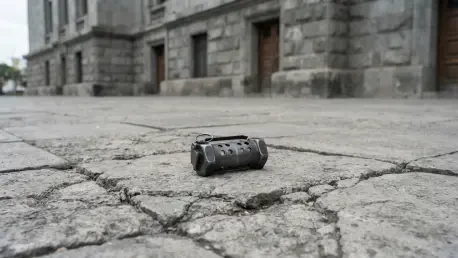

The long-standing legal battle over the boundaries of federal law enforcement authority during public demonstrations has taken a definitive turn following a pivotal decision by the U.S. Ninth Circuit Court of Appeals. A three-judge panel recently vacated a preliminary injunction that had severely restricted the use of non-lethal crowd-control munitions, such as tear gas and pepper balls, at the Immigration and Customs Enforcement facility in Portland. This ruling stems from the case of Dickinson v. Trump, where plaintiffs, including journalists and protesters, alleged that federal agents used these tools as retaliation for exercising First Amendment rights between 2025 and 2026. By removing the requirement that agents only use such force when facing an imminent threat of physical harm, the court has broadened the operational latitude of personnel. This shift underscores the tension between protecting constitutional assembly and ensuring that government facilities remain secure during periods of unrest.
Shifting Paradigms in Federal Enforcement
Redefining the Scope: The Threshold for Force
The appellate court’s decision, authored by Judge Kenneth Lee, fundamentally challenges the premise that non-lethal force should be a measure of last resort reserved only for life-threatening scenarios. The court clarified that federal agents possess the inherent authority to use chemical irritants and impact munitions to disperse crowds and restore public order, even in the absence of an immediate physical danger to personnel. This interpretation moves away from the more restrictive standards imposed by the lower district court, which had sought to minimize collateral casualties among peaceful protesters and members of the press. According to the panel, the government is not legally required to wait for a situation to escalate into violence before taking steps to manage an unruly gathering. By prioritizing the protection of federal property and law enforcement duties, the ruling establishes a precedent that emphasizes the practical necessity of crowd management over individual harms.
Analyzing Retaliatory Intent Claims
Central to the court’s reasoning was the rejection of the argument that federal agents acted with retaliatory intent against individuals exercising their First Amendment rights. The judges characterized the injuries of the plaintiffs—which included journalists caught in the deployment of tear gas—as the unfortunate result of managing a complex environment rather than a targeted effort to suppress speech. This distinction is crucial for future litigation, as it sets a high bar for proving that law enforcement actions are motivated by a desire to punish protesters for their viewpoints. Furthermore, the court emphasized that the First Amendment does not provide a legal shield for activities such as vandalism, criminal trespass, or the obstruction of federal operations. By framing the agents’ actions as a neutral response to a chaotic situation, the Ninth Circuit has reinforced the idea that the state’s interest in security can justify tactical measures that may impact bystanders or non-violent participants.
Procedural and Safety Implications
Correcting Overbroad Judicial Remedies
Beyond the specific use of munitions, the appellate ruling addressed the procedural flaws in the original district court order, specifically regarding class certification and agent identification. The previous injunction had required federal agents to display more conspicuous and unique markings on their uniforms to ensure accountability during field operations. However, the Ninth Circuit found that the district court exceeded its authority by granting relief to an overly broad class of individuals who merely desired to protest or report at the facility. This lack of commonality among the proposed class members meant that a single remedy could not satisfy federal procedural rules. Consequently, the requirement for enhanced identification was eliminated, along with the restrictions on non-lethal force. This decision highlights the judiciary’s hesitation to impose sweeping changes on agencies through preliminary orders that are not supported by a likelihood of success on the merits of the legal claims.
Future Considerations: Implementing Internal Agency Protocols
The dissolution of these judicial restrictions necessitated a renewed focus on internal agency protocols and the development of engagement strategies that did not rely solely on court mandates. While the majority favored restoring operational freedom, the partial dissent served as a reminder that non-lethal force still carried risks of injury. Proactive administrators advocated for maintaining internal prohibitions against targeting the head or torso with munitions unless deadly force was justified. Law enforcement agencies adopted these specific safety guidelines as standard operating procedures to mitigate liability. Moving into 2027 and 2028, the emphasis shifted toward training programs that prioritized de-escalation while utilizing the tools permitted by the ruling. Agencies also implemented voluntary identification systems that balanced officer safety with transparency. These steps ensured that the restoration of authority did not lead to a surge in injuries, fostering a more sustainable approach to civil management.