
The loss of a dedicated secretary and director has left the Human Rights Department with only one remaining staff member to manage a growing backlog of cases. This administrative vacuum has transformed a routine personnel matter into a high-stakes cultural and legal battle within the City of Waterloo. As the municipal government weighs a fundamental change to the city ordinance, the local community remains on edge, fearing that the specialized infrastructure designed to protect marginalized voices is being intentionally dismantled. The current tension is not merely about a vacancy but about the very definition of the city’s responsibility to its residents. For months, the absence of executive leadership has stalled investigations and created a bottleneck that threatens the efficacy of local civil rights enforcement. This situation has forced a difficult conversation about whether the city views human rights oversight as a non-negotiable pillar of governance or a discretionary expense that can be absorbed by other departments. As the debate intensifies, the ideological divide between city leadership and civil rights advocates continues to widen, reflecting a broader national struggle over the preservation of institutional memory and the mechanisms of accountability.
The Legacy Of 1966 And Modern Administrative Friction
A Foundation Built On Civil Rights Activism
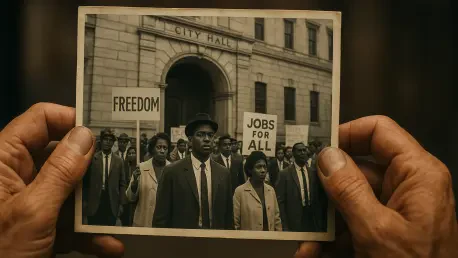
To understand the intensity of the current outcry, one must recognize that the Human Rights Director position in Waterloo was never a standard bureaucratic creation; it was a hard-won victory forged in the crucible of the 1960s civil rights movement. In May 1966, the death of Eddie Sallis in police custody served as the catalyst for a fundamental shift in the city’s social contract. Sallis, a young Black man, was found dead in his jail cell shortly after an arrest, sparking a firestorm of protests and a march on City Hall led by prominent activists like Anna Weems. The community did not just demand answers; they presented a comprehensive list of grievances that required the establishment of a funded Human Rights Commission with a dedicated, professional director. They understood that a volunteer board without a full-time executive leader would lack the investigative “teeth” necessary to hold powerful institutions accountable. Consequently, the mandate that the city “shall” appoint a director was established as a safeguard, ensuring that civil rights enforcement would remain a permanent and staffed priority rather than a symbolic gesture.
The historical weight of this office remains a central argument for modern residents who view the current vacancy as a betrayal of a sixty-year-old promise. For many in Waterloo, the directorate is a legacy “paid for” by the grief of the Sallis family and the tireless efforts of civil rights martyrs who fought for a seat at the table. To suggest that this role should now be optional is seen by many as an attempt to erase the progress made since 1966. Advocates argue that the mandatory nature of the position is what gives the commission its independence, allowing it to operate without the fear of being sidelined by changing political whims. They maintain that the director is the bridge between the lived experiences of the citizenry and the formal legal structures of the city. Without this dedicated role, the historical narrative of Waterloo’s struggle for equality risks being reduced to a footnote, and the institutional safeguards built to prevent a repeat of the past could be quietly neutralized under the guise of administrative reorganization.
Current Failures And Personnel Crises
The current crisis was precipitated by the April termination of the former director, Abraham Funchess, following a series of internal policy violations that left the department in disarray. According to official documents, the dismissal was the result of multiple infractions, including allegations of harassment, the mishandling of confidential information, and the unauthorized use of city equipment. This sudden departure, following on the heels of the department secretary’s resignation, effectively decapitated the city’s human rights infrastructure. With only one administrative staff member remaining, the department has struggled to maintain its basic functions, leading to a significant backlog of civil rights complaints. This personnel collapse has not only hindered the city’s ability to respond to new allegations of discrimination but has also demoralized those who rely on the commission for mediation and justice. The inability to fill these roles quickly has created a sense of urgency among activists who believe the department is being allowed to wither through intentional neglect.
The practical consequences of this leadership vacuum are already being felt across the city as residents lose faith in the local system’s ability to deliver timely results. Because the department lacks the executive staff necessary to conduct formal investigations, many citizens have been forced to seek redress elsewhere. Under Iowa law, if a local commission fails to process a case within a year, the complainant has the right to transfer that case to the state-level commission for review. Recent reports indicate that at least thirteen Waterloo residents have already opted to move their cases to the state level, a move that signals a significant loss of local jurisdiction and oversight. While some city officials argue that this transfer process provides a necessary safety net, critics point out that it removes the community-based resolution that the local commission was designed to provide. They argue that a volunteer-only commission, no matter how well-intentioned, cannot replace the specialized expertise and full-time dedication of a professional director, leaving the city vulnerable to unresolved systemic issues.
Policy Proposals And The “May” Vs. “Shall” Conflict
At the heart of the legal dispute is a proposed change to the municipal ordinance that would alter the language governing the appointment of the Human Rights Director. Mayor Dave Boesen has suggested shifting the mandate from “shall appoint” to “may appoint,” a linguistic adjustment that would grant the mayor’s office the discretion to leave the position vacant or assign its duties to other city employees. Proponents of this change argue that it provides necessary administrative flexibility, especially during difficult transition periods or when a suitable candidate cannot be immediately found. They suggest that “qualified employees” already on the city payroll could be designated to fulfill the essential functions of the human rights office, ensuring that the work continues without the need for a high-salaried executive position. From this perspective, the change is a pragmatic solution to a personnel challenge, aimed at modernizing the city’s operations and ensuring that no single department is left completely non-functional due to a vacancy.
However, opponents of the “may” proposal view it as a strategic move to permanently weaken the Human Rights Commission’s independence and efficacy. They argue that the word “shall” is a legal requirement that forces the city to prioritize the recruitment and retention of a dedicated civil rights expert. By making the appointment discretionary, the mayor could theoretically leave the office unstaffed indefinitely, effectively dissolving the department without a formal vote to do so. Furthermore, critics contend that delegating human rights duties to general city staff creates an inherent conflict of interest. A staff member who serves at the pleasure of the mayor and has other primary responsibilities may lack the impartiality or the specific legal training required to investigate sensitive complaints against the city or major local employers. For those who value the commission’s role as an independent watchdog, the shift to “may” represents a dangerous erosion of the checks and balances that have protected Waterloo’s residents for decades.
Political Polarization And The Fight For Institutional Memory
A Racial Divide On The City Council
The debate within the Waterloo City Council has exposed a profound demographic and ideological split that mirrors the racial tensions of the city’s past. During a recent work session, the council’s three Black members—Belinda Creighton-Smith, Deb Berry, and Kelly Martin—voted unanimously to reject the proposed ordinance change and maintain the mandatory requirement for a director. Their opposition was rooted in the belief that the Human Rights Department is a vital shield for marginalized communities and that any reduction in its status is a direct threat to public safety and equity. In contrast, the remaining members of the council voted to continue the discussion on the mayor’s proposal, favoring a path that keeps the discretionary language on the table. This division has created a tense atmosphere at City Hall, with minority representatives expressing frustration that their colleagues do not seem to grasp the life-or-death importance of the issue for their constituents.
Councilmember Creighton-Smith articulated this disconnect by using the metaphor of a “fish in water,” suggesting that those who have never experienced the suffocating effects of systemic discrimination often fail to notice the environment that sustains it. She argued that for many white residents and officials, the Human Rights Commission might seem like an optional luxury or a redundant layer of bureaucracy. However, for those who face daily hurdles in housing, employment, and law enforcement, the commission is a necessary lifeline. This difference in perspective highlights the difficulty of achieving consensus in a city where the memory of racial struggle is still very much alive for a significant portion of the population. The failure of the council to reach a unanimous decision on such a foundational issue has reinforced the fears of activists who believe that the city’s leadership is increasingly out of touch with the needs of its most vulnerable citizens, leading to a breakdown in trust that may take years to repair.
Community Fears Of Systemic Regression
Public testimony during recent council meetings has been characterized by a raw and palpable fear that Waterloo is undergoing a period of systemic regression. Residents from across the city have voiced their concerns that the current administrative changes are part of a broader effort to turn back the clock on civil rights progress. O’Dell Sallis, a relative of the late Eddie Sallis, delivered a particularly moving challenge to the council, questioning whether the city still possessed the “will” to stand by the commitments made in the wake of his family’s tragedy. He noted that the funding for the director position is already allocated and the legal framework is already in place; therefore, the only obstacle to hiring a new director is a lack of political desire. His testimony served as a stark reminder that for many, this is not a budget issue or a policy debate, but a test of the city’s moral character and its respect for the historical sacrifices of its people.
This local anxiety is further amplified by a national climate where the mechanisms of social justice and the teaching of racial history are increasingly under fire. Residents have drawn parallels between the proposed ordinance change in Waterloo and efforts in other regions to limit diversity programs or remove books by Black authors from public libraries. To the community members fighting for the Human Rights Department, the attempt to make the director position optional feels like a local manifestation of a global trend toward minimizing the institutional memory of racial struggle. They fear that if the “shall” mandate is removed, it will be the first step in a gradual process of erasing the office entirely. This sense of impending loss has galvanized a diverse coalition of activists, labor leaders, and ordinary citizens who view the preservation of the mandatory directorate as a line in the sand that cannot be crossed if Waterloo is to remain a city committed to true equality and justice for all.
Legislative Pressures And State Mandates
The struggle for the future of Waterloo’s Human Rights Department is not occurring in a vacuum, as several new state-level mandates have forced the city to re-examine its entire commission structure. Under recently enacted Iowa regulations, all municipal commissions must adhere to strict new rules regarding term limits and appointment procedures. These state laws require that commissioners serve only two-year terms, with a total service limit of six years. Waterloo’s existing ordinance, which allows for varying term lengths of up to three years, is now out of compliance and must be updated regardless of the outcome of the director debate. This legislative pressure has provided the city administration with a convenient window to introduce broader changes to the department’s structure, but it has also added a layer of complexity to the local conflict. Critics argue that the city is using the need for state compliance as a “Trojan horse” to slip in the controversial “may vs. shall” language without sufficient public scrutiny.
Moreover, the increased transferability of cases to the state commission has created a “use it or lose it” scenario for local human rights offices across Iowa. As more residents opt to take their complaints to the state level due to local backlogs, the justification for maintaining a robust, independently staffed municipal department begins to weaken in the eyes of fiscal conservatives. This creates a dangerous feedback loop: by failing to staff the department properly, the city creates a backlog; the backlog then justifies the transfer of cases to the state; and the loss of cases is then used as evidence that a local director is no longer necessary. Advocates in Waterloo are working hard to break this cycle by demanding that the city reinvest in its local office before its authority is completely hollowed out. They emphasize that local investigators have a better understanding of the city’s specific social dynamics and history, making them far more effective at resolving disputes than a distant state agency that lacks the same contextual knowledge and community trust.
The Erosion Of Local Civil Rights Enforcement
The ongoing vacancy and the proposed shift in legal language have effectively transformed the Human Rights Commission from a proactive enforcement agency into a passive advisory body. Without a permanent director to lead investigations, subpoena witnesses, and issue formal determinations, the commission’s volunteer members are left with little more than the power to listen and recommend. This erosion of authority has a chilling effect on those who might otherwise report instances of discrimination, as the lack of a clear path to resolution discourages victims from coming forward. The city council recognized that the current path was unsustainable and that a failure to act would lead to the permanent marginalization of the commission’s work. Stakeholders emphasized that a comprehensive hiring process needed to begin immediately, prioritizing candidates with deep roots in civil rights advocacy and the investigative expertise required to clear the existing backlog of cases.
The path forward necessitated a renewed commitment to the “shall” mandate to prevent a total breakdown of trust between the municipal government and the community it served. Local leaders determined that the only way to preserve the legacy of 1966 was to ensure that the Human Rights Department remained a fully staffed and independent entity within the city’s hierarchy. They concluded that the “may” proposal carried too high a risk of future neglect and that the specialized nature of civil rights work required a dedicated professional rather than a generalist employee. To restore the department’s efficacy, the city initiated a search for a director who could not only manage the administrative load but also serve as a vocal advocate for systemic equity. This strategy focused on rebuilding the department’s “teeth” and ensuring that the historical promises made to the Sallis family and the wider community remained a central, mandatory component of Waterloo’s governance for the years ahead.