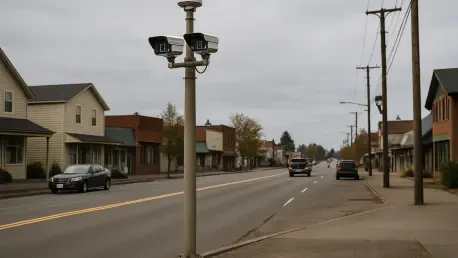

The streets of Stanwood, Washington, are about to see the return of a familiar high-tech guardian as the city officially moves to reactivate its network of automated license plate reader cameras. This decision marks a significant reversal for a municipality that had previously suspended its surveillance program in May 2025 due to a combination of legal uncertainty and mounting administrative pressure. For months, the fourteen cameras that sit atop specialized poles along major city thoroughfares remained dark, serving as silent monuments to the complex debate over privacy versus public safety. Now, however, the local government has found the necessary legal footing to re-engage these digital sentinels, signaling a new chapter in how small towns manage advanced law enforcement tools. The shift is not merely a local policy change but a calculated response to a changing legislative environment that seeks to define exactly where the line between effective policing and personal privacy should be drawn in the modern era.
Navigating the New Legal Landscape
The Impact of the Driver Privacy Act
The definitive turning point for Stanwood arrived with the recent enactment of the Driver Privacy Act, formally known as Senate Bill 6002, which established a rigid statewide framework for license plate surveillance. Before this legislation, cities like Stanwood operated in a gray area, often making up their own rules for data management while facing potential lawsuits or civil rights challenges. The new law provides a standardized set of operating procedures that remove much of the guesswork for local officials. By codifying specific rules regarding how data is captured, stored, and eventually purged, the state has created a predictable environment that satisfies both the police department’s need for investigative leads and the public’s demand for transparency. Mayor Sid Roberts noted that this legislative compromise was the primary catalyst for the city’s decision, as it offers the legal protection necessary to operate the technology without fear of constant litigation or accusations of overreach.
This legislative shift also brings about a new era of judicial oversight that was previously left to internal department policies. Under the current statutes, law enforcement agencies are strictly prohibited from utilizing this technology for immigration enforcement or tracking individuals who are participating in constitutionally protected activities, such as legal protests or seeking medical care. Furthermore, the act mandates that police must obtain a warrant before they can access historical license plate data held by private third-party contractors like Flock Safety. This requirement ensures that the cameras are used for specific, targeted criminal investigations rather than broad, warrantless fishing expeditions. By moving toward a warrant-based system, the state has effectively integrated high-tech surveillance into the existing legal traditions of the Fourth Amendment, providing a level of constitutional security that was previously absent from the program’s initial rollout a few years ago.
Operational Restrictions and Sensitive Locations
A critical component of the new regulatory environment involves the geographic placement of these cameras, which can no longer be installed near what the state defines as “sensitive locations.” These areas include healthcare facilities that provide protected services, schools, places of worship, and immigration-related service centers. The intent behind this restriction is to ensure that the mere act of seeking medical help or attending a religious service does not result in an individual’s movements being logged into a law enforcement database. In Stanwood, this has required a physical audit of the existing infrastructure, leading to the relocation of two cameras that were found to be in conflict with these new proximity rules. This proactive compliance effort demonstrates a commitment to the spirit of the law, ensuring that the surveillance net remains focused on public thoroughfares and high-traffic transit corridors rather than private or sensitive community spaces.
In addition to physical placement, the law has significantly tightened the timeline for how long data can be kept on file, reducing the retention period from thirty days to twenty-one days. This change is designed to minimize the risk of “data creep,” where vast repositories of historical movement patterns are stored indefinitely. By mandating a quicker purge of non-relevant data, the state ensures that the information is only available for active, recent investigations where it is most likely to be useful. For the Stanwood Police Department, this means the system acts more like a short-term investigative tool than a permanent archive of resident movements. This reduction in the data storage window serves as a technical safeguard against the potential misuse of the system for long-term tracking of individuals who are not suspected of any criminal activity, thereby addressing one of the most persistent concerns raised by digital privacy advocates.
Implementation and Regional Context
Tactical Utility and Force Multiplication
From the perspective of local law enforcement, the reactivation of the Flock Safety system represents a much-needed “force multiplier” for a department that must cover significant territory with limited personnel. Chief Glenn DeWitt has emphasized that these cameras do not function as live video surveillance or facial recognition tools; instead, they capture static images of license plates and vehicle characteristics like make, model, and color. When a vehicle associated with a reported crime, such as a stolen car or a vehicle linked to a felony warrant, passes one of these sensors, the system sends an immediate alert to officers in the field. This real-time intelligence is particularly valuable in a city like Stanwood, which serves as a transit hub for travelers moving between more populated urban centers and rural areas. The ability to intercept a suspect vehicle within minutes of it entering city limits significantly increases the likelihood of a safe and successful apprehension.
Beyond just catching car thieves, the system provides a vital safety net for more sensitive law enforcement operations, including the location of missing persons and suspects in domestic violence cases. In many instances, the first few hours after an incident are the most critical, and having a digital record of a suspect’s direction of travel can be the difference between a cold lead and a solved case. The department maintains that the technology is strictly focused on the vehicle itself rather than the occupants, which helps maintain a boundary between public safety and personal anonymity. By focusing on objective data points like license plate numbers and vehicle colors, the police can filter through thousands of daily movements to find the one specific vehicle that poses a threat to the community. This targeted approach is presented as a modern solution to the challenges of policing in an increasingly mobile society where criminals often move across jurisdictional lines with ease.
Administrative Safeguards and Privacy Concerns
One of the most overlooked but impactful changes brought by the new state law is the exemption of license plate data from broad public records requests. Before the 2025 pause, Stanwood and other small municipalities were frequently targeted by “repeat requesters” who submitted massive, complex data queries that were nearly impossible for small administrative staffs to fulfill within legal timeframes. These requests often seemed designed to trap cities into missing deadlines, thereby triggering significant financial penalties and legal fees. By classifying this raw surveillance data as exempt from standard public disclosure, the state has protected small towns from what many officials described as predatory litigation. This change allows the city to utilize the technology for its intended law enforcement purposes without the constant threat of administrative paralysis or financial ruin caused by the exploitation of transparency laws.
Despite these new protections, the broader regional debate over automated surveillance continues to simmer as privacy groups and academic researchers voice ongoing concerns. A study recently conducted at the University of Washington highlighted instances where federal agencies were able to access local camera networks through back-door data-sharing features that were enabled by default. This revelation has caused a ripple effect across Western Washington, leading cities like Redmond and Everett to keep their systems offline while they conduct deeper audits of their data-sharing agreements. Stanwood is currently moving forward as an early adopter of the new state framework, but it does so under a microscope. The success or failure of its program will likely serve as a benchmark for neighboring jurisdictions that are still weighing the potential for federal overreach against the undeniable tactical advantages that these automated systems provide to local police departments.
Conclusion: A Unified Regulatory Framework
The reactivation of the license plate reader program in Stanwood marked a transition from experimental technology to a regulated municipal utility. By adhering to the standardized rules set forth in the Driver Privacy Act, the city established a clear path forward that minimized administrative risk while maximizing investigative capabilities. Moving into the next phase of implementation, the focus will likely shift toward maintaining rigorous internal audits to ensure that the data-sharing bans and warrant requirements are strictly followed. Other municipalities should look to Stanwood’s experience as a guide for navigating the intersection of state law and local enforcement, particularly regarding the proactive relocation of cameras away from sensitive areas. Future considerations must include regular public reporting on system hits and successful case resolutions to maintain community trust. Ultimately, the successful integration of these tools depended on the existence of a robust legal framework that prioritized the rights of the individual as much as the efficiency of the state.