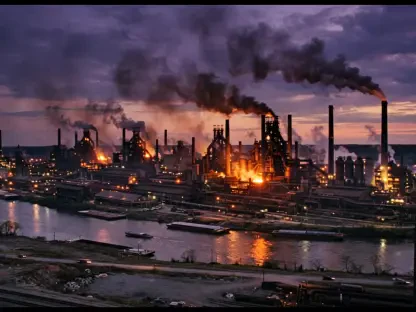

The global industrial trade landscape is undergoing a radical transformation as the European Union begins the full implementation of its Carbon Border Adjustment Mechanism, forcing international producers to rethink their entire financial and environmental reporting strategies. This regulatory shift acts as a pivotal tool within the broader European Green Deal, aiming to equalize the carbon price paid by domestic European manufacturers and foreign importers. By targeting carbon-intensive sectors such as steel, cement, aluminum, and fertilizers, the regulation ensures that the environmental cost of production is accounted for regardless of where the goods are manufactured. This transition marks the end of an era defined by free emission allowances, replacing it with a competitive carbon-pricing model that demands rigorous fiscal transparency from any entity wishing to enter the European market.
To navigate this new environment, businesses must appoint authorized CBAM declarants who are responsible for the accurate reporting and surrendering of carbon certificates. Market entry now requires a mandatory verification process, where third-party auditors scrutinize the carbon intensity of every shipment to ensure compliance with stringent European standards. This mechanism effectively exports the European Union’s climate ambitions, compelling foreign governments and private enterprises to adopt similar carbon-pricing architectures or face significant financial penalties at the border. Consequently, the role of these declarants has moved from a back-office administrative task to a core strategic function that directly impacts the bottom line of global trade operations.
Understanding the New Landscape of EU Carbon Border Adjustments
The implementation of the Carbon Border Adjustment Mechanism represents a fundamental change in how the European Union protects its industrial base while pursuing aggressive climate targets. By creating a level playing field, the regulation prevents carbon leakage, where companies might otherwise move production to countries with laxer environmental rules. The scope of this policy focuses on the most carbon-heavy industries, which are now required to match the pricing levels set by the European Union Emissions Trading System. This shift removes the historical advantage held by foreign producers who benefited from lower environmental costs, effectively integrating climate policy into the heart of commercial trade law.
Transitioning from voluntary participation to a mandatory pricing model requires a deep understanding of the legal requirements for authorized declarants. These entities must ensure that every ton of carbon embedded in their imports is accounted for through the purchase of CBAM certificates. The verification process is no longer a mere formality but a comprehensive audit of the production facility’s energy mix and emission efficiency. As the European Union continues to phase out free allowances for its own domestic industries, the financial pressure on importers will only intensify, making it essential for foreign producers to invest in cleaner technologies to remain competitive in the lucrative European market.
Evolving Dynamics in Global Carbon Pricing and Reporting
Emerging Trends in Emissions Transparency and Green Finance
The corporate world is witnessing a significant shift from voluntary sustainability reporting toward a landscape defined by mandatory, audit-ready carbon financial data. Financial institutions and regulators now demand the same level of precision for emissions data as they do for traditional balance sheets, leading to a surge in the adoption of digital tracking tools. Integration with Enterprise Resource Planning systems has become a necessity for managing real-time emissions data across complex, multi-national supply chains. This evolution ensures that carbon costs are no longer hidden externalities but are instead fully integrated into the financial planning and valuation of industrial enterprises.
Furthermore, the nature of carbon offsets is changing rapidly, with a distinct rise in the preference for Article 6-compliant carbon credits over traditional voluntary market offsets. Corporate behavior is shifting toward the creation of low-carbon supply chains not just for marketing purposes, but as a defensive strategy against regulatory penalties. As green finance becomes the standard, companies that fail to provide transparent, verifiable emissions data find themselves excluded from favorable lending rates and investment opportunities. This trend emphasizes the growing overlap between environmental performance and financial viability in the modern global economy.
Market Projections and the Rising Cost of Compliance
Market analysts project a steady price convergence between the European Union Emissions Trading System and various international carbon markets as nations scramble to align their policies with European standards. This convergence is expected to diminish the value of non-regulated or voluntary carbon offsets, which are increasingly viewed as insufficient for compliance purposes in European trade. For importers, the key performance indicator has shifted from simply calculating gross tax payments to understanding the net financial burden after accounting for domestic carbon prices already paid. This nuanced approach requires sophisticated financial modeling to predict the long-term impact of carbon pricing on profit margins.
The demand for specialized expertise has led to a boom in the professional services sector, particularly for independent emission verifiers and sustainability consultants. These professionals are tasked with navigating the intricate web of European regulations and ensuring that foreign producers do not fall afoul of the law. As the cost of compliance rises, the ability to accurately forecast carbon expenses will become a primary competitive advantage. Companies that proactively adapt to these market projections will be better positioned to absorb the costs of transition while those that delay risk facing sudden, prohibitive expenses as the full weight of the carbon tax takes effect.
Critical Obstacles in Deductions and Currency Valuation
Navigating the net price trap has become one of the most complex aspects of the new regulation, as importers must meticulously subtract subsidies, free allowances, and energy discounts from their declared costs. The European Union requires proof of the actual net financial burden borne by the producer, meaning any government support that lowers the cost of production must be disclosed and accounted for. This creates an unprecedented investigative burden on independent verifiers, who must now act as forensic accountants to ensure that no hidden government compensation exists. This level of transparency is often difficult to achieve in jurisdictions where industrial policy is closely guarded or opaque.
In addition to the complexities of subsidy tracking, importers face significant currency lag risks due to the mandatory use of the previous year’s European Central Bank average exchange rate for tax calculations. For producers operating in countries with volatile currencies, this rule can lead to substantial financial discrepancies, where the tax paid does not reflect the economic reality at the time of production. Strategies for mitigating these risks involve sophisticated hedging and a thorough understanding of how exchange rate fluctuations impact the final carbon tax bill. Without careful planning, the currency lag can erode profit margins and introduce a layer of financial instability into long-term trade agreements.
The Regulatory Framework for International Carbon Offsets
The regulatory framework imposes strict limitations on the use of international credits, capping their contribution at only ten percent of the total declared emissions. This move is designed to ensure that the primary method of decarbonization remains actual emission reductions within the production process rather than the purchase of cheap offsets. Crucially, the exclusion of standard voluntary carbon market credits, such as those from Verra or the Gold Standard, has sent shockwaves through the carbon trading industry. Only credits that are strictly aligned with Article 6 of the Paris Agreement and the nascent United Nations Article 6.4 mechanism are recognized for deduction, significantly narrowing the options for importers.
Legal requirements for maintaining evidence repositories have become more stringent, requiring companies to keep detailed records of every carbon credit transaction and its corresponding emission reduction. Navigating the independent person verification criteria requires a high degree of diligence, as these verifiers must prove their independence from both the producer and the government. This rigorous oversight ensures that the international offset market remains transparent and that the credits used have a genuine, verifiable impact on global emission levels. For many producers, this means a total overhaul of their carbon procurement strategies to focus exclusively on high-quality, treaty-aligned credits.
The Future of Trade Under Strict Carbon Governance
The integration of the United Nations CARP registry and the maturation of bilateral agreements involving Internationally Transferred Mitigation Outcomes are set to become major market disruptors in the coming years. These systems will provide a centralized, transparent platform for tracking carbon credits, reducing the risk of double-counting and ensuring that international offsets meet the highest standards. Innovation in supply chain legal safeguards, including the use of specialized non-disclosure agreements, will be essential for protecting sensitive financial and subsidy data during the verification process. As industrial transparency becomes a prerequisite for trade, the ability to share data securely will be a vital component of international business relationships.
While these regulations aim for environmental parity, they also have the potential to spark geopolitical friction regarding industrial policy and sovereignty. Foreign nations may view the demand for transparency as an intrusion into their domestic economic affairs, leading to trade disputes or retaliatory measures. However, the long-term outlook suggests significant growth in decarbonization technologies and green metallurgy as domestic industries worldwide adapt to the European Union’s standards. Those who invest in green hydrogen, carbon capture, and energy-efficient manufacturing today will likely dominate the markets of tomorrow, as carbon governance becomes an inescapable reality of global commerce.
Strategic Recommendations for Global Importers and Producers
The analysis of the current implementing regulations revealed several critical financial pitfalls that required immediate attention from global trade participants. It became clear that the exclusion of standard voluntary offsets and the introduction of currency lag risks created a precarious environment for those unprepared for the shift. Organizations that recognized these challenges early were able to begin auditing their carbon portfolios and pivoting their procurement strategies toward Article 6-compliant credits. This proactive stance was essential for maintaining uninterrupted access to the European market and ensuring that investment viability was not compromised by sudden regulatory hurdles.
Successful producers established internal audit systems to meticulously track state aid, energy subsidies, and free allowances to provide a clear picture of their net carbon costs. They moved away from traditional voluntary offsets and invested in high-quality, UN-approved quotas that met the strict ten percent limit imposed by the new rules. Furthermore, the implementation of robust data management systems allowed these companies to provide the necessary evidence to independent verifiers without compromising sensitive commercial information. Ultimately, the transition to strict carbon governance rewarded those who viewed compliance not as a burden, but as a strategic necessity for long-term growth in a decarbonizing global economy.