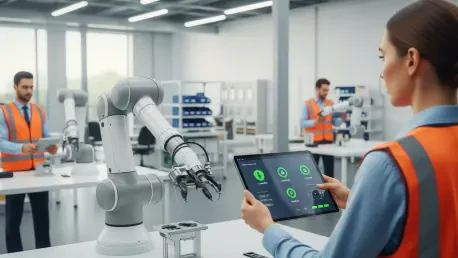

The rapid fusion of advanced large language models with industrial robotics has created a paradigm shift where machines no longer just execute commands but actively interpret their environments and make autonomous decisions in real-time settings. The integration of cloud-based intelligence and operational technology provides companies with unprecedented efficiency, yet it simultaneously broadens the governance gap between technological adoption and ethical oversight. As autonomous agents move from the screen into the physical workspace, the complexity of managing liability becomes a central concern for every modern enterprise. It is no longer enough to focus solely on the performance of a machine; stakeholders must now account for the systemic behavior and unexpected outcomes of integrated AI agents. Navigating this landscape requires a shift in perspective, moving away from reactive troubleshooting and toward a proactive model of systemic control. Failure to bridge this gap does not just result in technical glitches but can lead to significant legal exposure and reputational damage. By establishing a robust framework, organizations can harness the power of smart machines while ensuring that their operations remain within the boundaries of acceptable risk and societal expectations.
Strategic Shifts in High-Risk Model Deployment
Case Studies: Controlled Innovation
The industry is currently witnessing a fundamental shift in how frontier models are released to the public, with major developers prioritizing safety over immediate commercial reach. Organizations like Anthropic and OpenAI have transitioned toward a gated deployment strategy, where access to high-capacity models is limited to vetted partners rather than being offered through open, unrestricted interfaces. This controlled access is particularly critical when dealing with systems that interface with physical infrastructure or sensitive data environments where a single error could have cascading consequences. By implementing these rigorous vetting processes, developers are essentially creating a tiered ecosystem that permits innovation while restricting the tools that could be misused by malicious actors. This strategic gating serves as a first line of defense, ensuring that only those with demonstrated security protocols can utilize the most powerful autonomous agents available today. This movement signals a growing recognition that the rapid pace of AI development requires a more deliberate approach to market entry to prevent systemic vulnerabilities.
Beyond simple gating, companies such as Meta have established comprehensive frameworks aimed at preventing the release of high-risk systems that might facilitate large-scale threats. This adherence to the precautionary principle involves pledging against the deployment of advanced models until they have been thoroughly tested for their ability to assist in biological or cyber-based attacks. These organizations are dedicating significant resources to red-teaming and adversarial testing, seeking to identify potential failure points before a system ever reaches a production environment. Such a safety-first mindset reflects a broader industry consensus that the development of autonomous agents has outpaced the existing legal and technical guardrails. By voluntarily withholding advanced capabilities, these tech giants are setting a precedent that responsible innovation requires a willingness to prioritize long-term safety over short-term market share. This approach helps to protect not only the individual company’s reputation but also the integrity of the entire technological ecosystem against the unintended consequences of rapid AI proliferation.
Safety Priorities: Gated Access and Risk Mitigation
The strategic shift toward restricted access also addresses the complex issues surrounding data ownership and the integrity of corporate intellectual property. When high-risk models are gated, companies can better monitor how their technologies are being used and ensure that the outputs do not inadvertently leak proprietary information or violate privacy regulations. This level of control is essential for building trust with industrial clients who may be hesitant to integrate AI into their core operations due to fears of data exfiltration or model inversion attacks. Gated initiatives allow for a more collaborative relationship between developers and end-users, where feedback loops can be used to fine-tune safety features in a controlled setting. This iterative process ensures that the most advanced tools are only deployed once they have reached a level of maturity that aligns with the risk tolerance of critical infrastructure sectors. By prioritizing these safeguards, the industry is moving toward a more sustainable model of growth that values the reliability of the system as much as its raw technical capability.
Controlled deployment further serves as a mechanism for establishing a standard of care that can be referenced in legal proceedings or insurance assessments. By gating their models, companies demonstrate a proactive effort to mitigate foreseeable risks, which can significantly reduce their legal exposure in the event of an unforeseen system failure. This approach aligns with the expectations of global regulators who are increasingly calling for greater transparency and accountability in the AI sector. The transition away from the “move fast and break things” mentality is a direct response to the unique dangers posed by autonomous agents that have the capacity to act in the physical world. It acknowledges that the potential for harm extends far beyond the digital realm, impacting physical safety, environmental stability, and national security. Through these gated models and precautionary pledges, the technology sector is attempting to build a foundation of responsibility that will support the continued advancement of smart machines without compromising the safety of the public or the stability of the global market.
Core Elements of an Effective Governance Strategy
Policy Frameworks: Global Standards and Internal Rigor
Building a successful governance program requires moving away from ad-hoc experimentation and toward the adoption of formal internal standards that mirror international benchmarks. Many leading enterprises are now aligning their internal protocols with established frameworks like the NIST AI Risk Management Framework and the ISO/IEC 42001 standard. These guidelines provide a structured methodology for identifying, assessing, and mitigating the risks inherent in autonomous systems, moving beyond basic cybersecurity to address the ethical behavior of AI. By institutionalizing these standards, companies create a consistent language for risk management that spans across different departments and global offices. This structured approach ensures that every deployment is evaluated through the same lens of accountability and transparency, reducing the likelihood of oversight. As these global standards continue to evolve, they provide a reliable foundation for organizations to build upon, allowing them to remain agile in a fast-paced market while maintaining a high level of technical and operational integrity across their entire fleet.
Alignment with recognized international standards does more than just improve internal operations; it serves as a vital legal shield in an increasingly regulated environment. In the event of a regulatory audit or potential litigation, being able to demonstrate adherence to a standard of care like ISO/IEC 42001 can be the difference between a minor correction and catastrophic legal penalties. These frameworks offer a clear record of the due diligence performed by the organization, showing that the systems were managed with industry-recognized rigor and foresight. This proactive documentation of risk mitigation measures provides tangible evidence that a company took every reasonable step to prevent harm and ensure the reliability of its automated agents. Furthermore, as national governments begin to implement voluntary codes and mandatory regulations, companies that have already integrated these standards will find themselves at a significant competitive advantage. They are better prepared to handle the complexities of multi-jurisdictional compliance, ensuring that their expansion into new markets is not hindered by legal hurdles.
Accountability Measures: Human Literacy and Transparency
A robust governance framework is only as effective as the people who oversee its daily implementation, which makes human literacy a critical cornerstone of any modern technical strategy. Personnel at every level of an organization, from executive leadership to the factory floor, must possess a working understanding of how autonomous systems function and the specific points where they are likely to fail. This human-in-the-loop approach ensures that automated decisions are never made in a vacuum and that there is always a layer of human judgment available to intervene when necessary. Comprehensive training programs are essential for teaching managers how to interpret AI-driven data and identifying the signs of algorithmic drift or malfunctioning logic. By fostering a culture of technical literacy, companies can maintain a clear chain of accountability for all machine actions, ensuring that someone is always responsible for the behavior of the fleet. This empowerment of the workforce not only improves safety but also enhances operational efficiency by allowing employees to work confidently.
Meticulous record-keeping serves as the evidence base for an organization’s governance efforts, providing transparency into the decision-making processes of autonomous models. To maintain this transparency, companies must document their training data sources, testing methodologies, and the specific limitations identified during the development phase. This documentation is not just a bureaucratic requirement; it is a critical defense mechanism that allows an organization to explain why a specific action was taken by an AI system. If a decision is ever challenged by a regulator or a third party, having a detailed history of the mitigation measures taken can demonstrate that the organization acted responsibly and with due diligence. This “paper trail” for algorithms is becoming a standard requirement for high-stakes industries, where the ability to audit an automated decision is paramount. By prioritizing rigorous documentation, companies ensure that their AI systems are not “black boxes” but are instead understandable and verifiable tools that remain under the firm control of the human operators who deployed them.
Addressing the Unique Challenges of Robotics
Physical Interaction: Safety and Collaborative Systems
In the specialized field of robotics, the integration of artificial intelligence transforms purely digital risks into immediate and tangible physical safety concerns for human workers. This is especially evident in the rise of collaborative robots, or cobots, which are designed to operate alongside humans in diverse environments ranging from high-tech manufacturing floors to busy healthcare facilities. In these settings, the potential for physical harm introduces a unique layer of liability that is absent in purely software-based AI applications, requiring much stricter oversight. Organizations must ensure that their robotic systems adhere to specific safety standards, such as those set by the CSA and ISO, which are designed to manage human-machine interaction safely. These standards require rigorous testing of a robot’s ability to sense and react to human presence, ensuring that automated movements do not lead to accidents. Managing these physical risks is a foundational component of AI governance in robotics, as the consequences of a system failure can be real-world injuries.
The rise of agent-based attacks represents a new and dangerous frontier for security, as malicious actors utilize their own AI models to attempt to jailbreak industrial robots or bypass safety protocols. These sophisticated adversarial attacks can target the core logic of a machine, potentially turning a helpful tool into a significant physical hazard or an entry point into a broader corporate network. Traditional defensive measures are often insufficient against these AI-powered threats, necessitating a secure-by-design approach where security and governance are foundational elements of the system architecture. This means that every connected machine must be built with the assumption that it will be targeted, incorporating multi-layered defenses that are as adaptable as the intelligence they are meant to protect. By treating security as a core component of the design process rather than an afterthought, organizations can create more resilient systems that are capable of withstanding complex cyber-physical attacks. This proactive stance is essential for maintaining the operational continuity of smart environments.
Operational Resilience: Long-Term Liability Mitigation
Ultimately, the establishment of comprehensive AI governance frameworks functioned as a strategic roadmap for organizations that sought to maintain legal and operational resilience in a changing world. By institutionalizing clear policies and investing heavily in workforce training, these companies successfully captured the benefits of autonomy without falling victim to unmanaged liabilities. They recognized that treating governance as a core business function was the only way to manage the unique risks presented by the intersection of the digital and physical realms. Industry leaders adopted international safety frameworks and maintained meticulous documentation of their training data, which served as a robust defense against regulatory scrutiny and potential litigation. This disciplined approach allowed for the sustainable integration of smart machines into complex workflows, ensuring that technology remained a powerful asset rather than a growing liability. As the deployment of autonomous systems became the standard for modern industry, the focus shifted toward continuous improvement.
Successful organizations identified actionable next steps by conducting thorough risk assessments of their robotic fleets and updating their security protocols to include agent-based threat modeling. They established clear internal audit cycles that reviewed model performance against both technical benchmarks and ethical standards, ensuring that any logic drift was caught before it could cause harm. Furthermore, these firms fostered deep collaboration between their engineering teams and legal departments to ensure that every technical update remained compliant with the latest global regulations. By prioritizing human literacy and maintaining a clear chain of accountability, they created a workplace culture where technology served to augment human capability rather than replace it with unmonitored automation. These proactive measures provided the necessary stability for long-term growth, proving that robust governance was not an obstacle to innovation but rather its most essential catalyst. Leaders who embraced these frameworks moved forward with confidence, having secured their place in a safe and productive automated landscape.