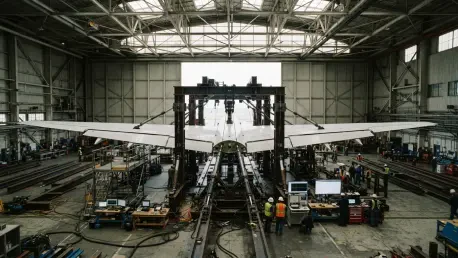

The HondaJet’s twelve-year path to certification illustrates the daunting learning curve and regulatory hurdles faced by newcomers entering the aviation industry. Beyond the sheer mechanical ingenuity required to build a light jet with over-the-wing engine mounts, the company had to navigate a labyrinthine verification process that demands absolute transparency and repeatable safety data. This journey is not merely about proving that an aircraft can fly, but demonstrating through thousands of pages of engineering analysis and physical stress tests that it can do so reliably under every conceivable atmospheric condition. In the high-stakes world of aerospace, the transition from a visionary blueprint to a commercial reality is governed by an architectural framework of regulations that prioritize public safety above all other metrics. Every structural joint, software algorithm, and electrical circuit must be scrutinized by both the manufacturer and federal overseers to ensure that the final product meets the uncompromising standards of modern airworthiness. This rigorous scrutiny serves as the industry’s primary defense against catastrophic failure, establishing a baseline of trust that allows millions of passengers to board flights every day without a second thought for the mechanical integrity of the vessel.
The Legal Framework: Goals of Type Certification
The primary objective for any aerospace manufacturer is the acquisition of a Type Certificate, which serves as the foundational legal document allowing a new design to enter service. Issued by regulatory bodies such as the Federal Aviation Administration in the United States or the European Union Aviation Safety Agency in Europe, this certificate signifies that an aircraft design meets all established airworthiness standards. It is important to distinguish this from the registration of a specific physical airplane; the Type Certificate validates the blueprint itself, including the airframe, engines, and propellers. This regulatory approval confirms that the engineering logic and structural design are inherently safe for the intended operation. Once this massive milestone is achieved, the manufacturer must then secure a Production Certificate. This secondary approval authorizes the company to replicate the certified design on a mass scale, ensuring that every unit rolling off the assembly line is an exact, high-quality duplicate of the prototype originally tested by the authorities.
Within the United States, these processes are governed by 14 CFR Part 21, which defines the requirements for the certification of products and parts. This legal structure ensures that the safety of the aircraft is not left to chance or corporate discretion but is instead dictated by a rigid set of federal laws. The Type Certificate essentially acts as a permanent record of the aircraft’s “genetic code,” meaning any future changes to the design must be reconciled with this original approval. For a manufacturer, holding a Type Certificate is a significant commercial asset, as it represents the government’s formal endorsement of their technology. Moreover, this dual-certificate system ensures that there is a clear separation between the quality of the design and the quality of the manufacturing process. By decoupling these two elements, regulators can identify whether a service issue stems from a fundamental engineering flaw or a failure in the production line, allowing for more targeted and effective safety interventions during the aircraft’s operational lifespan.
Establishing the Basis: The Regulatory Clock
Formal certification begins with the submission of FAA Form 8110-12, a step that does more than just initiate paperwork; it establishes the “certification basis” for the entire project. Under federal law 14 CFR 21.17, the regulations in effect on the day of application become the fixed safety standards the aircraft must meet. This regulatory “freeze” is vital because it provides engineers with a stable target, ensuring that the rules do not shift unexpectedly during the long development cycle. Without this fixed basis, a manufacturer might find themselves in a perpetual loop of redesigning components to meet new rules that emerged after the project started. However, this stability is governed by a strict regulatory clock that creates a high-stakes environment. For large transport category aircraft, the application remains valid for five years, while general aviation projects are allotted a three-year window. This timeframe forces companies to maintain a disciplined development schedule to avoid the expiration of their original certification basis.
If a project exceeds this five-year or three-year window, the manufacturer faces significant bureaucratic and financial consequences. They may be forced to restart the application process or, more commonly, negotiate an extension that requires the aircraft to adopt newer, more stringent safety rules enacted after their original filing date. These “upgraded” requirements can necessitate costly redesigns of systems that were already nearing completion, potentially adding years to the development timeline. This pressure is particularly intense for companies developing revolutionary technologies, where unforeseen technical challenges often threaten to push the schedule beyond the regulatory limit. Consequently, the management of the certification timeline is as much a project management challenge as it is an engineering one. Manufacturers must balance the need for thorough testing with the ticking clock of the FAA’s application window, ensuring that they reach the finish line before their regulatory foundation becomes obsolete and requires a complete overhaul.
Defining Requirements: Addressing Innovation in Design
Once the application is active, the process moves into the definition of specific requirements and the formation of a Type Certification Board. If a design introduces novel technologies, such as advanced composite materials or complex fly-by-wire systems that are not covered by existing laws, the regulator issues “special conditions.” These are custom-tailored requirements that address the unique risks of innovation, ensuring that modern advancements do not bypass traditional safety margins. For example, the widespread adoption of lithium-ion batteries and carbon-fiber fuselages required the FAA to develop entirely new sets of criteria that did not exist when the primary regulations were first drafted. These special conditions are often published for public comment, allowing industry experts and competitors to weigh in on the proposed safety standards. This collaborative but rigorous approach ensures that innovation is encouraged while maintaining the absolute integrity of the airworthiness framework.
The subsequent planning phase focuses on the “methods of compliance,” where the manufacturer and the regulator agree on how every rule will be satisfied. Whether through mathematical modeling, ground-based laboratory tests, or actual flight maneuvers, every regulatory line item must have a corresponding verification strategy. This stage also manages “Organization Designation Authorization,” which allows trusted manufacturers to perform certain compliance findings internally under strict agency oversight. This delegation is essential for efficiency, as it allows the regulator to focus its limited resources on the most critical or high-risk aspects of the design. However, the manufacturer remains legally responsible for the accuracy of these findings, and any failure to maintain the standards of the authorization can lead to severe penalties or the revocation of certification privileges. This balance of oversight and delegation is what allows the aerospace industry to continue advancing at a rapid pace without compromising its safety-first culture.
Implementation Phase: Physical Testing and Validation
The implementation stage represents the most resource-intensive portion of the journey, involving the construction of flight-test prototypes and meticulous conformity inspections. Before official government testing can commence, the regulator must issue a Type Inspection Authorization. This milestone indicates that the agency is satisfied with the preliminary engineering data and is ready to witness the formal flight and ground tests required for final approval. During this phase, the aircraft is subjected to extreme conditions that it will likely never encounter in normal service, such as maximum-weight takeoffs, high-velocity dives, and structural “break tests” where wings are flexed until they fail. These tests are designed to find the absolute limits of the design and verify that the safety margins calculated during the engineering phase are accurate in the physical world. Every hour flown during this period is tracked with extreme precision, with every sensor reading recorded for later analysis.
A critical component of this phase is “function and reliability” testing, which subjects the aircraft to hundreds of hours of service-like operations. For aircraft featuring new turbine engines, the law typically mandates a minimum of 300 flight hours to ensure the systems perform reliably in a real-world environment. This phase is as much about generating a mountain of technical reports and inspection records as it is about the physical performance of the airplane. Engineers must document every anomaly, no matter how small, and provide a detailed analysis of its cause and resolution. This documentation becomes the legal evidence used to support the “statement of compliance,” which is the final document the manufacturer signs to swear that the aircraft meets all applicable laws. The successful completion of this phase is often the most celebrated moment in an aircraft’s development, as it clears the final hurdle before the Type Certificate is officially granted and the aircraft can begin its commercial life.
Maintaining Integrity: Long-Term Airworthiness Responsibilities
The issuance of a Type Certificate does not end the manufacturer’s relationship with the regulator; instead, it transitions into the phase of “continued airworthiness.” Manufacturers are legally obligated to monitor the global fleet for service difficulties and issue mandatory service bulletins to correct emerging issues. This ensures that the safety of the design is maintained throughout its entire operational life cycle, which can span several decades. If a recurring mechanical issue is discovered in the field, the manufacturer must work with the regulator to develop a fix, which is then mandated for the entire fleet through an Airworthiness Directive. This continuous feedback loop is the reason why aviation remains the safest form of transportation; lessons learned from a single aircraft in one part of the world are immediately applied to all identical models globally, preventing similar issues from occurring elsewhere.
Furthermore, any subsequent modifications to the original design by third parties require a Supplemental Type Certificate. This ensures that changes, such as installing new avionics or converting a passenger cabin to a cargo configuration, do not compromise the integrity of the original certified architecture. The Supplemental Type Certificate process requires the same level of rigorous proof as the original certification, though it is focused specifically on the areas of the aircraft affected by the modification. This system allows older aircraft to be modernized with the latest technology while ensuring that the underlying structure remains airworthy. By maintaining this continuous oversight loop, the aviation industry reinforces its commitment to the gold standard of safety through every stage of an aircraft’s existence, from the first flight of the prototype to the final retirement of the last airframe in the fleet.
Future Evolution: Integrating Advanced Digital Validation
The certification landscape underwent a significant transformation as the industry moved toward a more integrated digital approach, where virtual modeling began to supplement physical testing. The adoption of digital twin technology allowed engineers to predict fatigue life and aerodynamic performance with unprecedented accuracy before a single piece of aluminum was ever cut. These advancements shifted the burden of proof from reactive testing to proactive simulation, which helped in managing the complexities of the Boeing 737 MAX 10 and other modern platforms. By late 2026, the data generated from these high-fidelity simulations provided regulators with a deeper understanding of system interactions, reducing the likelihood of late-stage design changes. This transition proved that while physical testing remained the ultimate validator, the digital environment offered a powerful tool for identifying potential regulatory hurdles much earlier in the development cycle.
For manufacturers looking to succeed in this evolving landscape, the primary takeaway was the necessity of early and frequent engagement with regulatory bodies. Developing a collaborative relationship with the Type Certification Board from the earliest stages of design was shown to be the most effective way to avoid the costly delays seen in previous decades. The industry successfully demonstrated that treating certification as a parallel engineering discipline, rather than a final administrative hurdle, ensured that safety was baked into the architecture of the aircraft from the very first sketch. Moving forward from 2026 to 2030, the integration of artificial intelligence in monitoring “continued airworthiness” is expected to further enhance safety by predicting component failures before they occur. This proactive stance, combined with a commitment to documentation and transparency, ensured that the rigorous architecture of certification remained the most robust safety system in the modern industrial age.