
Desiree Sainthrope has spent years at the intersection of law, technology, and global compliance, drafting complex agreements and translating policy into operational reality. With a deep grounding in intellectual property and a pragmatic eye on the fast-moving implications of AI, she brings a calm, courtroom-tested perspective to a heated moment in Florida. As pressure mounts—amid public statements, special-session energy, and investigations that seized headlines—she offers concrete, workable guardrails that protect kids while keeping room for ingenuity.
Florida’s Senate is poised to pass a bill requiring chatbots to share kids’ interactions with parents. How would that work in practice, and what technical safeguards prevent data misuse? What metrics or audit trails would you require to verify compliance without exposing children’s private information?
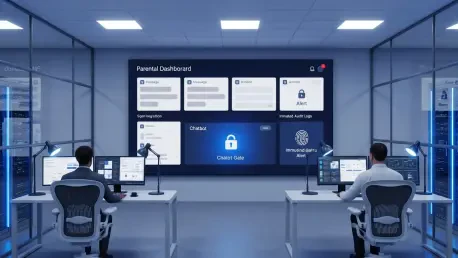
In practice, I would implement a parent-verified portal where access is scoped to a minor’s account, not a platform-wide search, and every viewing event is logged. Data should be encrypted in transit and at rest, with access controlled by role-based permissions tied to the parent’s verified identity and time-limited tokens. To prevent misuse, build in immutable audit trails capturing who accessed what, when, and from which device, plus alerts to the parent and platform if anomalous behavior occurs. For verification without overexposure, I’d require third-party attestations that confirm controls exist, coupled with redaction by default for health, location, and contacts, unless a parent opts in for fuller visibility after being shown clear risk notices. Finally, disclosures to parents should be watermarked with retrieval timestamps, so any leak can be traced, and administrators face immediate suspension if access deviates from policy.
The proposal includes parental time limits on chatbot use. How should platforms implement time controls across devices, and what enforcement pitfalls do you anticipate? Could you outline a step-by-step plan for rollout, escalation, and appeals when limits are disputed?
Time limits must be account-centric, synchronized via a child’s profile across phones, tablets, and browsers using a unified session service. Expect circumvention through guest modes, school devices, or cloned apps, so block use without authentication and require periodic rechecks rather than one-and-done gating. I’d roll out in phases: first, passive tracking with transparency to parents; next, soft blocks with grace periods; then hard blocks with appeal pathways for homework or therapy exceptions. When disputes arise, provide an in-app appeal that pauses enforcement for a short, documented window, followed by human review with clear timestamps, and a parent-facing ledger of decisions. Appeals should prioritize cases flagged by educators or clinicians, with the platform keeping a calm, written record rather than rushed chat replies that fuel frustration.
Notifications would trigger if a minor expresses self-harm or harm to others. How can alerts be accurate enough to avoid false positives while acting fast in emergencies? What triage protocols, handoff procedures, and response-time standards would you mandate?
Start with layered detection: language cues, context windows, and a human-in-the-loop for high-severity hits, so a dark joke doesn’t trigger the same path as an explicit plan. Triage should bucket events into imminent, urgent, and monitor-only, with clear decision notes visible to an internal reviewer. When imminence is detected, escalate to a trained safety team and notify the parent promptly, while documenting the time from detection to contact, and preserving relevant excerpts, not entire transcripts. For handoff, formalize referral channels to school counselors or community hotlines agreed upon in advance, including after-hours coverage. Even under pressure, maintain due process: log the basis for action, restrict access to the minimal data necessary, and allow a post-incident review where families can contest the categorization.
House leaders argue for federal rules over a patchwork of state laws. What concrete harmonization tools—model statutes, safe harbors, or interstate compacts—could bridge state innovation with national consistency? How would you phase implementation to avoid burdening startups?
Model statutes can define baseline duties—age assurance, parental access, and emergency alerts—while leaving implementation detail to technical standards bodies that iterate without reopening the law. Safe harbors tied to independent audits and transparency reports would reward good-faith compliance and reduce litigation risk. An interstate compact could recognize a single certification pathway, so a startup cleared once isn’t forced to re-certify everywhere. Phase-in should begin with voluntary commitments and sandbox pilots, then graduate to mandatory rules for larger platforms, with smaller firms allowed extended timelines and simplified documentation. This path respects the call for national consistency while giving Florida room to learn and lead without trapping newcomers in compliance quicksand.
Supporters claim Florida can protect children without stifling innovation. What measurable indicators would prove both safety and growth—such as incident reduction rates, startup formation, or R&D spend? How would you adjust the law if metrics diverge?
Track reductions in high-severity self-harm alerts that require escalation, alongside the rate of parental notifications resolved without further action. Pair safety metrics with growth signals like new corporate registrations in the state and the volume of research partnerships announced by universities. If safety improves while startup formation dips, adjust by expanding safe harbors and offering targeted technical assistance. If growth surges but serious incidents climb, tighten the emergency pathways and require more robust human review. Policy should breathe: schedule periodic reviews that surface what’s working and prune what’s not, rather than ossifying around first drafts.
The state recently set age restrictions on social media. What lessons from that rollout—vendor onboarding, identity verification, and enforcement—apply directly to AI chatbots? Where would you change course, and why?
The big lesson is that identity proofing must be privacy-preserving and fast, or families abandon it. For chatbots, I’d insist on multiple age-assurance methods—parental attestation, device signals, and limited document checks—paired with automatic deletion of verification artifacts after the decision. Vendor onboarding needs a single, plain-English requirements pack and a help desk that actually picks up, not a maze of forms. I’d change course by investing earlier in educator and clinician feedback loops, because they spot gaps families miss. And unlike social media, chatbots frequently serve educational and therapeutic goals, so carve out narrow, supervised-use exceptions instead of blunt bans.
Parents would gain access to all chatbot interactions their children have. How should consent, retention limits, and redaction work to protect sensitive data? What role should independent auditors or ombuds services play in disputes?
Consent should be granular: parents choose default visibility with the option to unlock fuller transcripts case by case after seeing a safety summary. Retention should be short by default, with longer storage only when a parent affirmatively opts in or when a safety event requires preservation for a defined review period. Redaction must mask names, locations, and third-party identifiers unless disclosure is essential to a safety handoff. Independent auditors should certify that redaction and retention controls match what parents are told, and an ombuds service can mediate when families disagree with a platform’s decision, providing a calm, documented path to resolution. This builds trust without turning private conversations into permanent dossiers.
Some leaders appear open to narrower child-safety measures while broader AI rules remain unsettled. What “minimum viable” provisions could pass now—scope, timelines, penalties—and what should be deferred? How would you prevent scope creep?
A minimum viable bill would cover minors’ chatbot use, parental access, emergency alerts, and basic auditing, with clear timelines aligned to the school calendar to ease adoption. Penalties should focus on repeat, willful noncompliance, reserving heavy sanctions for egregious failures tied to real harm, not paperwork misses. Defer broader questions—like general-purpose AI liability or sector-wide licensing—until evidence and federal signals clarify direction. To prevent scope creep, insert a sunset review and a requirement that any expansion include a fiscal and innovation impact statement, so changes aren’t slipped in without daylight and debate.
Advocacy groups are running ads tying digital grooming to high-profile abuse cases. How should policymakers separate emotional appeals from evidence? What datasets, case studies, or peer-reviewed findings would you prioritize before final votes?
Emotional appeals reflect real fears, but policy must rest on verifiable patterns. Lawmakers should review de-identified case files from schools and clinics, incident logs from platforms, and peer-reviewed research on online harms to minors. I’d prioritize data that differentiates between casual, exploratory use and high-risk behavior, so interventions are precise. Before a final vote, hold a public briefing where experts walk through findings in plain language and disclose limitations. That disciplined transparency cools the temperature while keeping compassion front and center.
The attorney general is investigating chatbot involvement in violent crimes. How should law enforcement balance investigatory needs with privacy and due process? What technical standards for logging, access controls, and third-party audits would you set?
Begin with lawful process, narrowly tailored requests, and minimization, so only the necessary slices of data are produced. Platforms should maintain tamper-evident logs that record every access, with dual authorization for sensitive pulls and immediate notice to oversight counsel. Require cryptographic integrity checks on provided data and independent audits that verify the chain of custody without exposing unrelated user content. After the case concludes, mandate a sealed, de-identified after-action report so the public sees process quality without compromising anyone’s privacy. This keeps investigations sharp and rights intact.
If the Senate passes a bill but the House stalls, what negotiation levers—sunset clauses, pilots, or regulatory sandboxes—could break the impasse? Could you outline a pilot design with concrete milestones and go/no-go criteria?
A time-limited pilot with a sunset clause is often the bridge between urgency and caution. I’d propose a school-year pilot with volunteer districts, limited to minors’ chatbot use, parental dashboards, and emergency alerts, coupled with an opt-out. Milestones would include vendor onboarding by the first grading period, verified alert workflows by midterm, and an independent evaluation delivered before the next session. Go/no-go hinges on clear indicators: functional dashboards, documented incident handling that meets agreed timelines, and no material increase in wrongful alerts. If the pilot clears those bars, expand; if not, adjust and rerun rather than rushing statewide.
For platforms, what are the hardest engineering tasks here—reliable intent detection for self-harm, age assurance, or parental dashboards? How would you prioritize sprints and allocate budgets, and what success metrics would you track monthly?
Intent detection is the most delicate because context, slang, and sarcasm can flip meaning in a heartbeat. Age assurance is next, requiring accuracy without hoarding sensitive identity data. Parental dashboards are straightforward technically but demand thoughtful UX to avoid panic and overreach. I’d prioritize sprints in that order, reserving the largest chunk of resources for detection research and human review tooling, while a lean team builds age checks and another polishes dashboards. Monthly, I’d track precision and recall for safety flags, verification completion rates, dashboard engagement, and the volume of successful appeals, keeping a close eye on any rise in false alarms.
For schools and parents, what training, toolkits, and escalation paths are essential on day one? Can you walk through a realistic incident workflow—from detection to parental notification to clinical referral—highlighting timelines and accountability?
Day one should ship with a plain-language safety guide, a brief video for families, and a helpline staffed by humans who can explain policies calmly. When the system detects a credible self-harm signal, it logs the event and routes it to a trained reviewer who confirms context, then notifies the parent with a concise summary and links to resources. If risk is high, the platform offers a warm handoff to a school counselor or a clinical hotline, documenting each touchpoint and the moment the parent was reached. The platform remains on the line—figuratively and literally—until the receiving party acknowledges responsibility. Afterward, a follow-up check gives the family room to share feedback and correct the record if the alert missed the mark.
What is your forecast for AI regulation in Florida over the next 12 months, and how should companies and families prepare for best- and worst-case outcomes?
Over the next year, I expect movement on a narrower child-safety package even if broader AI rules remain unsettled, reflecting the mixed signals but real momentum seen in recent weeks. Companies should prepare compliance playbooks and pilot-ready features so they can pivot if a vote comes late in the session. Families should get familiar with parental controls and talk with schools about escalation paths, so policies aren’t just words on a page. In a best-case scenario, Florida passes guardrails that reduce harm without chilling useful tools; in a worst-case scenario, we see confusion from uneven enforcement. The antidote in both cases is preparation: clear documentation, humane workflows, and a willingness to revise based on lived experience.