
Desiree Sainthrope stands at the high-stakes intersection of international diplomacy and corporate survival. As a legal expert who has spent years dissecting the fine print of trade agreements and navigating the labyrinth of global compliance, she has witnessed a tectonic shift in how multinational firms must operate. In a world where a single compliance oversight can lead to a billion-dollar fine or the seizure of an ocean-faring vessel, her insights serve as a critical compass for boardrooms from London to Shanghai. She brings a nuanced perspective to the table, blending a deep understanding of intellectual property with the emerging legal challenges posed by artificial intelligence and shifting geopolitical alliances.
The following discussion explores the volatile landscape of trade sanctions and the growing risk of over-compliance in 2026. We delve into the implications of China’s Anti-Foreign Sanctions Law, specifically Article 12, and how it has turned traditional risk management strategies on their head. Our conversation covers the landmark judicial interpretations coming out of Chinese maritime courts, the staggering multi-billion dollar litigation involving corporate governance, and the necessary evolution of sanctions clauses in modern contracts to avoid the “double-bind” of conflicting international laws.
Many multinational firms historically opted to terminate contracts immediately when faced with any sanctions risk to avoid steep penalties. Why is this “when in doubt, don’t perform” strategy no longer the safest path for businesses operating in 2026?
For decades, the standard operating procedure for any risk-averse compliance officer was simple: if a red flag appeared, you hit the brakes immediately. This was largely a defensive crouch against the long arm of U.S. sanctions, which could see non-U.S. financial institutions hit with penalties that literally reached into the billions of dollars. However, the legal architecture has fundamentally shifted with the maturation of China’s Anti-Foreign Sanctions Law, or AFSL, and its associated Blocking Rules. We are no longer in a mono-polar regulatory world where the only threat comes from Western regulators; today, a company that “over-complies” with a U.S. or EU sanction can find itself sued in a Chinese court for discriminating against a Chinese entity. The “safety” of non-performance has evaporated because you are now essentially standing between two firing squads, and choosing to satisfy one may trigger a devastating legal response from the other.
Can you explain the significance of Article 12 of the AFSL and how recent court cases in Nanjing and Shanghai have transformed it from a symbolic threat into a tangible litigation tool?
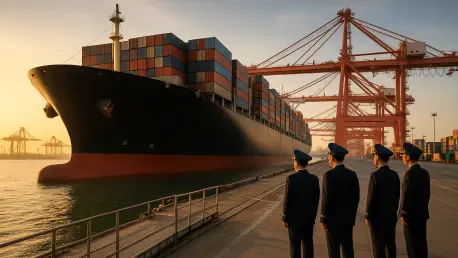
Article 12 was once viewed by many in the legal community as a “paper tiger”—a symbolic statement of sovereignty rather than a practical tool for litigation. That illusion was shattered by the 2024 case in the Nanjing Maritime Court, where a Chinese shipbuilder used Article 12 to secure an interim preservation order and arrest a vessel after a European counterparty withheld a payment of $11.86 million. Seeing a massive vessel physically seized and held in port provides a very visceral, sensory reminder that these laws have teeth. Then, the Shanghai Maritime Court took it a step further in a case that was later honored as a 2025 model maritime case, ruling that a Singaporean carrier’s refusal to deliver cargo was “discriminatory” even though the carrier claimed it was doing due diligence. What makes these cases so chilling for international lawyers is that the courts are increasingly treating Article 12 as an “overriding mandatory rule,” which means your carefully drafted choice-of-law clauses or Singaporean governing laws might be completely ignored by a Chinese judge if they feel a Chinese party’s rights have been harmed.
The Wingtech Technology v. Nexperia case involves a staggering RMB 8 billion. What does this litigation tell us about how Article 12 is expanding into the realm of corporate governance?
The Wingtech case is a watershed moment because it moves the battlefield from simple buyer-seller contract disputes into the very heart of corporate structure. We are looking at a scenario where a Chinese parent company is suing its own Dutch subsidiary and its senior management for $1.17 billion, alleging that their compliance with Dutch and U.S. export controls effectively stripped the parent company of control. Imagine the tension in those executive meetings, where management must decide whether to follow the judicial orders of the country where they are physically located or face a billion-dollar liability from their own shareholders in China. It is an extraordinary expansion of the law that treats compliance with foreign governmental security interventions as a “discriminatory measure.” This case signals that no corner of a multinational’s operations is safe; your own internal management decisions regarding economic security can now be the basis for massive civil damages.
How should a modern compliance officer distinguish between conduct that is legally required and conduct that is merely a result of internal risk appetite?
This is the most critical distinction in 2026, and getting it wrong can be a billion-dollar mistake. We often see firms reacting to a Chinese entity being placed on the BIS Entity List or the NS-CMIC List as if it were a total asset freeze, but these lists often only restrict specific things like U.S. technology access or securities trading. If a company treats an NS-CMIC listing as a reason to “absolutely refuse to perform any contract whatsoever,” they are engaging in over-compliance that is not legally mandated by the U.S. but is legally actionable under China’s Article 12. You have to look at the specific sanctions program; for instance, even an SDN designation—the “death penalty” of sanctions—often comes with a 30-day wind-down period via general licenses. If you cut ties on day one without utilizing that 30-day window to fulfill outstanding obligations, you are effectively choosing to invite a lawsuit in China that you could have potentially avoided through a more surgical, informed approach.
With the “double-bind” of conflicting laws becoming more common, what specific changes must be made to the drafting of sanctions clauses in international trade agreements?
The era of the “automatic exit” sanctions clause is over; these clauses must evolve from blunt instruments into sophisticated tools for managing conflict. First, we are advising clients to include express reservations stating that neither party is required to violate any applicable mandatory law, which must now explicitly include China’s AFSL and Blocking Rules. Second, the contract should create a proactive obligation to seek lawful alternatives—such as applying for an OFAC specific license or a Chinese Ministry of Commerce exemption—before any performance is suspended. We are moving toward a standard where a party only gets relief from liability if performance is “objectively prohibited” after all reasonable efforts to find a legal solution have been exhausted. It’s about moving away from the “concern” of a sanctions risk and requiring a “definite” legal barrier, verified by expert assessment, so that the decision to stop performance isn’t seen as a discretionary, discriminatory act by a Chinese court.
What is your forecast for the future of global trade compliance as these legal regimes continue to diverge?
I forecast a period of intense legal “de-risking” where we will see an increase in the use of anti-suit injunctions and a fierce battle over the recognition of foreign arbitral awards. As Chinese courts continue to assert that Article 12 overrides foreign forum selection clauses, we are going to see a rise in “parallel litigation” where a company is being sued in London or New York to stop performance while simultaneously being sued in Nanjing or Dongguan to compel it. Businesses will likely start restructuring their payment flows and asset locations to minimize their “surface area” for seizure in any one jurisdiction. Ultimately, the successful firms of the next few years won’t be those with the strictest sanctions policies, but those with the most agile legal teams who can navigate the narrow strait between Western enforcement and Chinese counter-sanctions without running aground on either shore.