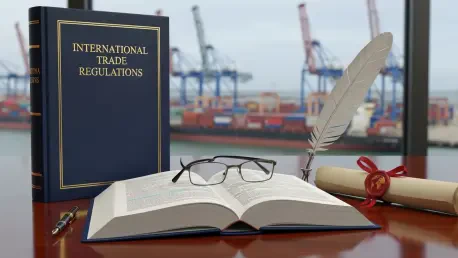

The global marketplace has undergone a seismic shift as trade compliance transformed from a routine administrative checklist into the primary frontline of American national security and economic statecraft. This evolution has fundamentally altered how multinational corporations view their supply chains and regulatory obligations. No longer is a failure in customs documentation merely an accounting error; it is now framed as a potential breach of the security architecture that protects the technological and economic sovereignty of the nation. In this environment, the traditional barriers between commercial interests and defensive strategy have dissolved, creating a reality where every cross-border transaction carries the weight of geopolitical consequence.
The New Frontier of Global Commerce and National Security
The Shift Toward Economic Statecraft
The transition of trade enforcement from a regulatory administrative task to a core pillar of national security represents the most significant policy pivot in recent decades. Throughout the previous year and into the current cycle, federal authorities have increasingly utilized economic tools to achieve objectives that were once the exclusive domain of traditional diplomacy or military deterrence. This strategy of economic statecraft recognizes that in a globalized world, the control of capital flows, intellectual property, and high-tech hardware is just as critical as territorial integrity. Consequently, the Department of Justice has repositioned its priorities to treat trade-related offenses with the same urgency as counter-intelligence operations, signaling to the global market that the cost of non-compliance now includes the risk of severe criminal prosecution.
This doctrinal shift has forced a total re-evaluation of corporate risk profiles. Organizations that previously viewed export controls as a technical hurdle now see them as a existential threat to their license to operate. The focus has moved beyond simple prohibition to a more nuanced strategy of strategic decoupling and technological containment. By leveraging the power of the domestic market and the global dominance of the dollar, the government has created an enforcement regime that requires companies to act as the first line of defense against the proliferation of sensitive technologies to adversarial states.
The Integrated Enforcement Ecosystem
A hallmark of the current era is the synchronized effort between the Department of Justice, the Bureau of Industry and Security, the Office of Foreign Assets Control, and U.S. Customs and Border Protection. This integrated enforcement ecosystem ensures that information is no longer siloed within individual agencies. Instead, a tip received by a port inspector in Long Beach can quickly trigger a multi-agency investigation involving financial analysts at the Treasury and criminal prosecutors in Washington. This level of coordination has created a “seamless web” of oversight that monitors global value chains from the point of raw material extraction to the final delivery of finished goods.
The collaborative nature of this ecosystem is most evident in the way data is shared and utilized. When a company is flagged for a potential sanctions violation, the investigation now automatically expands to include export control compliance and customs valuation accuracy. This holistic approach prevents entities from exploiting the gaps that previously existed between different regulatory bodies. As a result, the legal and operational costs for businesses have risen, as they must now satisfy multiple masters whose interests—while aligned—often involve different evidentiary standards and reporting requirements.
Technological and Regulatory Synergy
The marriage of advanced data analytics and new executive mandates has fundamentally reshaped the compliance landscape for multinational corporations. The government has invested heavily in artificial intelligence and machine learning tools that can identify patterns of trade fraud and sanctions evasion that were previously invisible to human auditors. These technological advancements allow regulators to analyze billions of trade data points in real-time, identifying anomalies in shipping routes, pricing structures, and ultimate end-user certifications. This proactive stance has moved enforcement away from a reactive model to one that is increasingly predictive and preemptive.
Furthermore, a series of executive mandates has granted these agencies broader authority to intervene in transactions that pose a risk to the national interest. These mandates have created a regulatory environment where the burden of proof has shifted toward the private sector. Companies are now expected to possess the same level of technological sophistication as the regulators who monitor them. The synergy between high-tech surveillance and expanded legal power means that ignorance of a supply chain’s deep-tier vulnerabilities is no longer an acceptable defense in the eyes of federal investigators.
Key Industry Segments Under Scrutiny
High-risk sectors, particularly semiconductors and electronic design automation, find themselves under the most intense microscope in the history of international trade. Because these technologies form the backbone of modern military and industrial power, they have become the primary focus of export control regimes. The government’s goal is to maintain a “sliding scale” of technological dominance, ensuring that adversaries remain several generations behind in computing power. This has led to the implementation of “choke point” controls that target not just the finished chips, but the very software and machinery required to design and manufacture them.
Beyond hardware, digital financial platforms have also emerged as a critical sector for enforcement. As decentralized finance and automated trading systems become more prevalent, regulators are working to ensure that these platforms do not become conduits for money laundering or the financing of sanctioned entities. The scrutiny on these sectors reflects a broader understanding that the tools of modern commerce—from the algorithms used in EDA software to the ledgers of fintech startups—are the most contested territories in the current global conflict. Companies in these spaces are now required to maintain rigorous internal controls that are audited with the same frequency and intensity as those in the defense industry.
Emerging Trends and Market Projections
The Trade Fraud Task Force
The 2025 initiative to integrate Homeland Security and Commerce Department resources has matured into a formidable enforcement engine known as the Trade Fraud Task Force. This body was specifically designed to execute an “America First” policy by hunting down entities that seek to undermine domestic industries through illegal trade practices. The task force focuses heavily on identifying transshipment schemes where goods are routed through third countries to disguise their true origin and avoid anti-dumping or countervailing duties. By combining the boots-on-the-ground presence of customs officers with the investigative expertise of federal agents, the task force has significantly increased the detection rate of large-scale duty evasion.
The impact of this task force extends beyond the recovery of lost revenue. It serves as a deterrent against the systemic erosion of the domestic manufacturing base. By targeting the financial networks that profit from trade fraud, the government is making it clear that the era of turning a blind eye to “gray market” activities is over. The task force also works closely with international partners to harmonize enforcement standards, ensuring that those who attempt to bypass U.S. regulations do not find safe harbor in other jurisdictions.
Expansion of the False Claims Act
One of the more innovative developments in recent trade enforcement is the repurposing of the False Claims Act to target customs evasion. Traditionally used to combat fraud in government procurement, the FCA’s whistleblower-driven litigation model has proven remarkably effective in the trade space. Individuals with inside knowledge of a company’s fraudulent customs declarations can now file “qui tam” lawsuits on behalf of the government, often receiving a significant portion of the recovered funds as a reward. This has created a massive incentive for current and former employees, as well as competitors, to act as voluntary extensions of the federal enforcement apparatus.
This expansion of the FCA has led to a surge in litigation that targets complex schemes such as the misclassification of goods and the undervaluation of imports. Because the FCA allows for treble damages and significant per-claim penalties, the financial risk of being named in such a lawsuit can be catastrophic for a business. The trend reflects a broader move toward “crowdsourced” enforcement, where the government leverages the private sector’s own knowledge base to identify and punish wrongdoing that might otherwise remain hidden within the intricacies of global supply chains.
Targeting Business Gatekeepers
A strategic shift has occurred toward penalizing the “gatekeepers” of global commerce—the law firms, accountants, and investment consultants who facilitate transactions for sanctioned entities or facilitate trade fraud. Regulators have realized that illicit trade networks often rely on the expertise of professional service providers to create shell companies, navigate complex financial regulations, and mask the ultimate beneficial ownership of assets. By holding these professionals accountable, the government aims to strip away the “veneer of legitimacy” that allows illicit actors to access the global financial system.
This focus on gatekeepers has sent shockwaves through the professional services industry. Firms are now required to conduct much deeper due diligence on their clients, often going far beyond standard “know your customer” protocols. The threat of being charged with aiding and abetting sanctions violations or money laundering has led many firms to exit high-risk markets or decline engagements with clients who have opaque ownership structures. This “de-risking” by professional service providers acts as a powerful auxiliary enforcement mechanism, making it increasingly difficult for problematic entities to find the legal and financial support they need to operate.
Record-Breaking Financial Penalties
The trajectory of civil and criminal fines has reached historic highs, with landmark settlements in the semiconductor and software industries setting new precedents for corporate liability. These massive penalties are no longer seen as just a cost of doing business; they are designed to be punitive and transformative. When a company is hit with a nine-figure fine, it often comes with a requirement for the appointment of a government-approved monitor and a total overhaul of the corporate compliance department. This aggressive approach to sentencing reflects the government’s view that financial penalties must be high enough to change corporate culture across entire industries.
Analysis of recent settlements shows that the government is particularly focused on “willful blindness” and the failure to act on internal red flags. Companies that ignore their own compliance officers or bypass internal controls to chase short-term profits are being singled out for the most severe treatment. These record-breaking fines serve as a clear warning that the financial rewards of cutting corners in international trade are vastly outweighed by the potential penalties. In this environment, the “compliance premium”—the cost of doing things the right way—is seen as a necessary and prudent investment in long-term stability.
The Volatility of Tariff Revenue
The suspension of the de minimis rule and the fallout from the Learning Resources judicial ruling have created significant volatility in tariff revenue projections. For years, the de minimis exemption allowed billions of dollars in low-value shipments to enter the country duty-free, creating a massive loophole that was exploited by foreign e-commerce giants. The removal of this exemption has led to a dramatic increase in the volume of entries that must be processed and taxed, straining the resources of customs authorities but also providing a substantial boost to federal coffers.
However, the legal uncertainty surrounding the use of certain tariff authorities has created a counteracting force. Following high-profile court challenges to the President’s authority to levy emergency duties, many importers are filing for refunds, leading to potential billions in duty clawbacks. This tug-of-war between expanded enforcement and judicial oversight has made it difficult for businesses to predict their landed costs with any certainty. The volatility in this space underscores the ongoing struggle to define the constitutional limits of executive power in the realm of international trade.
Investment Screening Intensity
Forecasting for the coming months suggests a definitive move from mitigation agreements to outright blocks in reviews conducted by the Committee on Foreign Investment in the United States. In the past, CFIUS often allowed foreign acquisitions of domestic companies to proceed if the parties agreed to certain security conditions, such as fire-walling sensitive data or maintaining a board of directors with U.S. citizens. Today, however, the government is increasingly skeptical of these “paper promises,” believing that they are too difficult to monitor and enforce in the long run.
The current trend is toward a “zero-trust” model for investments originating from designated adversarial nations. Instead of trying to manage the risk of a foreign entity owning a critical piece of technology, regulators are choosing to prevent the ownership altogether. This heightened intensity in investment screening is particularly evident in the telecommunications, energy, and biotech sectors. For multinational corporations, this means that the pool of potential buyers or partners is shrinking, and the time required to close a cross-border deal has extended significantly due to the rigorous and often opaque nature of the review process.
Navigating the Complexities of Modern Trade Compliance
The Substantial Transformation Conflict
A major point of legal friction has emerged between traditional customs origin rules and the more stringent export control determinations used by the Bureau of Industry and Security. For decades, the “substantial transformation” test was the gold standard for determining a product’s country of origin—essentially, where the product last underwent a process that changed its name, character, or use. However, current export control logic often ignores this transformation if the product contains even a small amount of sensitive U.S.-origin technology. This conflict has left many manufacturers in a state of regulatory limbo, where a product might be considered “Made in Vietnam” for tariff purposes but “U.S.-Origin” for export licensing requirements.
This discrepancy creates a massive compliance burden, as companies must maintain two separate sets of records for the same product. Moreover, regulators have signaled that they will no longer allow companies to use “country-hopping” as a way to “wash” the U.S. origin out of a product. If a high-end semiconductor is designed in California, it remains subject to U.S. jurisdiction regardless of whether it is assembled in Malaysia or packaged in Taiwan. Navigating this conflict requires a deep understanding of the subtle differences in agency interpretations and a proactive approach to obtaining formal rulings from both Customs and the Department of Commerce.
Supply Chain Traceability Burdens
The operational challenges of documenting raw material origins have intensified to satisfy tightening evidentiary standards under the Uyghur Forced Labor Prevention Act. It is no longer enough for a company to know its direct supplier; they must now possess detailed records for the second, third, and even fourth tiers of their supply chain. This “bottom-up” traceability requirement has forced companies to invest in sophisticated supply chain mapping technologies and to conduct intrusive audits of their global partners. The burden of proof is high, and a single shipment of cotton, polysilicon, or tomatoes can be detained at the border if there is even a suspicion that it was produced using forced labor.
This level of scrutiny has led to a fundamental restructuring of many global supply chains. Companies are increasingly “near-shoring” or “friend-shoring” their production to countries where labor practices are more transparent and easier to verify. The cost of this shift is significant, as it often involves moving away from the most efficient or low-cost manufacturing hubs. However, the risk of having millions of dollars in inventory seized at the port of entry has made supply chain integrity a top priority for corporate boards and risk managers alike.
Digital Platform Vulnerabilities
High-volume automated services face a unique set of challenges as they attempt to reconcile rapid transaction speeds with rigorous sanctions screening. In the world of e-commerce and fintech, where thousands of transactions occur every second, traditional manual compliance checks are impossible. This has created a vulnerability that illicit actors are quick to exploit, using aliases, VPNs, and fragmented payment methods to bypass automated filters. Regulators have recently taken a hard line on this issue, stating that the speed of a transaction is no excuse for a failure to screen the parties involved properly.
To address these vulnerabilities, platforms are increasingly turning to advanced identity verification and behavioral biometrics. By analyzing the “digital fingerprint” of a transaction—where it originates, how the user interacts with the site, and the history of the payment method—companies can identify high-risk activity without slowing down the experience for legitimate customers. However, the cat-and-mouse game between platform developers and sanctions evaders continues to escalate. The legal expectation is that these platforms must not only implement screening tools but also constantly tune them to catch the latest evasion techniques, a task that requires significant ongoing investment in engineering and compliance resources.
The Litigation Wave
The Supreme Court’s recent limitations on executive tariff authority under the IEEPA have sparked a massive wave of litigation that is currently working its way through the federal courts. For years, the executive branch exercised broad power to impose duties and trade restrictions by declaring national emergencies. The court’s move to rein in this authority has created an opening for thousands of importers to challenge the legality of billions of dollars in tariffs paid during recent years. This uncertainty has created a complex strategic environment for companies, many of which are now hedging their bets by filing “protective” lawsuits to preserve their right to a refund if the courts continue to rule against the government.
Beyond the financial stakes, this litigation wave is also a battle over the future of trade policy itself. If the President’s ability to act unilaterally is permanently curtailed, the responsibility for trade enforcement will shift back toward Congress and more traditional, slower-moving regulatory processes. This could lead to a more stable but less flexible trade environment. In the meantime, the ongoing legal battles serve as a reminder that the rules of international trade are not just set by bureaucrats in Washington, but also by judges who are increasingly concerned with the constitutional balance of power.
The Evolving Regulatory and Legal Landscape
Modernized Corporate Enforcement Policies
The standardization of voluntary self-disclosure and whistleblower incentives in early 2026 marked a new era in the relationship between the government and the private sector. The Department of Justice has made it clear that the most effective way for a company to avoid a “corporate death penalty” is to come forward and report its own violations before they are discovered by federal agents. Under the new guidelines, companies that voluntarily disclose, cooperate fully, and implement meaningful remediation can expect significantly reduced fines and a presumption of non-prosecution. This “carrot-and-stick” approach is designed to turn corporate compliance departments into the government’s eyes and ears inside the global market.
However, the bar for “cooperation” has been set extremely high. To receive full credit, companies must provide all relevant facts about the individuals involved in the misconduct, a requirement that can create significant tension between the firm and its employees. The introduction of standardized whistleblower awards has further complicated this dynamic, as employees now have a financial incentive to report violations directly to the government rather than through internal company channels. This shift requires organizations to foster a culture of transparency where employees feel comfortable raising concerns internally, as any delay in self-reporting could lead to a total loss of cooperation credit.
The Affiliates Rule and Ownership Transparency
Navigating the complexities of the 50 Percent Rule has become even more difficult with its expansion into the realm of export controls through the “Affiliates Rule.” Historically, sanctions applied to any entity owned 50% or more by a blocked person. Now, the Bureau of Industry and Security has adopted a similar stance for its restricted party lists. This means that if a listed entity has a majority stake in a subsidiary, that subsidiary is effectively “tainted” and subject to the same export restrictions as its parent, regardless of whether it is specifically named on a government list.
This focus on ownership transparency has made the task of “knowing your customer” much more demanding. Companies can no longer rely on simple list-matching; they must conduct deep-dive research into the ultimate beneficial ownership of their counterparties. In many jurisdictions, this information is intentionally obscured through layers of shell companies and offshore trusts. The regulatory expectation, however, is that U.S. exporters will uncover these relationships or refrain from doing business altogether. The expansion of this rule represents a direct assault on the “corporate veil” often used by adversarial states to gain access to sensitive Western technologies.
Executive Orders and Terrorism Designations
A significant shift in investigative tactics has occurred following the designation of several transnational criminal organizations as terrorist entities. This move was not merely symbolic; it unlocked a broad array of investigative powers and legal statutes that were previously reserved for counter-terrorism operations. For trade enforcement, this means that the government can now use “material support” statutes to prosecute those who facilitate the logistics or finances of these groups. This has proven particularly effective in targeting the networks involved in the illicit trade of chemical precursors and the laundering of drug proceeds through international trade.
The use of these designations reflects an understanding that the lines between traditional crime, terrorism, and state-sponsored disruption have blurred. By framing trade fraud in the context of global terrorism, the government can leverage more aggressive surveillance tools and seek harsher penalties for offenders. For businesses, this means that the “counter-party risk” now includes the possibility of being swept up in a terrorism investigation if their supply chains are infiltrated by elements of these designated organizations. The need for rigorous, intelligence-led due diligence has never been more critical.
Forced Labor as a Trade Barrier
The role of the UFLPA and new bilateral agreements has effectively turned labor standards into a major non-tariff trade barrier. By integrating forced labor provisions into trade deals with nations in Southeast Asia, the government is “exporting” its enforcement standards to key transshipment hubs. These agreements often require partner nations to implement their own monitoring systems and to share data on labor practices with U.S. authorities. This creates a multi-layered defense that attempts to stop the flow of forced-labor goods long before they reach American shores.
This trend has transformed the way companies manage their ethical responsibilities. Compliance with labor standards is no longer just a matter of corporate social responsibility; it is a hard legal requirement for market entry. As more countries adopt these standards to maintain their trade status with the U.S., a new global norm is emerging. For multinational corporations, this means that the cost of labor is no longer just the wage paid to the worker, but also the cost of verifying that every hour of work was performed voluntarily. The impact on global manufacturing is profound, as companies shift production away from regions where such verification is impossible.
The Future of International Trade and Investment
From Mitigation to Divestiture
Looking toward the coming years, the restrictive environment created by the Committee on Foreign Investment in the United States is expected to favor mandatory unwinding over traditional mitigation agreements. The government has become increasingly convinced that “foreign adversary” investments in sensitive sectors represent a persistent threat that cannot be managed through oversight alone. Consequently, many foreign investors who acquired stakes in U.S. tech firms during more permissive eras are now facing orders to divest their holdings. This retroactive enforcement has created a sense of “regulatory whiplash” in the venture capital and private equity communities.
The shift toward divestiture as a primary tool sends a clear signal that the U.S. is prioritizing the integrity of its innovation ecosystem over the free flow of international capital. This has led to a significant “cooling effect” on cross-border M&A activity involving entities with even tangential links to adversarial states. Companies are now conducting “pre-CFIUS” audits before even entering into negotiations, and many deals are being abandoned before a formal filing is ever made. The future of high-tech investment is likely to be characterized by “walled gardens,” where capital and technology only move between trusted allies.
The End of De Minimis Exemptions
The permanent shift away from low-value shipment exemptions is poised to transform the global e-commerce business model. For years, the ability to ship goods directly to consumers without paying duties or filing formal entries was the secret sauce of many international retailers. With the “de minimis” loophole effectively closed, these companies must now navigate the full complexity of the customs process for every single package. This has led to increased prices for consumers and a massive logistical challenge for carriers who must now collect and remit duties on millions of small-value items.
This change is not just about revenue; it is about visibility. By requiring formal entries for these goods, the government gains a much clearer picture of what is entering the country and from whom. This makes it much harder for illicit actors to use small-parcel shipping to bypass sanctions or flood the market with counterfeit or unsafe products. While the e-commerce sector is currently struggling to adapt, the long-term result will likely be a more professionalized and transparent industry, albeit one with higher barriers to entry for small-scale international sellers.
The Pivot to Alternative Tariff Authorities
As judicial roadblocks limit the use of emergency powers, the anticipated use of Section 122 and Section 301 of the Trade Act of 1974 represents a strategic pivot in tariff policy. Section 301, which targets “unreasonable or discriminatory” trade practices, has a long history and a more established legal foundation, making it a more resilient tool against court challenges. Section 122, which allows for temporary surcharges to address balance-of-payments issues, is also being dusted off as a way to manage trade deficits under the guise of economic stability.
This reliance on alternative authorities means that trade policy will become increasingly focused on specific bilateral disputes rather than broad, emergency-based actions. For businesses, this means that the “tariff map” will become more granular and targeted. A company may find that its products are subject to a surcharge not because of a national emergency, but because of a specific disagreement over digital services taxes or intellectual property rights in a partner nation. Staying ahead of these shifts requires a sophisticated government relations strategy and the ability to pivot supply chains in response to shifting political priorities.
Technological Sovereignty
The role of innovation in compliance has reached a point where “technological sovereignty” is now a competitive advantage. Companies that can demonstrate blockchain-verified supply chains or AI-driven real-time sanctions screening are finding it easier to secure government contracts and avoid regulatory delays. This pivot toward “clean” supply chains is creating a new market for compliance-tech providers, who are now seen as essential partners for any firm operating in the international arena. The goal for many corporations is to reach a state where their compliance data is so robust and transparent that it becomes a “trusted trader” credential in its own right.
This focus on sovereignty also extends to the data itself. Concerns over “data localization” and the influence of foreign governments on digital infrastructure are driving companies to seek out domestic or allied-nation hosting for their most sensitive compliance and operational information. The future of trade will be defined by these digital borders, where the security of the data is just as important as the security of the physical goods. In this environment, the most successful companies will be those that view compliance not as a cost center, but as a strategic technology investment that enables them to operate in a high-risk world.
Summary of Findings and Strategic Recommendations
The consolidation of federal power throughout the previous cycle has made trade fraud virtually indistinguishable from national security threats. The Department of Justice and its sister agencies have successfully reframed the conversation, moving it away from administrative compliance and toward the defense of the state. This has resulted in an enforcement landscape that is more aggressive, better coordinated, and more technologically advanced than at any time in history. The government has proven that it is willing to use every tool in its arsenal—from the False Claims Act to counter-terrorism statutes—to protect the integrity of the U.S. economy and its technological lead over adversaries.
The most important takeaway for the international business community is that proactive due diligence and self-correction are no longer optional; they are the only viable path for participation in the global market. Companies that wait for a subpoena to address their vulnerabilities are likely to find themselves facing crippling fines and potential exclusion from the U.S. financial system. The “America First” enforcement machine is now fully operational, and it values transparency and cooperation above all else. Organizations must empower their compliance officers, invest in the latest screening technologies, and be prepared to make difficult decisions about their partnerships and supply chains to remain on the right side of this new regulatory reality.
From an investment perspective, the outlook remains positive for those who can navigate these complexities. There are significant opportunities for growth in compliance technology and “clean” logistics, as the demand for verifiable supply chains continues to rise. However, the days of easy, high-risk growth in adversarial markets are largely over. Capital is flowing toward “friend-shored” manufacturing hubs and sectors that are aligned with the national security priorities of the U.S. and its allies. The most resilient investment strategies are now those that incorporate a deep understanding of geopolitical risk and a commitment to maintaining a pristine regulatory record.
The “America First” enforcement machine has fundamentally reset the expectations for global trade stability. While the transition has been marked by litigation and operational friction, the resulting framework provides a much clearer set of rules for those who wish to do business in the United States. The era of the “globalized free-for-all” has been replaced by a more disciplined and scrutinized trade environment where security and economics are inextricably linked. For those who can master the complexities of this new landscape, the rewards of participating in the world’s most powerful economy remain as significant as ever, provided they are willing to play by the new, more rigorous rules of the game.