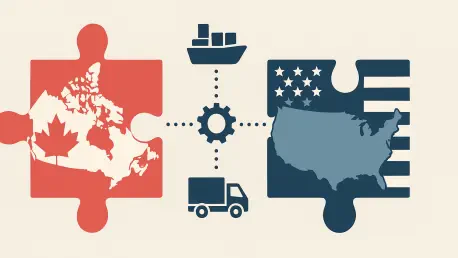

The long-standing economic partnership between Canada and the United States has recently faced unprecedented volatility due to a series of aggressive trade maneuvers that test the very limits of constitutional law and international diplomacy. This bilateral relationship, one of the largest and most complex in the world, facilitates nearly three billion dollars in daily trade, sustaining millions of jobs across North America. For decades, the two nations have operated as a singular economic unit, sharing values, security goals, and a commitment to market-driven prosperity. However, the recent introduction of protectionist measures has forced a re-evaluation of these foundational ties, as businesses on both sides of the border grapple with the uncertainty of a fractured trade landscape.
The integration of supply chains is particularly evident in the energy, automotive, and consumer goods sectors, where components often traverse the border multiple times before reaching a final consumer. In the automotive industry, for example, a single part might be cast in Ontario, machined in Michigan, and assembled in Mexico, illustrating a level of interdependence that is difficult to untangle without significant economic loss. Energy flows follow a similar pattern, with Canadian crude and electricity serving as vital inputs for American industrial hubs. This deep-seated integration means that any disruption, whether through tariffs or regulatory hurdles, creates a ripple effect that touches every level of the economy, from multinational corporations to local service providers.
Technological advancements have further tightened these bonds, as digitized logistics and just-in-time manufacturing processes require seamless border transitions. Modern tracking systems and AI-driven supply chain management have made it possible to monitor goods in real-time, but they also highlight the immediate financial impact of border delays and unexpected costs. As these technologies become more prevalent, the friction caused by political shifts becomes more visible and quantifiable. The primary market players, including manufacturing giants and agricultural cooperatives, are now forced to navigate a regulatory environment that is increasingly characterized by executive-led disruptions rather than the predictable rules-based order of the past.
Emerging Shifts in Protectionist Policy and Trade Performance
Trends Defining the New Era of Trade Friction
A noticeable rise in executive-led protectionism has signaled a significant departure from the multilateral trade agreements that defined the previous three decades. This shift toward unilateral action reflects a broader trend of prioritizing short-term domestic political gains over long-term regional stability. The movement away from established norms has created a climate where executive orders can suddenly upend decades of trade policy, leaving businesses and legal experts scrambling to respond. Consequently, the public has become increasingly aware of the direct correlation between these trade barriers and the rising costs of consumer goods, leading to a shift in consumer behavior and a growing skepticism toward tariff-induced inflation.
Emerging technologies in supply chain tracking now provide empirical evidence of the immediate costs associated with border disruptions, allowing advocacy groups to present a clear case for the damage caused by tariffs. This transparency has fostered a new era of cross-border cooperation between Canadian provinces and American states, as local leaders realize that their regional economies are more closely aligned with their neighbors across the border than with the protectionist agendas of their respective federal capitals. These alliances offer a glimmer of hope for a diplomatic realignment that could eventually bypass the current executive impasse and restore a sense of predictability to North American commerce.
Market Data and Projections Under Tariff Volatility
Trade volume fluctuations following the 2025 tariff enactments revealed a sharp contraction in bilateral exchange, particularly in highly integrated sectors like industrial chemicals and motor vehicles. While some recovery has been observed in early 2026, the overall trajectory remains sensitive to the outcome of ongoing judicial reviews. Growth projections for the 2026 to 2028 period suggest a cautious expansion, provided that legal challenges successfully curtail the executive’s power to impose further unilateral restrictions. However, the private sector continues to feel the weight of $166 billion in “lag time” collection impacts, representing funds that were tied up in illegal tariff payments during lengthy litigation processes.
Forward-looking forecasts indicate that the post-2026 trade environment will be defined by the judiciary’s willingness to uphold constitutional limits on taxing authority. If current trends in the U.S. Court of International Trade continue, the reliance on outdated statutes for modern protectionism is likely to diminish, creating a more stable foundation for long-term investment. Nevertheless, sectors such as automotive parts manufacturing are expected to face continued volatility as they adjust to new compliance requirements and the potential for sudden policy shifts. The resilience of these industries will depend on their ability to diversify supply chains and leverage legal protections to mitigate the risks of future executive overreach.
Navigating Complex Obstacles in the Bilateral Relationship
The clash between zero-sum trade philosophies and the reality of an integrated North American economy has created a significant dilemma for policymakers. While some view trade as a competition where one nation’s gain is another’s loss, the practical reality of the Canada-US relationship is one of shared prosperity. When one side imposes tariffs, it effectively taxes its own manufacturers who rely on imported inputs, thereby reducing their global competitiveness. This fundamental misunderstanding of economic integration continues to drive a wedge between the two nations, complicating efforts to reach a consensus on trade standards and border management.
Just-in-time delivery systems, which are essential for modern industrial efficiency, are particularly vulnerable to the logistical challenges posed by border interruptions. Even a minor delay at a crossing like the Ambassador Bridge can lead to factory shutdowns and millions of dollars in lost productivity within hours. Furthermore, the dilemma of retaliatory measures has become a central point of contention in Ottawa. While there is a natural political impulse to respond to American tariffs with counter-measures, such actions may inadvertently validate the legal pretexts used by the U.S. executive branch. Canadian strategies for mitigating harm must therefore focus on judicial persistence and cross-border advocacy rather than engaging in a self-destructive cycle of trade retaliation.
The Legal Battlefield: Statutes, Standards, and Executive Limits
The use of the International Emergency Economic Powers Act (IEEPA) to impose tariffs has faced intense scrutiny for its potential violation of constitutional limits. Originally designed to address urgent national security threats, the act was recently used as a tool for border control and trade leverage, a move that the U.S. Supreme Court ultimately found to be an overextension of executive authority. The judiciary emphasized that the power to tax imports is a legislative function that cannot be unilaterally seized by the president under the guise of an indefinite emergency. This ruling has set a critical precedent, reinforcing the idea that the executive branch must operate within the boundaries of clearly defined congressional intent.
In a similar vein, the decline of Section 122 of the Trade Act of 1974 reflects a judicial rejection of balance-of-payments justifications in a modern era of flexible exchange rates. When the administration attempted to use this dormant provision to justify broad protectionism, the courts were quick to point out that it was never intended to grant the president virtually unlimited power over trade. Moreover, regulatory scrutiny has intensified around Section 301 investigations that have been characterized by some legal experts as “shams” designed to bypass previous court losses. These investigations, often centered on forced labor allegations, are being challenged by small business groups and state governments who argue that the executive is attempting to circumvent established trade laws.
The revival of Section 338 of the Smoot-Hawley Act has also brought the “Major Questions Doctrine” to the forefront of trade litigation. This doctrine posits that if an executive agency or official seeks to decide an issue of vast economic and political significance, it must have clear authorization from the legislature. Because Section 338 has been essentially dormant since the Great Depression, its sudden application to modern trade disputes is seen by many as a stretch of legal logic. Meanwhile, the financial burden of non-refundable tariff payments remains a significant concern for the private sector. The cost of compliance and the inability to recoup funds lost during litigation have underscored the need for a more efficient judicial stay mechanism to protect businesses from the irreparable harm of illegal trade policies.
Future Horizons: Restoring Stability in North American Commerce
As the political cycle moves toward a new phase, there is significant potential for legislative trade reform during the upcoming months. Members of Congress from both parties have expressed interest in reclaiming their constitutional authority over trade, a move that could permanently limit the executive branch’s ability to act unilaterally. This shift toward increased oversight would provide a much-needed stabilizer for the North American market, ensuring that any future trade adjustments are the result of deliberate legislative debate rather than sudden executive decrees. Moreover, the integration of new technologies at the border, such as AI-enhanced customs processing and blockchain-based origin tracking, could eventually replace blunt tariff instruments with more targeted and efficient regulatory tools.
The potential for an updated CUSMA framework remains a key priority for those seeking to protect the bilateral relationship from future disruptions. Such an update could include provisions for immediate-effect judicial stays on tariffs that are found to be illegal, preventing the “lag time” collection of funds that has so severely impacted private industry. By establishing a more robust legal framework within the trade agreement itself, both nations could ensure that their economic ties are shielded from political volatility. Ultimately, the role of public opinion will serve as a vital stabilizer, as the vast majority of citizens in both countries continue to view the other as a critical ally and partner rather than a competitor.
Strategic Synthesis and the Path Toward Economic Resilience
The findings of this report highlighted the remarkable resilience of the economic ties between Canada and the United States, despite repeated attempts to disrupt them through executive overreach. The analysis showed that the fundamental strength of the North American supply chain often outweighed the temporary damage caused by protectionist measures. It was observed that the failure of various legal justifications in U.S. courts provided a necessary check on executive power, reinforcing the importance of a rules-based trading environment. The report also suggested that the most effective response for Canadian policymakers was to prioritize judicial challenges and cross-border alliances over the impulse to implement retaliatory tariffs.
The evidence presented in the report indicated that the American public and the business community remained largely supportive of a strong relationship with Canada. By focusing on legal persistence and legislative reform, both nations moved closer to restoring a predictable environment for trade and investment. The analysis concluded that the period of tariff volatility served as a wake-up call, prompting a renewed focus on the constitutional boundaries of trade policy. Canadian officials found that by aligning with American states and industries harmed by the tariffs, they could build a powerful coalition for stability. The report finally noted that as these legal battles concluded, the path was cleared for a new era of cross-border investment and economic cooperation.