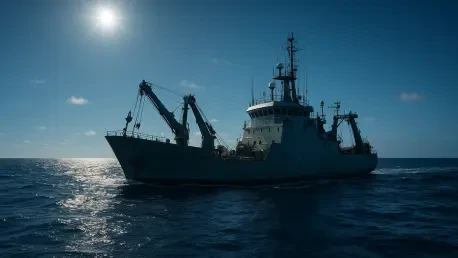

The vast expanse of the Pacific Ocean has long served as a lifeline for Taiwan’s economy, yet a sudden shift in international labor standards is currently threatening to dismantle the very foundations of its maritime heritage. This island nation, ranked as one of the premier fishing powers on the planet, finds itself at a critical juncture where the demands of global human rights advocacy intersect with the harsh economic realities of the sea. The introduction of “zero-fee” recruitment policies, primarily driven by the Agreement on Reciprocal Trade (ART), has created a complex environment for vessel owners who have historically operated on razor-thin margins. As the industry navigates these turbulent waters, the focus has shifted from mere catch volumes to the ethics of the supply chain.
The current situation is defined by a deep tension between the necessity of reform and the feasibility of its implementation. While the manufacturing sector in Taiwan has successfully adopted fair hiring practices, the decentralized and often family-run fishing industry is finding the transition significantly more difficult. The reliance on a foreign workforce is not merely a preference but a structural necessity, as local labor pools have largely evaporated in favor of land-based employment. Consequently, the industry is forced to reconcile its traditional operational models with a modern, transparent framework that places the financial burden of recruitment entirely on the employer.
Navigating the Global Tide: An Overview of the Taiwanese Maritime Sector
A Pillar of International Seafood Markets
Taiwan’s maritime industry is a sophisticated dual-tier system that supports both a massive distant-water fleet and a vibrant coastal fishing sector. The distant-water fleet operates across every major ocean, targeting high-value species like tuna and squid to supply the premium markets of Japan, the United States, and the European Union. This global reach ensures that Taiwan remains a central node in the international seafood trade, providing a significant percentage of the world’s sashimi-grade fish and processed seafood products.
In contrast, the coastal and offshore sectors focus on local consumption and the domestic supply chain, utilizing smaller vessels that stay within the Exclusive Economic Zone. These operations are often the cultural and economic backbone of rural coastal communities, providing jobs and sustaining local markets. Together, these two tiers form a comprehensive industry that generates billions in annual revenue, though the internal pressures of each tier vary greatly depending on their target markets and operational scales.
The Engine of Migration
The structural integrity of this vast maritime network depends almost entirely on the labor of more than 32,000 migrant workers, predominantly from Indonesia, the Philippines, and Vietnam. These fishers perform the grueling, often dangerous work that is no longer attractive to the domestic Taiwanese workforce. Without this transnational labor force, the majority of the fleet would remain docked, as the aging local population and the shift toward service-oriented careers have left a void that only foreign recruitment can fill.
This dependency has transformed Taiwanese fishing ports into multicultural hubs where the survival of a local family business is inextricably linked to the economic aspirations of workers from Southeast Asia. This relationship, however, has historically been lopsided, with workers bearing the brunt of recruitment costs and debt. The current shift in policy aims to rectify this imbalance, yet it simultaneously creates a new set of challenges for the employers who must now find ways to finance these entries into the workforce.
Technological and Geopolitical Shifts
The maritime sector is currently grappling with the dual pressures of fluctuating fuel prices and diminishing marine yields, both of which are exacerbated by broader geopolitical instability. High fuel costs, often driven by conflicts in the Middle East and international trade sanctions, represent a significant portion of a vessel’s overhead, sometimes making the difference between a profitable trip and a financial loss. Moreover, the long-term trend of declining fish stocks due to climate change and overfishing has forced vessels to travel further and stay at sea longer to achieve the same catch volumes.
In response to these challenges, there is a growing push for the adoption of modern maritime monitoring technology and improved vessel efficiency. Electronic monitoring systems, satellite tracking, and more efficient engine designs are being integrated into the fleet to optimize operations and comply with international conservation standards. However, the high cost of these technological upgrades, when combined with rising labor expenses, places a heavy burden on smaller operators who lack the capital of large maritime corporations.
The Regulatory Framework
A complex web of domestic laws and international treaties governs labor standards and fishing rights within Taiwan’s maritime jurisdiction. The Fisheries Agency, under the Ministry of Agriculture, serves as the primary regulatory body responsible for enforcing compliance with both environmental and labor mandates. Domestic regulations have been steadily updated to align with the International Labor Organization (ILO) standards, particularly the Work in Fishing Convention, which seeks to ensure decent working conditions and fair treatment for all crew members.
Despite these efforts, the enforcement of labor standards remains a significant hurdle, particularly on the high seas where monitoring is difficult. The intersection of Taiwan’s domestic Labor Standards Act and specialized fisheries regulations often creates a fragmented legal landscape. While those working on coastal vessels are protected under certain domestic labor laws, distant-water fishers frequently fall into a separate legal category with different wage and protection minimums, creating a disparity that international observers are increasingly keen to address.
Shifting Currents in Labor Dynamics and Market Performance
Emerging Trends in Transnational Recruitment and Human Rights
From Debt Bondage to Fair Hiring
The movement toward fair hiring practices marks a significant departure from the traditional recruitment model, where migrant workers often paid thousands of dollars in fees to secure a job. These fees, which frequently led to years of debt bondage, are now being eliminated in favor of an employer-pays model. This transition is heavily influenced by the ILO’s General Principles and Operational Guidelines for Fair Recruitment, which argue that no worker should pay for their job and that recruitment costs should be a business expense rather than a worker’s burden.
The Manufacturing Influence
The maritime industry is currently feeling the ripple effects of labor reforms that began in the electronics and garment sectors. Global tech giants have long mandated that their Taiwanese suppliers adopt zero-fee policies to satisfy the ethical demands of international consumers. This corporate social responsibility model is now being forcibly applied to the fishing industry, though the economic structures of a high-tech factory and a small fishing boat are fundamentally different, leading to significant friction during the implementation process.
Digital Connectivity at Sea
One of the most notable trends in modern maritime labor is the increasing demand for digital connectivity and telemedicine for crews on distant-water vessels. In an age of instant communication, being isolated for months at a time without access to family or medical advice is no longer considered acceptable by international human rights groups. Modern vessels are increasingly equipped with satellite internet, allowing fishers to maintain social ties and receive remote medical consultations, which significantly improves mental health and safety during long voyages.
Economic Projections and Maritime Industry Performance Indicators
The Cost of Compliance
The financial shift required by the zero-fee policy is substantial, with recruitment fees often reaching 190,000 NTD per worker. For a small vessel owner, this represents a massive upfront investment that must be recovered through increased catch efficiency or higher seafood prices. This cost of compliance is currently the primary source of anxiety within the industry, as many owners feel that the government has mandated these changes without providing a clear path toward financial sustainability.
Market Growth vs. Profit Margins
While global demand for seafood continues to rise, this growth does not always translate into higher profit margins for individual vessel owners. The global market is highly competitive, and prices are often dictated by large international buyers who prioritize low costs. Consequently, even as the “green” and “ethical” seafood markets grow, the premiums paid by consumers rarely trickle down to the vessel owners who are absorbing the increased costs of labor and environmental compliance.
Forecasting Industry Consolidation
The current economic environment suggests a significant move toward industry consolidation. Small, family-run operations that cannot afford the high upfront costs of recruitment and technological upgrades are likely to be phased out. In their place, large-scale maritime corporations with deep pockets and economies of scale will dominate the landscape. These larger entities are better positioned to absorb the 190,000 NTD recruitment fee and invest in the necessary infrastructure to meet modern global standards.
Structural Obstacles and the Precarity of Small-Scale Operations
The fiscal death knell is ringing for many coastal vessel owners who find themselves trapped between skyrocketing overhead and stagnant fish prices. Unlike the distant-water fleet, coastal operators cannot easily move to more productive waters and are limited by the biological health of their local marine environment. As fish stocks dwindle, the number of trips required to break even increases, making any additional financial burden, such as recruitment fees, feel like an insurmountable obstacle to continued operation.
Furthermore, there is a clear policy mismatch between international trade mandates and the unique realities of the localized maritime economy. The zero-fee model was designed for large factories with stable production schedules and high profit margins, not for the unpredictable and seasonal nature of fishing. When a trade agreement mandates a “one-size-fits-all” approach, it often ignores the fact that a small fishing boat cannot simply raise its prices or automate its labor in the same way a manufacturing facility can.
This extreme financial pressure risks driving some employers toward desperate measures that could inadvertently compromise safety and labor welfare. If an owner is forced to pay exorbitant recruitment fees while facing declining revenues, they may be tempted to cut costs in other areas, such as vessel maintenance, food quality for the crew, or safety equipment. Paradoxically, a policy intended to protect workers could lead to a deterioration of their actual living and working conditions if the economic survival of the vessel itself is at stake.
The Agreement on Reciprocal Trade (ART) and the Regulatory Landscape
The zero-fee mandate is a core provision of the ART, representing a high-stakes trade-off between diplomatic recognition and industrial overhaul. Under this agreement, Taiwan has committed to prohibiting all recruitment and placement fees for migrant workers, effectively shifting the entire financial risk of labor migration to the employer. This provision is designed to eliminate the potential for forced labor and debt bondage, aligning Taiwan with the most stringent labor standards currently recognized by its major trading partners, particularly the United States.
However, the legal status of migrant fishers remains a point of contention, especially the distinction between domestic migrant fishers and the “exceptional” status of those in the distant-water fleet. While domestic fishers are generally covered by the Labor Standards Act, those on the high seas are often governed by different sets of rules that offer fewer protections. The ART seeks to bridge this gap, but the implementation of these standards requires a massive shift in how the Fisheries Agency monitors and enforces labor contracts in international waters.
Supervision remains the greatest challenge for the Fisheries Agency, as monitoring compliance on thousands of vessels spread across the globe is an immense logistical task. While the agency has increased its inspections and introduced new reporting requirements, the “high seas” remain a difficult place to verify whether fees are being charged or if labor rights are being respected. The success of the ART will ultimately depend on the agency’s ability to create a transparent system that can track financial transactions and labor conditions in real-time, far from any physical port.
Future Horizons: Innovation, Regulation, and Industrial Survival
The transition to corporate maritime models appears inevitable as larger fleets utilize their economies of scale to absorb new labor costs. These corporations can negotiate better rates with recruitment agencies, invest in higher-efficiency vessels, and implement sophisticated labor management systems that are beyond the reach of individual owners. This shift may lead to a more professionalized and compliant industry, but it also threatens the traditional maritime culture of Taiwan’s coastal villages, where fishing has been a family pursuit for generations.
To prevent the total collapse of these traditional communities, the role of government subsidies and financial support packages will be crucial. State-led interventions, such as low-interest loans for recruitment costs or grants for vessel modernization, could provide a temporary bridge for small-scale owners as they adapt to the new regulatory environment. Without a robust financial safety net, the social cost of the zero-fee policy could outweigh its humanitarian benefits, leading to widespread unemployment and the decay of historical fishing ports.
Ultimately, the long-term viability of the zero-fee model depends on establishing Taiwan as a global leader in ethical seafood sourcing. If the industry can successfully market its products as being free from labor exploitation, it may be able to command the price premiums necessary to offset its increased costs. This requires a collaborative effort between the government, vessel owners, and international retailers to create a “sustainable labor supply chain” that is as transparent about its human impact as it is about its environmental footprint.
Anchoring the Future: Synthesis of Industry Prospects and Recommendations
The investigation into the current state of the Taiwanese fishing industry revealed a profound tension between humanitarian progress and economic survival. While the move toward zero-fee recruitment represented a significant victory for labor rights, it also placed an unprecedented financial strain on the small-scale vessel owners who formed the industry’s backbone. The transition period highlighted a lack of flexibility in international trade frameworks, which often failed to account for the unique operational constraints of the maritime sector compared to manufacturing.
Strategic recommendations for the future emphasized the need for a more nuanced application of the ART framework. Stakeholders suggested that the government should implement tiered compliance schedules and targeted financial aid to assist smaller operations in meeting the new standards. Furthermore, the development of industry-specific recruitment channels that bypass expensive third-party brokers could significantly reduce the overall cost of hiring, making the zero-fee model more sustainable for all parties involved.
The concluding viewpoint suggested that Taiwan’s success in balancing international diplomatic goals with the protection of its domestic industries would define its maritime future. The industry moved toward a more corporate and ethically transparent model, but the cost was the potential loss of traditional fishing practices. Moving forward, the focus shifted to ensuring that the benefits of fair labor practices were shared across the entire supply chain, ensuring that neither the migrant worker nor the local vessel owner was forced to bear the burden of systemic reform alone.