
The shift in Baltimore’s policing strategy resulted in an 81 percent increase in arrests for serious violent crimes without raising the total number of low-level or drug-related arrests. This statistical pivot reflects a deeper transformation within a city that, for more than fifty years, has struggled with the heavy burden of urban instability and lethal violence. By late 2026, the local narrative had shifted from one of crisis to one of cautious optimism, following a period where homicides reached a staggering peak of 337 in 2021. The subsequent years saw a 60 percent decline in lethal incidents by 2025, with an additional 10 percent drop recorded through the current year. As October 2026 progresses, Baltimore finds itself on a trajectory toward its safest year in six decades, having recorded only 83 homicides by the start of the final quarter. This transition is not merely a reflection of broader national trends or a post-pandemic correction, but rather the outcome of a deliberate and data-driven initiative known as the Group Violence Reduction Strategy. By focusing on the specific networks driving the most severe crimes, the city has managed to decouple its safety profile from the volatility that once defined its street-level interactions, offering a potential blueprint for other major metropolitan areas facing similar challenges.
The Framework of Focused Deterrence
Concentrating Resources on High-Risk Networks
The theoretical backbone of Baltimore’s strategy is rooted in the concept of focused deterrence, a framework that operates on the logic that a very small number of individuals and groups drive the bulk of serious violence. Rather than increasing police presence across the entire city—a method that often strains community relations and widens the net of the justice system—focused deterrence concentrates resources on the highest-risk networks. Data from the city’s Western District revealed that lethal violence was an unusually concentrated phenomenon, with only 18 criminally active groups, representing less than 2 percent of the district’s population, responsible for the vast majority of shootings. By identifying these individuals before violence escalates, the city can intervene in the cycles of retaliation that characterize urban crime, moving away from broad-based policing toward a surgical approach that targets the “risky people” rather than entire neighborhoods.
This precision-based model allows law enforcement to move beyond the traditional “statistics-driven” approach, where success was once measured by the sheer volume of arrests and stops. By utilizing advanced network analysis, investigators can map interpersonal disputes and group dynamics to understand the flow of violence. This shift ensures that the weight of the legal system is applied only where it is most needed, reducing the collateral damage often associated with high-intensity policing in marginalized communities. The focus on high-risk networks acknowledges that violence is often a social contagion spread through identifiable groups; by disrupting these specific links, the city can achieve a massive impact on public safety without the negative consequences of over-policing. This strategy has effectively transformed the police department’s role from a general deterrent force into a specialized unit capable of neutralizing the city’s most lethal actors.
Balancing Enforcement with Social Support
The Group Violence Reduction Strategy operates on a “carrot-and-stick” logic designed to shift an offender’s perception of risk by offering a clear choice between change and consequence. The “stick” involves proactive law enforcement in which individuals are informed that future violence will result in immediate, concentrated legal attention on their entire group. This approach forces group members to police one another, as they realize that the actions of a single individual can bring the full weight of the BPD and federal prosecutors down on the collective. Simultaneously, the “carrot” offers a genuine “way out” through social services. Individuals on the periphery of violent groups are provided with employment assistance, housing, counseling, and vocational training, strengthening their ability to leave a violent lifestyle permanently and reducing the economic desperation that often fuels criminal activity.
By integrating social support directly into the deterrence framework, the city addresses the root causes of violence while maintaining clear accountability. This dual-track system ensures that the message delivered to at-risk individuals is not just a threat but a path toward a better life. The inclusion of community members and social workers in the notification process lends legitimacy to the strategy, framing it as an effort to save lives rather than simply fill prison cells. When individuals are presented with viable alternatives—such as stable housing and career pipelines—the threat of prosecution becomes a much more powerful deterrent. This balance is critical for long-term sustainability, as it builds trust between the city government and the communities most affected by violence. The success of the “carrot” side of the equation is evidenced by the high participation rates in relocation and mentoring programs, which have helped hundreds of young men exit the cycle of street violence since 2022.
Implementing the Strategy in Baltimore
Leadership and Institutional Commitment
Baltimore’s journey toward successful implementation was not immediate, as previous attempts in the late 1990s and 2014 failed due to fractured leadership and a lack of coordination. Current success is attributed to the persistent leadership of Mayor Brandon Scott and a strategic partnership with the University of Pennsylvania’s Crime and Justice Policy Lab. Launched in the Western District in January 2022, the strategy succeeded because the administration resisted political pressure to expand too quickly, focusing instead on building durable systems and institutional capacity. By prioritizing a centralized administrative structure within the Mayor’s Office of Neighborhood Safety and Engagement, the city ensured the strategy was not dependent on the whims of a single police commissioner or political cycle, but was instead woven into the city’s long-term operational DNA.
This institutional commitment required a radical rethinking of how city agencies collaborate, breaking down the silos that historically hindered effective governance. The partnership with academic researchers provided the city with the analytical tools needed to track progress in real-time and adjust tactics based on empirical evidence rather than political intuition. Mayor Scott’s insistence on “durable systems” meant that the program expanded to new districts only once the necessary social services infrastructure and law enforcement coordination were fully established. This methodical rollout was essential for maintaining the integrity of the strategy and ensuring that the quality of interventions remained high as the geographic footprint grew. The result is a governance model that prioritizes long-term outcomes over short-term political wins, creating a stable environment where public safety initiatives can take root and flourish.
The Operational Three-Stage Process
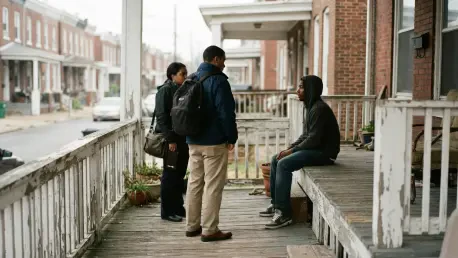
The execution of the GVRS follows a disciplined cycle of identification, notification, and action, ensuring that every intervention is targeted and purposeful. Weekly shooting reviews allow the Baltimore Police Department to identify group members at high risk of being perpetrators or victims, using intelligence to map the shifting alliances and rivalries on the street. This is followed by “custom notifications” delivered by a team of detectives, social workers, and community members who convey a three-part message: the violence must stop, the community disapproves of the behavior, and help is available for those who want it. These notifications are often conducted in person, sometimes on the very doorsteps of those at highest risk, making the communication both intimate and undeniable. The presence of community voices is vital, as it shifts the narrative from a purely adversarial police encounter to a community-led demand for peace.
The final stage of the process involves rapid action from nonprofit organizations like Roca and Youth Advocate Programs, which engage with these individuals to provide high-touch mentoring and relocation services. These organizations provide the “intensive care” needed to help individuals navigate the complex transition out of criminal networks, offering everything from cognitive behavioral therapy to immediate emergency housing. On the enforcement side, police and prosecutors coordinate to ensure that those who continue to commit violence face certain and swift consequences. This coordination ensures that the “stick” is as reliable as the “carrot,” creating a predictable environment where the costs of violence are high and the benefits of change are tangible. Monthly performance reviews at City Hall maintain operational accountability, ensuring that data trends are matched with specific actions on the ground. This three-stage process has transformed the city’s response to violence from a reactive scramble into a proactive and disciplined operation.
Empirical Evidence of Transformation
Measurable Reductions in Lethal Violence
To evaluate the impact of the GVRS, researchers utilized a “synthetic difference-in-differences” model to compare the Western District against other areas with similar crime histories. The findings were profound: during the first 18 months, shootings and homicides in the Western District dropped by approximately one-third relative to comparison areas that did not have the strategy in place. Furthermore, the strategy led to a 40 percent reduction in carjackings, which are often perpetrated by the same high-risk groups responsible for lethal violence. This correlation suggests that the strategy is effective not only at stopping murders but also at dismantling the broader criminal networks that drive urban instability. The data provided a clear signal that the intervention was working exactly as intended, targeting the city’s most violent elements with surgical precision.
Crucially, there was no evidence of “displacement,” a common concern that crime reduction in one area simply pushes it into neighboring districts. Because the GVRS targets the specific interpersonal networks and groups responsible for violence, the strategy effectively dismantles the social structures that drive crime rather than just clearing a street corner. When these networks are disrupted and individuals are offered a way out, the total volume of violence in the city decreases rather than relocating. The decline in the homicide rate was so sustained and significant that it outperformed almost every other high-violence city in the United States between 2022 and 2026. By October 2026, the cumulative effect of the program across multiple districts had contributed to a citywide safety profile that few would have thought possible only five years earlier.
Precision Policing and Arrest Composition
One of the most significant findings was that the GVRS did not lead to an increase in the total number of arrests but rather to a fundamental change in the composition of those arrests. While nonviolent and drug-related arrests did not rise, arrests for serious violent crimes increased by 81 percent. This indicates a shift toward “precision policing,” where law enforcement energy is directed toward the most dangerous offenders rather than the general population. This approach helps mend the relationship between the police and the community by reducing unnecessary interactions and focusing on the crimes that residents care about most. When the public sees that the police are focused on solving homicides rather than making low-level drug busts, the willingness of witnesses to cooperate increases, creating a virtuous cycle of safety and trust.
Additionally, the violent crime clearance rate—the rate at which police solve crimes—improved from 8 percent to 10 percent during the initial phase of the program. While this number remains low, the upward trend signals more effective use of investigative resources and better integration of intelligence. Detectives are now able to focus on high-priority targets identified through the GVRS process, leading to more “quality” arrests that are more likely to result in successful prosecutions. This focus on serious offenders has allowed the city to achieve historic safety gains without the high social costs of mass incarceration. By the start of 2026, the Baltimore Police Department had become a more specialized and effective force, capable of maintaining order through intelligence and cooperation rather than sheer volume. This evolution in policing philosophy is perhaps the most enduring legacy of the Group Violence Reduction Strategy.
Historical Context and Future Trajectory
Breaking the Legacy of De-policing
The magnitude of this decline must be understood against the backdrop of Baltimore’s long-standing struggle with deindustrialization and the breakdown of police-community relations following the 2015 civil unrest. For nearly a decade, the city suffered from a “de-policing” effect that saw homicides remain consistently above 300 annually, as both the community and the police force retreated from one another. The GVRS broke this “new normal” by treating violence as a public health crisis rather than a police-only issue, integrating the Mayor’s Office of Neighborhood Safety and Engagement into the city’s core administrative DNA. This shift allowed the city to move past the trauma of the previous decade and begin building a new framework for public safety that prioritizes the lives of all residents.
The program’s focus on high-touch intervention, such as cognitive behavioral therapy, helped at-risk individuals manage trauma and hypervigilance, allowing them to process emotions before reacting with violence. Emergency relocation funds provided a vital escape from “hot zones,” while employment pipelines offered transitional jobs that built the soft skills necessary for permanent career placement. When individuals had a viable alternative to street life, the threat of prosecution became a much more powerful deterrent. This comprehensive approach recognized that the cycle of violence was rooted in both social and economic factors and required a solution that addressed both. By 2026, these efforts had successfully moved the city away from the reactive policing models of the past and toward a more proactive and empathetic system of governance.
Institutionalizing the New Safety Model
For Baltimore to maintain its status as a city that transitioned toward safety, it was necessary to sustain the political will to fund social services and ensure rigorous coordination between law enforcement and community partners. The GVRS proved that violence was not an inevitable feature of the urban landscape but a manageable problem solved through data and focused intervention. The challenge lay in institutionalizing these practices so they would survive changes in political leadership and economic shifts. By late 2026, the city had successfully established these durable systems, creating a permanent infrastructure for violence reduction that continues to yield positive results. The success of the model has turned Baltimore from a national outlier in violence into a leading example for other cities seeking to reduce crime through surgical and equitable means.
The ultimate goal was for Baltimore to follow the trajectory of other major cities that overcame waves of violence, but through a model that was arguably more just than the “broken windows” tactics of the previous century. The city demonstrated that significant safety gains did not require mass incarceration or the harassment of marginalized communities. Instead, a surgical focus on the tiny fraction of the population driving lethal violence created a safer, more equitable environment for all residents. As the program enters its next phase of development from 2026 to 2028, the focus remains on deepening the integration of community voices and expanding the reach of social support networks. Baltimore’s experience served as a powerful case study for urban policy, proving that even the most entrenched cycles of violence can be broken with the right combination of data, compassion, and accountability.
Frequently Asked Questions
What makes the GVRS different from traditional policing?
Traditional policing often relies on high-volume tactics, such as stops and low-level arrests, to deter crime, which can alienate communities and lead to unnecessary incarceration. The GVRS, however, uses a surgical approach that focuses specifically on high-risk individuals and groups identified through data and social network analysis. It combines the threat of targeted prosecution with robust social services, addressing the root causes of violence while maintaining clear accountability for those who continue to commit serious crimes. This dual-track system ensures that law enforcement resources are focused on the most dangerous offenders while offering others a legitimate path out of criminal lifestyles.
Did the crime reduction in Baltimore affect all types of crime?
No, the reduction was notably concentrated in homicides, shootings, and carjackings, which are the primary focus of the Group Violence Reduction Strategy. Other forms of violent crime, such as aggravated assault and robbery, followed general national trends and did not see the same dramatic drop within the same timeframe. This suggests that the GVRS is specifically effective at neutralizing lethal violence and organized group activity rather than acting as a universal solution for all categories of criminal behavior. The strategy’s success lies in its ability to target the specific interpersonal dynamics that lead to the most severe and lethal outcomes.
How did the city ensure the violence did not just move elsewhere?
Researchers used sophisticated statistical modeling to check for displacement and found no evidence that crime simply shifted to neighboring districts. Because the GVRS targets the specific interpersonal networks and groups responsible for violence, the strategy effectively dismantles the social structures that drive crime. When these networks are disrupted and individuals are offered a way out, the total volume of violence in the city decreases rather than relocating. By focusing on high-risk individuals and their specific groups, the intervention addresses the source of the violence rather than just clearing a geographic area, leading to a genuine citywide reduction in crime.