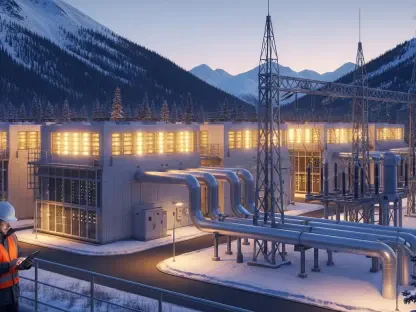

The hum of high-density server racks now echoes through the valleys of the Susquehanna, signaling a transformation that promises immense wealth while simultaneously threatening the monthly budgets of millions of Pennsylvania households. This digital expansion represents a defining moment for the Commonwealth, as it attempts to secure a dominant position in the global artificial intelligence race. With a landmark $20 billion investment from Amazon already fueling development in Bucks County and the Wilkes-Barre region, the state is rapidly evolving into a massive “AI factory.” However, the arrival of these data centers brings a complex challenge: how to provide the colossal amount of electricity these facilities require without triggering a surge in residential utility rates.
This development is not merely a localized economic boost but a high-stakes test of the state’s ability to manage a new industrial frontier. The administration in Harrisburg faces the daunting task of integrating these energy-hungry titans into a grid that was originally designed for a different era of consumption. If the state succeeds, it could set a national precedent for technological growth; if it fails, the financial burden of this digital gold rush may fall squarely on the shoulders of the average taxpayer.
The High-Stakes Balancing Act: A New Industrial Frontier
Pennsylvania currently stands at a precarious crossroads where the massive energy demands of a digital future collide with the monthly financial realities of today’s families. The $20 billion commitment from Amazon has accelerated the timeline for infrastructure expansion, forcing policymakers to confront the physical limits of the state’s power generation capacity. The central tension remains whether the Commonwealth can attract high-tech investment while shielding its citizens from the costs of the necessary grid upgrades.
This transition requires a sophisticated navigation of both market forces and public policy. While the potential for job creation and tax revenue is significant, the sheer scale of the power needed for AI operations is unprecedented. Legislators are tasked with ensuring that the digital infrastructure of tomorrow does not become a financial liability for the residents of today, creating a policy environment where innovation and affordability are not mutually exclusive.
Leveraging Industrial Roots: A Digital Renaissance
The drive to transform Pennsylvania into a global artificial intelligence hub is a calculated play to leverage the state’s historical strengths. By pairing the world-class technical prestige of Carnegie Mellon University with a deep-seated manufacturing heritage, the state has identified AI as the primary catalyst for long-term economic survival. This shift represents a physical evolution; it is about the heavy infrastructure of cooling systems and power grids that require the same unionized grit that once built the nation’s steel industry.
Moreover, this digital renaissance is intended to create a diverse range of employment opportunities. Beyond the software engineers and data scientists, the construction and maintenance of these massive data complexes provide high-volume work for skilled trades. This strategy aims to ensure that the benefits of the high-tech economy are felt across the workforce, bridging the gap between traditional labor and the cutting-edge requirements of the modern tech sector.
The Energy Paradox: Powering Data Centers Without Grid Collapse
The scale of the current AI projects necessitates an “all-of-the-above” energy strategy that is testing the limits of the existing power infrastructure. While the state continues to utilize its vast natural gas reserves and existing nuclear capacity, it must navigate a tightening vise of federal regulations and shifting tax credits. These external pressures have already impacted the labor market, with some estimates suggesting a loss of 26,000 union jobs following recent adjustments to federal energy incentives.
In contrast to more traditional industries, data centers operate with a constant, high-load demand that leaves little room for error in grid management. The challenge lies in scaling up power generation quickly enough to satisfy these new “AI factories” while managing a transition that remains politically and economically volatile. Maintaining grid stability is paramount, as any failure to meet demand could lead to price spikes or service interruptions for the broader public.
Taking on the Grid: The Fight Against Sclerotic Energy Management
Governor Shapiro has directed sharp criticism toward the PJM Interconnection, the regional grid manager, calling its leadership “utility-heavy” and its internal processes “sclerotic.” As the grid faces projected supply shortages and the threat of multi-billion-dollar price hikes, the state has adopted a firm “pay-for-your-own-power” stance. This policy demands that tech giants shoulder the full costs of their massive energy footprints, including the construction of dedicated substations and transmission lines.
This confrontational approach is designed to prevent infrastructure expenses from trickling down to residential ratepayers through hidden delivery fees and surcharges. By challenging the status quo of regional energy management, the state is seeking to force a more transparent and efficient allocation of costs. The goal is to ensure that the rapid expansion of data centers serves as an economic engine rather than a drain on the resources of Pennsylvania families.
Practical Strategies: Protect the American Ratepayer
To ensure that tech leadership does not come at the expense of the average citizen, the state is pursuing a specific framework for utility protection. This includes mandating that data center developers fund their own dedicated energy infrastructure and advocating for strict price caps on residential bills to prevent market volatility. Furthermore, the administration has signaled a willingness to explore a full exit from regional energy markets if the current systems cannot guarantee both the speed required for tech growth and the affordability required for households.
The state government ultimately prioritized a model where innovation was forced to pay its own way. Policymakers implemented rigorous oversight mechanisms that separated industrial energy costs from residential billing cycles. This proactive stance ensured that the infrastructure for the digital age was built on a foundation of corporate responsibility rather than public subsidy. By the time the first major AI clusters reached full capacity, the Commonwealth had successfully insulated its citizens from the inflationary pressures of the tech boom, proving that industrial progress and consumer protection could coexist within a modern energy economy.