
The Evolving Power Struggle Over Environmental Enforcement
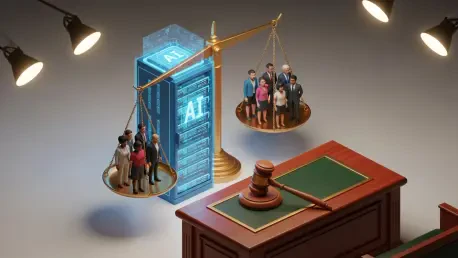
The historical equilibrium between the federal government and the American public is facing a high-stakes stress test as modern environmental law moves into a period of intense legal scrutiny and unprecedented executive pushback. This friction centers on the “citizen suit provision,” a legislative mechanism that has functioned for decades as a democratic safety valve. By allowing individuals and non-profit organizations to act as “private attorneys general,” these laws ensure that the standard for clean air and water is not left solely to the political whims of the current administration. However, the trajectory of this right is now under threat, creating a significant point of contention regarding the limits of executive power and the autonomy of the public.
Understanding this legal evolution is necessary for anyone concerned with the long-term health of the American ecosystem. This timeline documents the journey of public enforcement, beginning with the foundational statutes of the 1970s and leading to a modern era where the executive branch seeks to curtail these powers significantly. At the heart of the current debate is a fundamental question about constitutional authority: can a president effectively shield a private corporation from a public lawsuit by simply declaring a national policy interest? As this conflict plays out in federal courts, the answer will determine whether environmental law remains a mandate or becomes a suggestion that can be waived by the executive branch.
A Chronological Journey of Public Accountability and Executive Pushback
The 1970s: The Legislative Birth of the Private Attorney General
The groundwork for modern environmental accountability was laid during a period of massive legislative activity. In an era where smog-filled skies and burning rivers captured the public imagination, Congress passed the Clean Air Act, the Clean Water Act, and the Safe Drinking Water Act. Lawmakers at the time were acutely aware that federal agencies might lack the resources or the political courage to pursue every polluter. To solve this, they intentionally decentralized enforcement by embedding citizen suit provisions directly into the statutes. This created a bipartisan fail-safe, ensuring that the law would be upheld even if the executive branch became indifferent or hostile to environmental protection. It established the core principle that the public has a vested, legal interest in the integrity of the natural environment.
1980 to 2025: Decades of Judicial Success and Remediation
For nearly half a century, the citizen suit served as the most effective tool in the arsenal of environmental advocacy groups. Over 2,000 cases were filed during this period, resulting in massive industrial modernizations and the remediation of significant ecological damage. Major victories included a settlement against the Clairton Coke Works in Pennsylvania, which forced the facility to overhaul its toxic emission monitoring systems. In Texas, a landmark $50 million settlement was reached against Formosa Plastics for discharging plastic pellets into Lavaca Bay, while Styropek USA in Pennsylvania agreed to a $2.5 million settlement to protect the Ohio River watershed. These cases followed a predictable legal rhythm: a 60-day notice was sent to the government, and if the EPA did not act, the citizens took the reins in federal court, successfully addressing issues ranging from endangered species protection to the dangerous injection of wastewater into groundwater.
April 2026: The NAACP Challenges xAI in Mississippi
The current legal crisis erupted when the NAACP filed a lawsuit against xAI, an artificial intelligence firm founded by Elon Musk. The litigation focused on the operation of 27 natural gas-fired turbines at the Colossus 2 data center located in Southaven, Mississippi. According to the filing, xAI bypassed the Clean Air Act by failing to secure the necessary permits for nitrogen oxide and formaldehyde emissions. This case highlighted a growing tension between the rapid expansion of the tech industry and the health of local communities. The NAACP argued that the lack of permits allowed the company to skip installing the best available pollution control technologies, potentially exposing residents to chemicals linked to respiratory diseases and cancer.
Late 2026: The Department of Justice Intervenes to Block Litigation
In a dramatic shift from historical norms, the Department of Justice under the Trump administration moved to dismiss the NAACP’s lawsuit against xAI. The government did not claim that the company was following the law; instead, it argued that the executive branch held the authority to block the suit based on overarching policy goals. The administration cited executive orders regarding a “national energy emergency” and the strategic importance of “American leadership in artificial intelligence.” The filing suggested that because the administration had made a deliberate choice to allow xAI to operate without immediate permit enforcement to foster technological innovation, the public no longer had the right to sue. This represented a direct challenge to the “private attorney general” status that had stood since the 1970s.
2027 and Beyond: A Potential Landmark Shift in Executive Power
As this case moves through the court system, it has transformed into a referendum on the very nature of the law. The administration continues to push the narrative that citizen suits should only be allowed to fill gaps where the government has accidentally overlooked a violation, rather than challenging a purposeful “policy-based” decision to ignore one. If the judiciary accepts this argument, it will mark a transformative shift in the American legal paradigm. It would essentially grant the executive branch a “veto” over public lawsuits, potentially ending an era where citizens could hold powerful industries accountable when the government refuses to do so. The future of environmental compliance now rests on whether the courts believe the law is a mandatory requirement or a flexible tool for executive discretion.
Identifying Turning Points and the Shift Toward Executive Centralization
The most critical turning point in this timeline is the transition from a decentralized enforcement model toward a centralized, executive-led hierarchy. Historically, the 60-day notice period was a mechanism to ensure the government had the first opportunity to act, but it was never viewed as a way for the government to permanently silence the public. The current administration’s attempt to claim a “policy-based” veto marks a departure from the original intent of the 1970s statutes. This shift indicates a move toward executive centralization, where the strategic priorities of a single branch of government can effectively override the legislative mandates established by Congress.
Several themes are visible throughout this evolution, particularly the growing tension between national security, economic dominance, and public health. Using “national interest” as a shield for private corporations is a relatively new strategy in the realm of regulatory defense. However, a notable gap remains in the legal statutes, as they do not explicitly define the limits of executive power when an administration chooses not to enforce a law for ideological reasons. This lack of clarity has allowed the current executive branch to test the boundaries of its authority, creating a situation where local communities may be left without a legal remedy even when their health is being directly impacted by industrial activity.
Analyzing Constitutional Tensions and the Future of Regulatory Compliance
The debate surrounding citizen suits revealed deep nuances in the interpretation of the Constitution. Those who supported the executive branch argued that these suits allowed private organizations to “usurp” the prosecutorial authority of the president, creating a chaotic legal environment where individual suits could disrupt a unified national policy. They viewed the hierarchy of the executive branch as the only proper channel for law enforcement. Conversely, legal scholars and environmental advocates argued that the executive branch did not possess the “dispensing power,” which is the authority to ignore or waive laws passed by the legislature. They maintained that the statutes were mandates that must be followed, regardless of an administration’s preferred industrial strategy.
Regional factors further complicated this struggle, as seen in Southaven, Mississippi, where local health concerns were pitted against the federal goal of winning the global race for artificial intelligence. This created a disconnect where environmental justice for a local community was sacrificed for a broader national strategic objective. A common misconception persisted that citizen suits were a form of government interference, when in reality, they were a Congressionally mandated check designed to prevent any single administration from gaining absolute control over the law. As this conflict reached its peak, the role of the judiciary became the deciding factor in whether the executive branch could act as the final arbiter of environmental compliance. Moving forward, stakeholders should prioritize the clarification of statutory language to ensure that executive discretion does not permanently erode the public’s right to seek judicial relief. Legal teams and community organizers likely began preparing for a future where administrative law is increasingly dictated by executive orders rather than legislative stability.