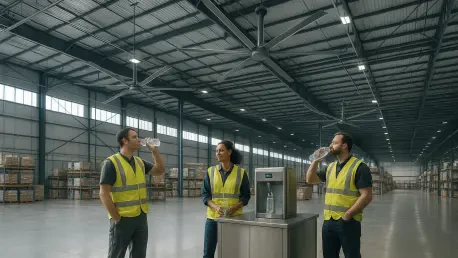

The unprecedented intensification of atmospheric heat levels across North America has forced a high-stakes confrontation between federal safety regulators and legislative factions over the fundamental right to life-saving cooling measures in the American workplace. As the calendar moves through 2026, the American workforce faces an environment where extreme thermal events are no longer seasonal anomalies but persistent industrial hazards. The Occupational Safety and Health Administration (OSHA) remains the primary architect of national labor benchmarks, yet its attempt to finalize a cohesive heat safety standard has met significant political resistance. This federal oversight is designed to protect millions of laborers who are increasingly vulnerable to the physiological stresses of outdoor and indoor heat.
However, a deep divide has emerged between federal regulatory bodies and state legislatures, particularly in regions where industrial growth is most aggressive. Private sector stakeholders frequently argue that federal mandates interfere with the specific operational needs of diverse industries, from agriculture to logistics. In contrast, health advocates point to record-breaking thermal data from the current year as undeniable evidence that voluntary guidelines are no longer sufficient. This tension has transformed workplace safety from a technical compliance issue into a central point of contention regarding the limits of federal authority in the modern economy.
The Rising Stakes of Occupational Heat Exposure and Federal Oversight
The current landscape of workplace safety is being rapidly reshaped by environmental shifts that defy historical precedents. With 2026 seeing some of the highest temperatures on record, the necessity of a centralized regulatory response has become more urgent for agencies tasked with reducing preventable deaths. OSHA has moved toward a more aggressive stance, aiming to establish the first-ever federal standard specifically targeting heat stress. This shift reflects a recognition that heat-related illnesses now contribute to a significant percentage of work-related hospitalizations, a metric that continues to climb as thermal stability wanes.
Economic influences also play a massive role in this regulatory push, as thermal hazards directly impact labor productivity and supply chain reliability. While federal bodies seek to create a uniform baseline, many state governments argue that such mandates undermine their local economic competitiveness. This creates a fragmented regulatory map where a worker’s safety depends largely on state geography rather than a universal safety right. Technological advancements in climate modeling are providing clearer evidence of these risks, yet the translation of this data into enforceable policy remains stalled by intense lobbying from sectors that fear the high costs of implementation.
Environmental Realities and the Evolving Regulatory Response
Climate Triggers: The Science of Worker Vulnerability
The physiological impact of “heat domes” has redefined the safety limits of the human body in labor-intensive roles. Modern research confirms that when the heat index reaches an 80-degree Fahrenheit threshold, the risk of heat exhaustion and heatstroke rises exponentially for those performing physical tasks. This threshold serves as a primary trigger for the proposed federal rules, acknowledging that environmental hazards are not just a matter of comfort but of biological survival. OSHA specifically emphasizes the danger of high humidity, which prevents the body from cooling itself through evaporation, turning moderately warm days into lethal scenarios.
A critical focus of the 2026 regulatory framework is the process of acclimatization, a biological adaptation that is often ignored in standard industrial practices. Data indicates that a staggering 75% of heat-related fatalities occur within the first week of a worker’s employment, primarily because the body has not been given the time to adjust to high-intensity labor in extreme conditions. Labor behaviors are shifting as workers become more aware of these risks, leading to higher turnover in industries that refuse to implement proper cooling breaks. Consequently, the push for mandates is as much about stabilizing the labor force as it is about health.
Performance Indicators: The Economic Impact of Heat Standards
From 2026 to 2028, the market for heat-related safety investments is projected to see substantial growth as companies prepare for potential compliance requirements. Infrastructure such as mobile cooling stations, hydration systems, and enhanced ventilation for indoor warehouses represents a significant capital expenditure for the private sector. However, data-driven forecasts suggest that these initial costs are largely offset by the reduction in medical expenses and workers’ compensation claims. Implementing a standardized federal floor could effectively stabilize labor market volatility by ensuring that no single company gains a competitive advantage by neglecting safety.
The economic loss associated with workplace fatalities and heat-induced productivity drops has reached a critical point where doing nothing carries its own fiscal burden. When a regional heat wave shuts down construction projects or slows down delivery speeds, the ripple effects are felt throughout the national economy. By establishing a predictable regulatory environment, OSHA aims to give businesses a clear set of performance indicators to follow. This approach would replace the current reactive model with a proactive system of risk management, allowing firms to budget for safety as a standard operating cost rather than an unpredictable liability.
Navigating the Friction Between Federal Mandates and State Autonomy
Critics of the proposed federal rules argue that a “one-size-fits-all” approach fails to account for the administrative and financial diversity of American businesses. Small enterprises, in particular, cite the difficulty of documenting every break and monitoring every worker’s hydration level as an overreach of bureaucratic power. Moreover, the financial burden of retrofitting older facilities to meet new airflow standards could threaten the viability of local manufacturing hubs. These concerns have fueled a movement to maintain state-level control over safety standards, arguing that local inspectors are better positioned to judge risks.
The challenge of legislative preemption has become a major flashpoint in states like Texas and Florida, where recent actions have complicated local safety efforts. These states have passed laws that prevent municipal governments from enacting their own heat safety ordinances, effectively creating a ceiling for worker protections rather than a floor. In response, some industries have voluntarily adopted “water, shade, and rest” requirements to mitigate the risk of litigation, but these efforts remain inconsistent. The friction between federal requirements and state resistance suggests a long period of legal uncertainty that could take years to resolve.
The Legislative Battleground: H.R. 6213 and the Regulatory Framework
The introduction of H.R. 6213 represents a significant effort to dismantle the proposed OSHA heat safety rule before it can be finalized. This legislation seeks to preemptively block federal intervention, reflecting a belief that the executive branch has exceeded its authority in creating climate-related labor policies. Proponents of the bill argue that the existing General Duty Clause is sufficient for holding employers accountable for unsafe conditions, making a specific heat rule redundant. This legislative push highlights a deeper struggle over who gets to define the boundaries of modern workplace safety.
Furthermore, the battle over H.R. 6213 involves a unique application of the Congressional Review Act versus preemptive legislative intervention. While traditional regulatory challenges occur after a rule is on the books, this bill attempts to cut off the rule-making process in its tracks. This tactic has raised questions about the security of the regulatory framework and whether future safety standards will be subject to similar political vetoes. Employers are currently caught in the middle, trying to balance the need for operational flexibility with the looming possibility of a strictly enforced federal mandate that could change their entire business model.
The Future of Climate-Responsive Labor Policy
The evolution of the workplace is increasingly defined by “climate-adaptive” strategies that move beyond simple compliance. One emerging trend is the integration of wearable health monitoring technology, which can alert both the worker and the supervisor if an individual’s internal temperature reaches a dangerous level. These devices represent a new frontier in occupational health and safety, providing real-time data that traditional manual monitoring cannot match. As these technologies become more affordable through 2028, they may become a staple of high-risk industries, potentially bridging the gap between regulatory requirements and actual worker safety.
However, the path forward remains clouded by potential market disruptors, including ongoing litigation and shifting political majorities. If the federal authority of OSHA is significantly curtailed by the courts, the responsibility for environmental health and safety (EHS) will fall back onto the shoulders of consulting firms and private insurance carriers. Long-term growth in the EHS sector is expected as companies seek to insulate themselves from liability in a world with more frequent extreme weather events. This shift suggests that even without a federal mandate, the market itself may eventually demand higher standards to ensure the sustainability of the workforce.
Reconciling Economic Growth with Human Welfare
The debate over federal heat safety standards revealed a profound tension between immediate industrial profitability and the long-term necessity of climate resilience. It was clear that while legislative resistance sought to protect the economic flexibility of states, the human cost of unregulated thermal exposure continued to mount. The analysis indicated that companies that proactively adopted rigorous safety protocols often saw improved retention rates and lower long-term liability costs. It was established that a uniform federal floor offered the best protection against a race to the bottom in labor standards.
Strategic recommendations for the coming years emphasized the need for businesses to decouple their safety investments from the prevailing political winds. Successful organizations prioritized the adoption of decentralized cooling infrastructure and data-driven hydration programs as essential components of their operational risk management. Moving forward, the integration of environmental health into the core of corporate governance proved to be the most effective way to reconcile human welfare with sustainable growth. The shift in focus from reactive compliance to proactive health management became the defining characteristic of the most resilient sectors in the economy.