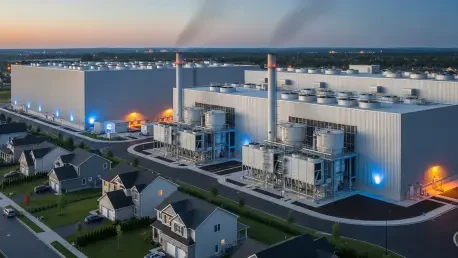

The rapid proliferation of massive data processing facilities has transformed once-quiet residential neighborhoods into dense industrial corridors where the relentless humming of servers never ceases. In regions like Northern Virginia, the promise of a seamless digital cloud is colliding with the physical reality of gas-fired power generation, creating a landscape of tension between technological progress and public well-being. This shift toward on-site energy production, while solving immediate grid constraints for tech giants, introduces a suite of environmental and physiological challenges that are only now being quantified. As these facilities become permanent fixtures in suburban settings, the initial novelty of hosting the internet’s backbone is being replaced by a critical examination of the hidden costs associated with high-speed connectivity. The tension highlights a growing global dilemma regarding how to power the digital age without sacrificing the quality of life for those living in the shadow of the infrastructure.
The Physical Impact of On-Site Energy Production
Noise Pollution and Physiological Stress
The installation of gas-fired turbines at data center sites has introduced a constant, high-pitched acoustic profile that differs significantly from standard industrial noise. Residents living near facilities such as the Vantage data center in Sterling report that the sound is not merely a background hum but a persistent vibration that penetrates the walls of their homes. This auditory intrusion has been linked to chronic sleep deprivation and increased stress levels among local populations who previously enjoyed suburban quiet. Unlike backup generators that run only during emergencies, these turbines often operate for extended periods to offset grid instability, making the noise a permanent feature of the landscape. The psychological toll of this constant exposure is becoming a central point of contention in community meetings, as families find their personal spaces compromised by the industrial demands of the tech sector.
Furthermore, the mechanical nature of these turbines creates low-frequency vibrations that can be felt even when they are not clearly heard. This phenomenon has led to reports of physical discomfort, including headaches and a general sense of unease among those living within a one-mile radius of the energy plants. While data center operators often claim to meet local noise ordinances, these regulations were frequently designed for temporary construction or traditional commercial activities rather than permanent, round-the-clock turbine operations. Consequently, the existing legal frameworks are often insufficient to protect residents from the specific type of noise pollution generated by on-site power solutions. The disconnect between corporate operational needs and the biological necessity for quiet rest environments has sparked a wave of local activism aimed at forcing tech companies to implement more effective sound mitigation technologies.
Air Quality and Regional Environmental Health
Beyond the immediate auditory impact, the reliance on gas-fired turbines raises significant concerns regarding the emission of hazardous pollutants and fine particulate matter. Research from institutions like Harvard University suggests that the health-related costs of such facilities can reach tens of millions of dollars annually due to the degradation of local air quality. These “pop-up” power plants release nitrogen oxides and sulfur dioxide, which contribute to the formation of smog and can exacerbate respiratory conditions like asthma and chronic bronchitis. Because air currents do not respect property lines, the emissions from a single data center campus in Virginia can affect the health of residents in Maryland and the District of Columbia. This geographical spread of pollutants complicates the regulatory environment, as local approvals often fail to account for the broader regional consequences of concentrated industrial energy production.
The lack of transparency regarding actual emission data from these on-site facilities further fuels public distrust. While industry representatives often defend their environmental records by citing the efficiency of modern turbines, they rarely provide real-time monitoring data to the communities most affected by their operations. This opacity makes it difficult for public health officials to accurately assess the long-term risks associated with living near high-density data centers. In response, environmental advocates are calling for mandatory, independent air quality monitoring at all sites utilizing on-site combustion for power. Without such data, the true environmental footprint of the digital economy remains obscured, allowing companies to externalize the health costs of their operations onto the public while maintaining a facade of corporate sustainability and technological advancement.
Regulatory Gaps and the Shift Toward Accountability
Zoning Failures and Local Governance Challenges
The rapid development of “Data Center Alley” in Loudoun County has exposed significant flaws in local zoning ordinances that were never intended to manage heavy industrial power plants. Many of these facilities were approved “by right,” a legal designation that allows developers to proceed with construction without a lengthy public hearing process or specific environmental impact studies. This regulatory vacuum allowed tech companies to install massive gas turbines under the guise of temporary or backup power sources, which then transitioned into primary energy drivers as the local grid struggled to keep pace with demand. Local officials have since admitted that the existing laws were insufficient to address the unique complexities of modern data center infrastructure. This realization has led to a contentious period of legislative catch-up, as municipalities move to tighten restrictions on where and how these facilities can operate.
The pushback is not limited to Virginia, as other regions are beginning to see the fallout of unchecked data center growth. In Pittsylvania County, the rejection of a proposed “megacampus” signaled a turning point in how local governments evaluate the trade-offs between economic investment and community health. Residents and local advocates are increasingly demanding that future projects be subject to rigorous scrutiny, including detailed noise and emission modeling before any permits are issued. This shift in sentiment suggests that the era of uncontested data center expansion is coming to an end. Tech companies must now navigate a much more complex landscape of public opposition and evolving legal standards. The focus has moved from simple job creation to a holistic evaluation of how these massive industrial sites fit into the existing fabric of residential life and the natural environment.
Strategic Transitions for Sustainable Infrastructure
To mitigate future conflicts, the industry was forced to consider more sophisticated power strategies that prioritize public health and environmental transparency. Moving forward from 2026 to 2030, the integration of advanced battery storage and hydrogen-based energy systems will be essential to phasing out the reliance on gas-fired turbines in residential corridors. Decision-makers in both the public and private sectors must collaborate to establish standardized health metrics that are factored into the initial site selection process for new facilities. This approach includes the implementation of rigorous buffer zones and mandatory acoustic shielding that goes beyond current minimum requirements. By adopting a proactive stance on pollution and noise control, data center operators can begin to rebuild the trust that was eroded by previous projects. The path forward requires a shift from viewing the community as an obstacle to seeing them as a vital stakeholder in the digital ecosystem.
In conclusion, the conflict over on-site power generation served as a catalyst for a broader movement toward industrial accountability in the technology sector. The lessons learned from the health crises in Northern Virginia underscored the necessity of updating antiquated zoning laws to reflect the realities of the high-energy digital age. It was determined that the true cost of digital infrastructure could no longer be measured solely in capital expenditure or processing speed, but must include the long-term well-being of neighboring populations. Future developments were designed with a focus on eliminating localized soot emissions and minimizing auditory disturbances through better engineering and location choices. By internalizing these environmental costs, the industry took the first steps toward a more sustainable and socially responsible model of growth. Ultimately, the transition away from high-impact on-site power proved that technological progress did not have to come at the expense of public health.