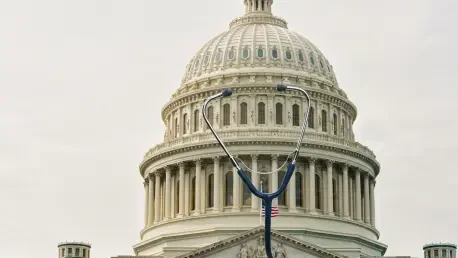

Imagine a ticking clock, with millions of Americans awaiting a decision that could determine whether they can afford health insurance in the coming months. The expiration of Affordable Care Act (ACA) subsidies looms large, and within the Republican Party, a fierce debate rages over how to address this urgent issue. Centrists, conservatives, and bipartisan voices are all weighing in with competing visions for health care reform. This roundup gathers diverse opinions and insights from across the political spectrum to unpack the ongoing struggle within the GOP and beyond, shedding light on potential paths forward as deadlines approach.
Unpacking the Centrist Push for Compromise
At the heart of the debate is a proposal from a centrist House Republican aiming to extend ACA tax credits while integrating reforms like enhanced flexibility for Health Savings Accounts (HSAs). Many moderate voices within the party argue that this approach strikes a necessary balance, ensuring coverage stability for millions while offering concessions to conservative priorities. Sources close to centrist factions emphasize the dire consequences of inaction, pointing to data suggesting that without these subsidies, a significant number of Americans could lose affordable insurance options almost overnight.
However, even among centrists, there is cautious optimism mixed with frustration. Some argue that their efforts are often overshadowed by louder conservative voices, leaving little room for pragmatic solutions in party discussions. Reports from bipartisan working groups highlight a shared concern: if subsidies lapse without a replacement plan, the resulting chaos in insurance markets could damage public trust in GOP leadership on health care issues. This tension underscores a broader call for compromise that seems elusive in today’s polarized climate.
Conservative Resistance and Market-Driven Alternatives
In stark contrast, conservative Republicans advocate for a complete shift away from federal subsidies, favoring market-based solutions. Insights from party hardliners suggest a strong belief that individual spending accounts and reforms to pharmacy benefit managers offer Americans greater control over their health care dollars. This faction, often aligned with GOP leadership, views the ACA framework as an overreach of government involvement, pushing instead for policies that prioritize personal choice over centralized support.
Yet, this stance draws sharp criticism from other quarters. Centrist and bipartisan observers warn that such an abrupt pivot could destabilize markets, leaving vulnerable populations without viable coverage options. Conversations with policy analysts reveal a recurring concern: while market-driven ideas hold theoretical appeal, the practical fallout of subsidy expiration might outweigh any long-term benefits. This divide within the party reveals a fundamental clash of ideology that continues to stall progress.
Bipartisan Voices Seek a Middle Ground
Amid the GOP infighting, a separate bipartisan coalition has emerged with a proposal for a two-year subsidy extension, coupled with new eligibility limits to address fiscal concerns. Advocates of this plan argue that it serves as a temporary bridge, buying time for more comprehensive reforms while preventing immediate hardship for millions. Feedback from across the aisle indicates a willingness among some Democrats to engage, provided the plan includes safeguards against coverage disruptions.
Nevertheless, skepticism persists. Conservative Republicans view even short-term extensions as a capitulation to the ACA’s framework, while certain moderate Democrats remain wary of supporting measures that lack a broader, long-term strategy. Regional differences in health care needs further complicate these discussions, as lawmakers grapple with varying constituent demands. Input from legislative insiders suggests that while this middle-ground approach has potential, its success hinges on overcoming deep-seated mistrust between factions.
Ideological Rifts and Broader Implications
Digging deeper, the health care debate exposes underlying ideological rifts that extend beyond policy specifics. Centrist Republicans often feel marginalized by leadership’s alignment with conservative priorities, while hardliners argue that preserving any part of the ACA betrays core party values. Anonymous sources within the GOP describe the subsidy expiration as nothing short of an emergency, yet the lack of consensus on how to respond keeps the party fragmented.
Beyond internal struggles, bipartisan friction adds another layer of complexity. Democrats, hesitant to back GOP-led initiatives without comprehensive negotiations, cite concerns about market stability and equitable access. Analysts observing these dynamics note that unrelated political battles, such as recent government funding disputes, have eroded goodwill, making cross-party collaboration even harder. This tangled web of tensions raises questions about whether the current political climate can sustain meaningful health care reform at all.
Reflecting on Diverse Perspectives and Next Steps
Looking back, this roundup of perspectives painted a vivid picture of a Republican Party at odds with itself over health care policy, while bipartisan efforts struggled to gain traction. The centrist push for subsidy extensions clashed with conservative demands for market-driven alternatives, and even compromise proposals faced uphill battles amid ideological divides. Each viewpoint brought unique insights, yet the lack of unity underscored the complexity of addressing an issue that affects millions.
Moving forward, stakeholders appeared poised to focus on targeted outreach within the GOP to bridge factional divides, alongside pragmatic negotiations with Democrats to prioritize urgent subsidy extensions. Monitoring legislative deadlines remained crucial, as did advocating for balanced reforms that addressed both coverage needs and individual choice. The path ahead demanded a willingness to set aside partisan gridlock in favor of actionable solutions, offering hope for progress if key players could align on shared goals.