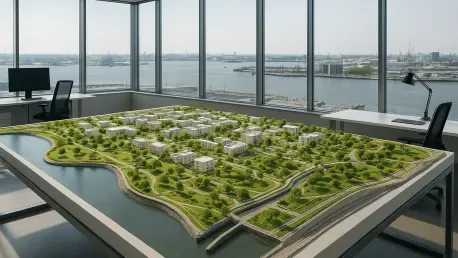

Income inequality and migration status create disparate outcomes during environmental disasters, as those without social protections face the greatest barriers to safety and recovery. As sea levels continue to encroach upon coastal metropolises from 2026 to 2028, the dialogue surrounding urban resilience has shifted from mere engineering feats to the fundamental protection of human rights. It is no longer sufficient to build higher sea walls or more efficient pumping systems if the underlying social fabric remains frayed. The vulnerability of marginalized communities is exacerbated by limited access to insurance, legal representation, and emergency services. This is a systemic failure. This dynamic necessitates a holistic approach to urban governance that prioritizes the dignity of the individual alongside the preservation of the landscape. Addressing these inequities requires a departure from traditional disaster management toward a rights-based framework that ensures every resident, regardless of status, has a pathway to security.
Implementing Legal Protections for Vulnerable Populations
Codifying the Rights of Displaced Communities
In the coming years between 2026 and 2030, municipal governments must establish clear legal definitions for climate-induced displacement to prevent administrative abandonment. Without specific legal designations, individuals forced from their homes by chronic flooding often fall into a jurisdictional void, lacking the protections afforded to traditional refugees or victims of sudden natural disasters. Creating a robust legal framework involves the recognition of habitability standards that trigger institutional support before a crisis reaches its breaking point. This shift is vital. This ensures that the right to housing is not just a theoretical concept but a functional policy that provides transitional assistance and long-term relocation options. Furthermore, legal clinics specialized in land rights and tenancy can help prevent the exploitation of low-income renters during the rapid neighborhood changes caused by rising tides. By securing these rights today, cities can avoid the chaotic and often discriminatory patterns of movement that historically follow environmental degradation.
Ensuring Digital Equity in Early Warning Systems
The integration of advanced monitoring technology and artificial intelligence provides unprecedented predictive capabilities, yet the distribution of these benefits often remains uneven. Ensuring that all residents have access to real-time information is a critical component of securing human rights in an era of environmental instability. Equitable digital infrastructure means that early warning systems must be accessible across multiple languages and compatible with low-bandwidth devices to reach the most isolated populations. Access must be universal. Beyond simple alerts, the transparency of data regarding flood risks and infrastructure health must be prioritized to empower citizens to make informed decisions about their safety. When city planners utilize high-resolution topographical mapping and predictive modeling, the results should be shared openly to prevent the hoarding of safety information by wealthy enclaves. This democratization of data fosters a sense of collective responsibility and trust, which are essential for maintaining social cohesion.
Socioeconomic Strategies for Coastal Adaptation
Managing the Transition Through Financial Inclusion
Managed retreat is often framed as a technical challenge, but the true hurdle lies in the economic viability of relocation for the working class. As properties in flood-prone areas lose value, the risk of “blue-lining”—where banks and insurers withdraw services from high-risk zones—threatens to trap low-income families in uninhabitable homes. The financial risk is immense. To secure human rights, cities are now experimenting with public buyout programs that offer fair market value based on historical prices rather than current depreciated levels. These financial interventions, spanning the period from 2026 to 2030, are designed to provide the liquidity necessary for families to find housing in safer locations. Additionally, social impact bonds and micro-insurance schemes are being deployed to bridge the gap for those who lack traditional credit access. By treating financial security as a pillar of human rights, urban centers can mitigate the risk of mass homelessness and ensure that the transition away from the shoreline is handled with dignity.
Fostering Resilient Growth Through Adaptive Governance
The path forward involved a total reimagining of how urban centers integrated environmental realities into the social contract. City leaders recognized that securing human rights required a shift from reactive emergency responses to proactive, community-led adaptation strategies. Inclusivity was the primary driver. By the end of the period leading to 2028, many municipalities successfully implemented participatory budgeting where residents voted on the placement of green infrastructure and protective barriers. This inclusive methodology ensured that the most vulnerable neighborhoods received priority for new drainage systems and heat-mitigating parks. Urban planners also prioritized cultural heritage and social networks during relocation, preventing the erasure of community identity that often accompanied past projects. The successful integration of these diverse perspectives ultimately demonstrated that technical solutions were only as effective as the social foundations upon which they were built and maintained. This transition underscored the necessity of viewing climate adaptation as a continuous evolution of civic responsibility.