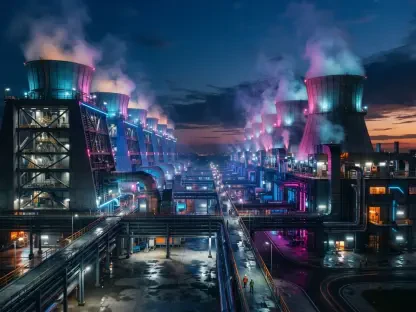

The sheer scale of infrastructure development across India has transformed cement manufacturing from a secondary industrial pursuit into a foundational pillar of the national economy. Within this high-stakes environment, UltraTech Cement has established itself as the undisputed leader, controlling approximately 22 percent of the domestic capacity. This massive operation does not merely dominate locally but also ranks as the third-largest cement producer globally, a position that grants the firm significant leverage over supply chains and pricing mechanisms.
While the market remains highly competitive, with formidable players like Shree Cement and Ambuja Cement vying for market share, UltraTech has successfully utilized its immense scale to absorb shocks that might cripple smaller entities. The ongoing surge in government-led infrastructure spending provides a consistent floor for demand, allowing the company to maintain high utilization rates even when other sectors fluctuate. This symbiotic relationship with national development goals ensures that the firm remains at the center of the country’s industrial narrative.
Analyzing Market Dynamics and Growth Indicators
Emerging Trends and Strategic Diversification Initiatives
Consumer behavior in the construction sector has shifted significantly toward premium, branded materials as builders and individual homeowners prioritize long-term durability over immediate cost savings. UltraTech has capitalized on this trend by aggressively marketing its specialized product lines, ensuring that the brand remains synonymous with quality. Beyond its traditional expertise in cement, the company has begun a strategic push into the cables and wires segment, seeking to become a comprehensive provider of construction solutions rather than just a raw material supplier.
Operational sustainability has also moved from a peripheral concern to a core strategic objective. By investing heavily in green power generation and alternative fuel sources, the company is insulating itself against the volatility of global energy markets. This transition toward sustainable manufacturing serves a dual purpose: it lowers long-term operational costs and aligns the firm with increasingly stringent environmental expectations from global investors and domestic regulators.
Quantitative Performance and Capacity Expansion Targets
The financial metrics reflecting this strategic positioning are robust, with the company’s market capitalization reaching approximately ₹3.41 lakh crore in early 2026. Even with minor fluctuations in daily trading, the stock price maintains a strong position around ₹11,586, supported by bullish analyst sentiment and price targets ranging between ₹12,000 and ₹14,200. This investor confidence stems from a clear roadmap for expansion that aims to push production capacity beyond 240.8 MTPA by the end of fiscal year 2028.
Such aggressive growth targets necessitate a delicate balance between capital expenditure and the maintenance of healthy profit margins. Despite the pressure of massive investment cycles, the company has managed to provide consistent shareholder value through disciplined financial management. Analysts remain optimistic about the firm’s ability to integrate new acquisitions and greenfield projects into its existing logistics network, which remains one of the most efficient in the industry.
Navigating Persistent Economic and Sectoral Challenges
The path to continued dominance is not without obstacles, particularly as inflationary pressures continue to impact the procurement of fuel and essential raw materials. Rising logistics costs and energy prices have forced the industry to implement periodic price hikes, a move that requires careful execution to avoid alienating price-sensitive segments. Furthermore, a noticeable divergence has emerged between the booming public infrastructure sector and a relatively stagnant private housing market, requiring a flexible sales strategy.
To mitigate the risks of market fragmentation, the company has focused on optimizing its internal efficiencies to protect margins against these volatile input costs. The entry of aggressive regional competitors often leads to localized price wars, but UltraTech’s wide geographical reach allows it to offset regional weaknesses with strength in other corridors. Maintaining this resilience requires a constant evaluation of supply chain vulnerabilities and a proactive approach to cost management.
The Regulatory Environment and the Power of Intellectual Property
Protecting brand equity has become as vital as expanding physical capacity, a fact underscored by the Bombay High Court’s ruling against Shiv Cement Co. earlier this year. The court found that the defendant had engaged in bad faith competition by using trademarks like UltraPlus and UltraHiTouch to capitalize on the market leader’s reputation. By awarding ₹66.48 lakh in damages and legal fees, the judiciary sent a clear signal that intellectual property infringement would face severe financial consequences.
This legal victory serves as a critical precedent, enabling the company to defend its market standing against smaller players who attempt to confuse consumers with similar branding. Beyond intellectual property, the company must also navigate a complex regulatory landscape involving ongoing GST disputes and evolving compliance standards. Aggressive litigation and a robust legal department have thus become essential tools in maintaining the firm’s premium status and preventing the dilution of its brand identity.
Strategic Trajectory for Long-Term Market Leadership
Looking toward the future, the integration of new technologies in kiln management and automated logistics will likely be the next frontier for operational superiority. The company is already exploring how data analytics can optimize distribution routes, reducing the carbon footprint and lead times for major projects. Urban development remains a key growth area, and the expansion of specialized product tiers will allow the firm to capture higher margins in the rapidly growing metropolitan construction markets.
Global economic conditions and shifting trade regulations will continue to influence domestic supply chains, making localized production even more critical. As environmental policies tighten, the move toward carbon-neutral construction solutions will transition from a voluntary initiative to a regulatory necessity. By staying ahead of these shifts, the company positions itself to not just survive but to define the future standards of the Indian construction materials industry.
Final Assessment of UltraTech’s Defensive and Growth Strategies
The synthesis of legal victories and massive industrial scale provided a formidable barrier to entry for any potential competitor. By securing its intellectual property and expanding its physical footprint simultaneously, the organization demonstrated a comprehensive approach to market defense. The focus on green energy and diversification into related building materials offered a roadmap for maintaining profitability in a resource-constrained environment. Investors who observed the firm’s resilience noted that its ability to navigate regulatory hurdles was just as important as its production targets. Ultimately, the company’s trajectory suggested that financial stability would depend on balancing aggressive expansion with a disciplined response to economic volatility.