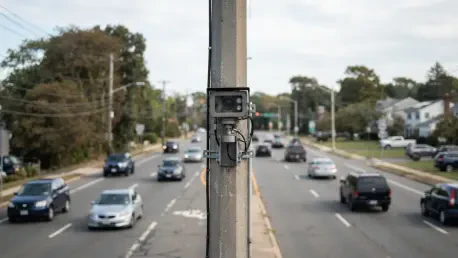

While touted as a vital tool for solving homicides and missing persons cases, automated roadside cameras currently operate under a fragmented patchwork of local policies. These systems, utilizing automated license plate reader technology, have expanded across Utah, turning common roads into data collection points managed by various vendors like Flock Safety. Proponents argue this infrastructure is a necessary evolution in policing, yet critics point to a lack of transparency regarding how long sensitive movement data is stored and who is permitted to query it. The absence of a unified state law has allowed individual agencies to create their own rules, leading to a significant disparity in how citizen privacy is prioritized from one county to the next. As the network grows denser, the potential for mass surveillance of innocent individuals becomes more pronounced, raising questions about the limits of government oversight in an increasingly digital and connected society.
The Reality of System Exploitation
The case of Jose Baires, a former detective with the Tooele County Sheriff’s Office, provides a stark illustration of how these advanced systems can be exploited for personal motives. Records from a detailed internal affairs investigation revealed that in late 2025, Baires utilized the regional license plate reader database to track a vehicle belonging to the estranged husband of a woman with whom he was involved. To bypass the system’s requirements for a valid case number, he intentionally entered information from a matter that had already been closed, tricking the software into granting him access. He performed twenty separate detection searches without any legitimate law enforcement justification, demonstrating a clear vulnerability in the digital safeguards. This breach of trust resulted in an eighteen-month suspension of his certification, yet it served as a chilling reminder of how easily internal barriers can be circumvented by those with insider access.
The Baires incident was particularly concerning because it was not identified through a proactive system audit or an automated flag by the vendor, but rather surfaced by chance. The misuse only came to light during a secondary, unrelated investigation into a conflict of interest, suggesting that many other instances of unauthorized access might currently go unnoticed. Many law enforcement agencies claim that their internal checks are sufficient to deter misconduct, but the reality is that many of these audits are reactive rather than preventive. Privacy advocates argue that without more rigorous, automated oversight, the promise of secure data remains largely theoretical. The incident has intensified the debate over whether law enforcement can be trusted to police its own use of such powerful surveillance tools, especially when the technology is designed to capture the movements of anyone who drives past a camera, regardless of their legal standing in a case.
Inconsistent Protocols and Regional Gaps
A comprehensive survey of over thirty law enforcement agencies across Utah reveals a dramatic lack of uniformity regarding the management of license plate data. While some departments, such as those in urban areas, claim to delete captured images after only seven days to protect resident privacy, others maintain these records for up to nine months. This creates a massive disparity in the digital footprint left by Utah drivers as they traverse different jurisdictions, often without awareness of the varying retention policies in place. A driver commuting from a city with strict deletion rules to one with long-term storage might have their daily routine archived for nearly a year in one database while it vanishes in another. This “zip code privacy” model highlights the urgent need for a statewide standard that ensures a predictable level of protection for all citizens, preventing the creation of permanent travel logs that could be accessed long after any investigative need.
The frequency and rigor of internal audits also vary across the state, with some departments maintaining strict weekly reviews while others have admitted to missing entire calendar years of oversight. In Clearfield, lapses in the auditing process meant that no formal checks were conducted for a long period, leaving the system ripe for potential exploitation. Furthermore, the practice of sharing data with out-of-state entities has raised alarms. In Weber County, it was discovered that data from just ten roadside cameras had been queried over five million times by agencies spanning forty-five different states. This high volume of external access occurred before local officials implemented tighter restrictions to “lock down” their databases. Such instances demonstrate that without clear regional and state boundaries, the movements of local residents can be monitored by distant law enforcement agencies with little to no local accountability or transparency.
The Debate Over Future Guardrails
Advocacy groups like the Utah Civic Compact have emerged as primary voices calling for a significant overhaul of how these surveillance networks are managed. The organization argues that the current approach, where each municipality sets its own rules, is fundamentally unsustainable and invites corruption. Clark Dice, a representative for the Compact, has emphasized that the goal is not to eliminate the technology, as its utility in criminal investigations is recognized, but to implement guardrails that prevent mass surveillance. The Compact is pushing for the introduction of mandatory third-party audits to replace the current model of self-policing, which they believe is inherently biased and prone to overlooking misconduct. By introducing an objective layer of oversight, these advocates hope to ensure that the public can trust that their data is only being used for legitimate purposes and that any misuse is met with swift, public consequences for those involved.
Police leadership from major cities like Salt Lake City and Ogden maintain that license plate readers are a life-saving resource that should not be restricted by excessive legislative red tape. They frequently cite success stories where the technology was instrumental in locating kidnapped children, identifying vehicles involved in hit-and-run fatalities, and providing critical leads in homicide cases. Officers express frustration when incidents like the Baires case occur, as such malfeasance threatens the public support necessary to maintain these investigative tools. They argue that existing misdemeanor laws already provide a strong deterrent against misuse and that the focus should remain on punishing bad actors rather than stripping a vital capability from an entire department. For many in law enforcement, the conversation should center on refining existing protocols rather than creating bureaucratic hurdles that could potentially delay time-sensitive criminal searches.
Strategic Pathways for Legislative Reform
As the Utah Legislature prepares for its upcoming session in early 2027, there is a growing consensus that the current fragmented approach to data management is no longer viable. Both privacy advocates and law enforcement officials agree that some level of statewide intervention is inevitable to resolve the conflicting policies currently in place. One emerging trend is the movement toward “data sovereignty,” where departments are taking steps to limit the mass sharing of their records with out-of-state entities. This shift reflects a broader concern about the potential for distant state agencies to misuse local information for purposes that do not align with Utah’s specific legal standards. The upcoming legislative debates are expected to focus on defining a uniform retention period and establishing clear criteria for when data can be queried, ensuring that the benefits of the technology are preserved while providing residents with a shield against overreach.
The investigative analysis of Utah’s license plate reader infrastructure highlighted a critical need for centralized regulation to prevent future misconduct. The state recognized that the existing patchwork of local rules failed to offer adequate protection, as evidenced by the documented exploitation of the system by motivated individuals. To address these vulnerabilities, policymakers moved toward a model that mandated frequent, objective audits and standardized data deletion timelines across all municipalities. This shift prioritized the creation of a transparent oversight body that removed the burden of self-policing from local departments, thereby restoring a measure of public confidence in surveillance technology. By implementing these rigorous standards, the state successfully balanced the pursuit of public safety with the preservation of constitutional liberties. These actions ensured that while cameras remained operational, they functioned under a clear framework that prohibited the tracking of citizens.