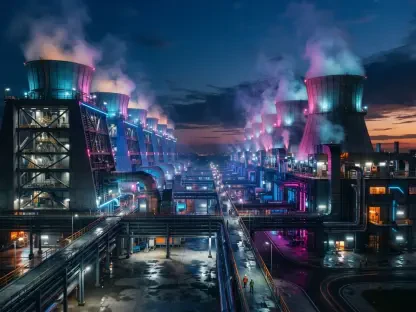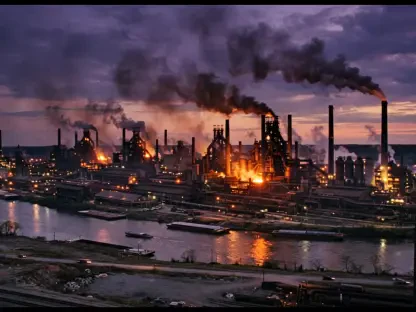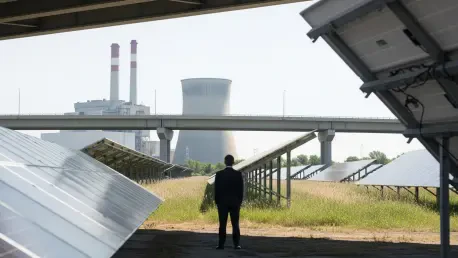

The newly ratified New York State budget for the current fiscal cycle has ignited a firestorm of controversy among climate scientists and policy experts who once viewed the state as the nation’s environmental vanguard. This massive $268.5 billion spending plan represents more than just a financial roadmap; it signals a fundamental recalibration of priorities where immediate economic relief takes precedence over the ambitious ecological targets established only a few years ago. Governor Kathy Hochul’s administration argued that the revisions were necessary to balance the state’s books and protect taxpayers from rising utility costs, but critics contend that the cost of inaction will far outweigh these short-term savings. By softening the mandates that previously governed the state’s transition to a green economy, the executive branch has effectively decoupled fiscal policy from environmental accountability. This shift has frustrated advocacy groups and raised questions about the long-term viability of achieving a zero-emissions future in a volatile energy market.
The Opaque Nature of Budgetary Negotiations
The legislative strategy employed to secure the passage of the Transportation and Economic Development portion of the budget has faced intense scrutiny for its perceived lack of transparency and democratic oversight. Major policy shifts that would typically require months of public hearings and expert testimony were instead negotiated behind closed doors, away from the prying eyes of constituents and stakeholders. This secretive approach meant that lawmakers were often presented with hundreds of pages of complex legal text just hours before being called to cast their final votes, leaving little time for meaningful analysis or debate. By embedding significant environmental deregulation within a must-pass spending bill, the administration successfully bypassed the traditional legislative hurdles that often slow or stall controversial reforms. This maneuver effectively neutralized the influence of environmental committees and reduced the role of the state legislature to a simple rubber stamp for executive decisions.
This departure from standard legislative procedures has created a dangerous precedent for how environmental policy is conducted in Albany, potentially undermining future efforts to pass climate-focused laws. When the most consequential changes to New York’s ecological framework are shielded from public discourse, the legitimacy of those policies is inevitably called into question by both the public and the scientific community. Advocacy groups have pointed out that the exclusion of expert voices during the negotiation phase allowed for the inclusion of industry-friendly language that would likely have been rejected in an open forum. Furthermore, the speed at which these revisions were pushed through prevented a thorough assessment of how the new laws would interact with existing municipal green initiatives. The erosion of deliberative transparency signals a broader shift toward a more centralized form of governance that prioritizes political convenience over the rigorous, evidence-based policymaking required to address the ongoing climate crisis effectively.
Decelerating the Climate Leadership and Community Protection Act
At the core of the recent policy shift is a series of substantial amendments to the Climate Leadership and Community Protection Act, a framework that was once heralded as the most progressive state-level environmental law in the United States. The new budget provisions grant the Department of Environmental Conservation an additional five-year window to finalize the critical regulations necessary to implement the state’s “cap and invest” program. This extension essentially puts a freeze on the collection of revenue from the state’s largest industrial polluters, funds that were originally earmarked to finance the massive expansion of renewable energy infrastructure. Without this predictable stream of capital, many of the planned wind, solar, and hydroelectric projects may face significant delays or outright cancellations due to a lack of state-level subsidies. The delay also postpones the rollout of financial relief programs designed to help low-income households transition to cleaner heating and cooling systems, potentially stalling the state’s progress for years.
Beyond the simple timeline extensions, the budget introduces new and highly subjective criteria for regulatory compliance that center on the concepts of cost containment and technical feasibility. While these terms may sound reasonable in a purely economic context, environmental attorneys argue that they serve as expansive loopholes that allow the state to grant indefinite waivers to fossil fuel plants. These provisions effectively permit the Department of Environmental Conservation to prioritize corporate profitability over atmospheric health if the cost of transitioning to cleaner technology is deemed too high. Perhaps most significantly, these legislative changes have functionally mooted a recent landmark victory in the state court system achieved by the Sierra Club. The court had previously ordered the state to adhere to its original regulatory schedule, but the new budget language overrides judicial mandate by rewriting the laws the court was tasked with enforcing. This strategic use of the budget process to circumvent judicial oversight has deeply concerned legal experts.
Statistical Gimmicks and Environmental Review Loopholes
A particularly contentious aspect of the new fiscal plan involves the adoption of revised environmental accounting methods that critics have labeled as mathematical sleight of hand. By extending the timeframe over which methane emissions are measured, the state can artificially lower the reported impact of natural gas infrastructure on the environment. Methane is a potent greenhouse gas that dissipates faster than carbon dioxide but traps significantly more heat in the short term; thus, a longer measurement window minimizes its perceived severity in official reports. Additionally, the new budget allows the state to ignore the lifecycle emissions associated with fossil fuels that are extracted out of state but consumed within New York’s borders. This change creates a statistical illusion of progress toward emission targets while the actual volume of pollutants released into the global atmosphere remains unchanged. Environmental scientists have warned that such gimmicks undermine the scientific integrity of the state’s goals and provide a false sense of security.
In a move intended to address the state’s chronic housing shortage, the budget has also introduced significant exemptions to the State Environmental Quality Review Act for certain residential developments. Projects that include up to one hundred units are now permitted to bypass the traditionally rigorous environmental assessment process if they are situated on land defined as previously disturbed. While the goal of increasing housing density is widely supported, the broad and somewhat ambiguous definition of “disturbed land” has raised alarms about the potential for building on contaminated sites. Critics fear that without the oversight provided by a full environmental review, housing could be fast-tracked on toxic brownfields or near ecologically sensitive wetlands without adequate remediation for future residents. This rollback dismantles a regulatory safeguard that has protected New York communities for over five decades. By framing environmental protection and housing availability as a zero-sum game, the budget risks creating new public health crises in vulnerable neighborhoods.
Navigating the Path Toward Compensatory Environmental Action
Environmental advocates have characterized these budget revisions as a shortsighted retreat that leaves New York increasingly vulnerable to the inherent volatility of the global fossil fuel market. By slowing the transition to domestic renewable energy, the state remains tethered to external supply chains that are often subject to geopolitical instability and unpredictable price spikes. This continued reliance does not only pose an economic risk but also ensures that the state will continue to face the escalating costs associated with extreme weather events, such as flooding and heatwaves. Advocacy groups have argued that the long-term expenses required for disaster recovery and environmental remediation will eventually dwarf any temporary savings gained by delaying green initiatives. Advocates emphasized that bypassing environmental reviews for housing development does not resolve the root causes of the affordability crisis; rather, it shifts the burden of future health issues and land restoration onto local municipalities, creating a legacy of environmental debt for the next generation.
To address the deficits created by these budgetary rollbacks, legislative leaders identified several critical avenues for compensatory action that sought to restore the state’s environmental standing. One primary focus involved the drafting of more stringent regulations for energy-intensive sectors, particularly those associated with the rapid expansion of artificial intelligence data centers and cryptocurrency mining operations. Policymakers also recognized the urgent necessity of passing comprehensive bans on the use of forever chemicals to safeguard the state’s clean water supplies. Furthermore, the focus shifted toward streamlining the permitting process specifically for offshore wind and large-scale battery storage projects to offset the delays caused by the recent budget amendments. These proposed solutions aimed to decouple economic development from environmental degradation by incentivizing innovation in green technology rather than relying on outdated regulatory exemptions. By prioritizing these targeted legislative efforts, the state sought to reconcile its fiscal constraints with the non-negotiable demands of a changing climate.