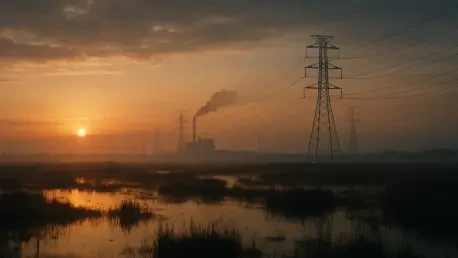

The silent stretches of the ACE Basin now serve as the front line for a legal confrontation that will determine the energy trajectory of the entire American Southeast. As legacy coal-fired plants reach the end of their operational lifespans, South Carolina has pivoted aggressively toward natural gas combined-cycle facilities as the primary solution for baseload power. This transition represents a significant shift in utility strategy, favoring the perceived efficiency and lower carbon intensity of gas over the aging coal infrastructure that once defined the regional grid.
The centerpiece of this expansion is the Canadys Station, a $2.5 billion project born from a rare joint venture between Dominion Energy and the state-owned utility Santee Cooper. By combining resources, these two entities aim to establish a dominant power hub that can respond to the rapid industrial and residential growth currently transforming the Lowcountry. This partnership is viewed by the utilities as a necessary pooling of capital to handle the immense financial and logistical burden of modernizing the state energy portfolio.
With a projected output of 2,200 megawatts, the facility is designed to generate enough electricity to sustain over one million homes, addressing what regulators describe as skyrocketing demand. However, the choice of location has ignited a fierce debate regarding the compatibility of heavy industrial infrastructure with the ACE Basin. This watershed is one of the most biodiverse and protected areas on the East Coast, and the prospect of a massive industrial footprint near its heart has raised questions about the long-term viability of balancing energy production with ecological preservation.
Emerging Shifts in Utility Development and Market Forecasting
Trends in Regional Energy Generation and Rural Land Use
The push for expanded capacity is leading to a noticeable industrialization of rural landscapes, particularly in Colleton and Hampton counties. Local property owners find themselves caught between the state broader energy goals and the preservation of their own property rights and lifestyle. This friction has moved beyond simple land use debates, evolving into a fundamental question of whether the quiet, agricultural character of these regions can survive the encroachment of high-output utility corridors.
Infrastructure interdependency is a critical factor here, as the plant cannot function without the proposed 71-mile Elba Express pipeline. This secondary project has become a prerequisite for the viability of the Canadys Station, effectively broadening the scope of the legal and social conflict across multiple jurisdictions. The pipeline represents a logistical necessity for the utilities, yet for those in its path, it symbolizes a permanent alteration of the landscape that extends far beyond the power plant itself.
Public sentiment is also shifting, driven by a growing coalition of grassroots organizers and environmental groups like the Conservation Voters of South Carolina. These organizations are increasingly effective at mobilizing citizens against traditional utility models that favor centralized fossil fuel generation. This trend indicates a diversifying public discourse where energy reliability is no longer the sole metric of success; instead, transparency and community alignment have become essential components of the development process.
Performance Indicators and Long-Term Economic Projections
Economic projections for the Canadys Station initially centered on a $2.5 billion capital investment, but market watchers are now closely monitoring the potential for rising costs. Historically, large-scale energy infrastructure projects are susceptible to inflationary pressures and supply chain fluctuations, which can eventually impact ratepayer costs. Analysts suggest that the final price tag may dictate whether the project remains a cost-effective solution for South Carolina consumers over the next decade.
On the local level, Colleton County officials have pointed toward forecasted job creation and tax revenue as primary benefits of the project. The construction phase alone is expected to inject significant capital into the local economy, providing a temporary stimulus for regional businesses. Proponents argue that the long-term tax contributions from such a high-value asset will provide essential funding for public services, creating an economic windfall that rural counties often struggle to secure through other means.
Grid reliability remains the most potent argument in favor of the facility, with state regulators providing data-driven forecasts that predict energy shortfalls without new baseload generation. The Public Service Commission views the Canadys plant as a stabilizing force for the regional grid, essential for avoiding the kind of volatility seen in other markets during extreme weather events. This perspective prioritizes the collective security of the state electrical supply, framing the project as an indispensable tool for future economic stability.
Navigating Environmental Risks and Public Health Obstacles
The biodiversity conflict centers on the ecological risks posed to the Edisto River and the broader ACE Basin ecosystem. Environmental advocates argue that the withdrawal of vast quantities of water and the discharge of heated runoff could disrupt the delicate balance of aquatic life. These concerns are not merely aesthetic; they touch upon the fundamental health of a watershed that supports both local fisheries and a burgeoning ecotourism industry.
Public health remains a primary concern for local residents, particularly regarding the emission of fine particulate matter. Critics have questioned the magnitude, scope, and duration of potential air quality impacts, arguing that the concentration of industrial output could lead to increased respiratory issues in nearby communities. The debate focuses on whether the current mitigation strategies are sufficient to protect the long-term well-being of the population residing in the shadow of the plant.
A significant data gap controversy has emerged, with opponents highlighting a lack of prospective environmental impact studies in the current regulatory record. This deficiency has fueled pipeline litigation, as hundreds of private landowners manage the legal complexities of eminent domain and survey access disputes. Without a comprehensive understanding of the project footprint, many residents feel that their legal rights and health protections are being sidelined in favor of utility expediency.
The Regulatory Framework and Judicial Oversight
The Public Service Commission mandate grants it the authority to override local restrictions if they are deemed unreasonably restrictive to the broader energy needs of the state. This power creates a tension between local governance and state-wide utility planning, as the commission must balance localized environmental concerns against the demand for reliable power. The current battle tests the limits of this authority and the extent to which local voices can influence major infrastructure decisions.
Statutory obligations are now under appeal, with the legal argument focusing on whether environmental and health impacts must be treated as absolute prerequisites for approval. Landowners contend that the commission failed to perform a sufficiently rigorous analysis before granting the project a certificate of public convenience and necessity. This judicial review will likely clarify the level of scientific and environmental scrutiny required for all future large-scale energy developments in the state.
Legislative influence also plays a role, as the energy package signed by Governor Henry McMaster has accelerated the timeline for natural gas projects. This political backing provides a clear signal to utilities that the state government prioritizes infrastructure expansion as a component of economic growth. However, the SC Supreme Court remains the final arbiter of compliance and accountability, ensuring that legislative enthusiasm does not bypass established environmental protections.
The Future Path of South Carolina’s Power Generation
Technological evolution is expected to play a critical role in the operation of the Canadys plant, with state-of-the-art emission controls integrated into the design. Furthermore, the potential for future hydrogen integration offers a pathway for the plant to transition toward even lower carbon emissions as technology matures from 2026 to 2035. This flexibility is a key selling point for combined-cycle facilities, as it allows them to adapt to changing environmental standards and technological breakthroughs.
Market disruptors remain a significant variable, as the outcome of the Supreme Court battle could set a lasting precedent for or against future fossil fuel infrastructure in the Lowcountry. If the court rules in favor of the landowners, it may signal a shift toward decentralized energy resources and a more stringent regulatory environment for traditional utilities. Conversely, a victory for the utilities could solidify the role of natural gas as the dominant energy source for the region for the next several decades.
Global economic influences, specifically the volatility of natural gas prices, continue to affect the long-term feasibility of large-scale plants. While gas is currently a cost-effective fuel source, fluctuations in global markets could lead to unpredictable rate increases for consumers. Balancing innovation and conservation will require identifying growth areas where energy reliability and environmental stewardship can coexist without placing an undue financial burden on the state’s residents.
Synthesis of the Legal Conflict and Industry Outlook
The arguments presented to the South Carolina Supreme Court summarized a profound disagreement over the state regulatory duties and the definition of the public interest. The court was tasked with deciding whether the potential for ecological damage outweighed the immediate necessity of industrial expansion. This ruling was expected to determine if the state current approval processes were rigorous enough to protect citizens from the unintended consequences of rapid energy growth.
The reliability versus integrity trade-off ultimately required a choice between the certainty of power and the preservation of natural heritage. It was suggested that industrial necessity did not provide a blank check for environmental degradation, especially in a region as sensitive as the ACE Basin. Stakeholders were advised to look toward a model where utility planning integrated environmental health as a core metric of project viability. These conclusions aimed to guide the industry toward a more collaborative approach that avoided the costly delays and social friction seen in the Canadys Station dispute.
A new standard of transparency emerged as the primary recommendation for investors and community advocates navigating this landmark transition. The focus shifted from mere regulatory compliance to a more holistic approach that accounted for the cumulative impacts on rural landscapes and public health. By prioritizing comprehensive data and early engagement, the state sought a path forward where infrastructure projects were built on a foundation of public trust rather than legal confrontation. This shift moved the industry toward a future where energy security and conservation were no longer viewed as competing interests.