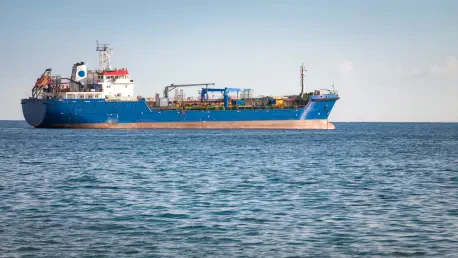

In the vast, open expanse of international waters, the interception of a single oil tanker has ignited a diplomatic firestorm, crystallizing the simmering conflict between national sovereignty and global economic pressure. The recent seizure of the Russian-flagged tanker, the Bella, by United States forces marks a significant escalation in the enforcement of sanctions against Venezuela, thrusting the shadowy world of illicit oil transport into the spotlight. This event is not merely about a ship and its cargo; it represents a critical juncture in a broader geopolitical struggle, testing the limits of international law and economic warfare.
Freedom of Navigation vs a Global Blockade
At the heart of Russia’s condemnation is the principle of freedom of navigation, a cornerstone of maritime law enshrined in the 1982 UN Convention on the Law of the Sea. Moscow’s Transport Ministry swiftly cited the convention, arguing that the American action on the high seas was a flagrant violation of established international norms. This legal challenge frames the seizure as an act of piracy under the guise of sanctions enforcement, asserting that no single nation has the right to police global waterways based on its domestic policies.
In direct opposition, the United States’ position prioritizes the integrity of its sanctions regime. Washington’s blockade on Venezuelan oil is designed as a tool of foreign policy, and the interception of the Bella serves as a clear signal that it will not tolerate evasion. This creates a fundamental conflict where the universal right to traverse the seas collides with a superpower’s determination to enforce its economic restrictions, regardless of a vessel’s flag or location.
The Sanctions Standoff Unpacked
The American sanctions against Venezuela’s oil industry form the backdrop for this confrontation. Imposed to exert pressure on the Venezuelan government, these measures have effectively cut off a major source of the nation’s revenue from legitimate international markets. This economic blockade has crippled the country’s economy but has also spurred the creation of alternative, clandestine trade routes to bypass Western financial systems and keep oil flowing to allied nations.
This environment has given rise to the “shadow fleet,” a sprawling network of aging tankers with opaque ownership, often operating with disabled tracking systems to move sanctioned oil. Russia has been accused of mastering the use of this covert fleet to transport crude from both Venezuela and Iran, creating a resilient and difficult-to-trace supply chain. For Western allies, these vessels are not legitimate merchant ships but instruments of a coordinated effort to undermine global sanctions.
Anatomy of the Interception
The seizure of the Bella was a meticulously coordinated U.S. operation. U.S. Defense Secretary Pete Hegseth stated the action was intended to send an unequivocal message, reinforcing the strict blockade on Venezuelan oil and demonstrating a firm line against sanctions evasion. This interception was more than a random stop; it was a targeted move based on intelligence aimed at disrupting a critical node in the illicit trade network.
The operation also highlighted close Western collaboration. United Kingdom Defence Secretary John Healey confirmed that British bases played a supporting role in staging the mission. He condemned the tanker’s activities as part of a “Russian-Iranian axis of sanctions evasion” that destabilizes global security. Healey further pledged increased allied action against these shadow fleet operations, signaling a more aggressive, unified posture.
Diplomatic Fallout A Chorus of Condemnation and Support
The international reaction was swift and polarized. Russia’s Foreign Ministry decried the seizure as a “disproportionate” and “excessive” action, questioning the intense focus from the U.S. and its NATO allies. This protest positioned Moscow as a defender of international law against what it portrays as unilateral American aggression on the world stage.
Conversely, Western allies presented a unified front in support of the seizure. An anonymous European official described the operation as a “welcome and clear message” to Moscow, emphasizing a collective resolve to dismantle the “black fleets” used to transport sanctioned oil. This perspective underscores a shared commitment among Western nations to uphold economic sanctions against both Russia and Venezuela, viewing it as essential for maintaining international order.
Broader Implications A New Front in Economic Warfare
The interception of the Bella elevated the conflict over covert maritime trade, moving it from a matter of quiet surveillance to overt enforcement. This action signaled a new, more confrontational phase in economic warfare, where the risk for operators of the shadow fleet now includes the potential loss of their multi-million dollar assets and cargo.
This escalation has set the stage for potential retaliation and has raised complex questions about the future of sanctions enforcement. The incident challenged the established norms of maritime trade and left the international community to grapple with its long-term consequences. The human and economic costs for Venezuela and other involved nations were starkly highlighted, demonstrating how geopolitical maneuvers on the high seas directly impact economies and populations on land.