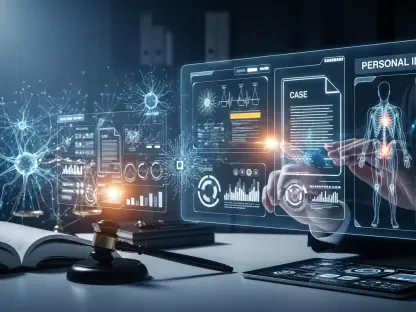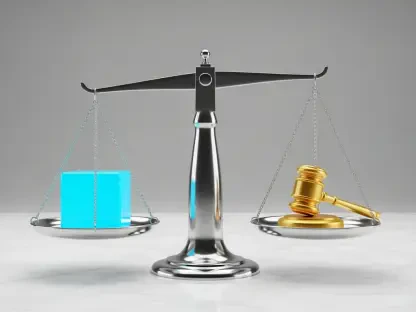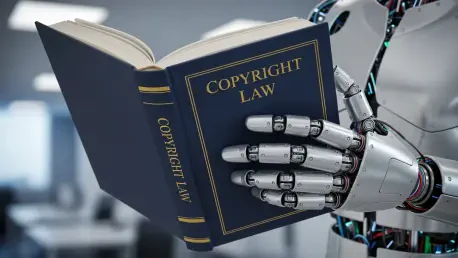

The centuries-old legal structures designed to protect human creativity are now facing their most profound test, as generative artificial intelligence dismantles the very definitions of authorship and originality. What began as a niche technological curiosity has rapidly evolved into a mainstream force, generating text, images, and music that are often indistinguishable from human-made works. This surge in AI-driven creation is forcing a critical re-evaluation of intellectual property law, an intricate system built on the fundamental assumption that a human mind is the origin of every creative expression. As these intelligent systems become more integrated into commercial and artistic workflows, the resulting legal friction is creating widespread uncertainty, setting the stage for a paradigm shift in how society values and protects creative works.
The New Creative Frontier Where AI and Copyright Collide
The current state of intellectual property is defined by a direct conflict between the exponential growth of generative AI and copyright laws that have evolved at a glacial pace. AI models are trained by ingesting petabytes of digital information from the open internet, a process that invariably includes vast quantities of copyrighted text, images, and code. This practice has placed technology developers on a collision course with the foundational principles of copyright, sparking high-stakes legal battles that question the very legality of how these powerful systems are built. The core of the issue lies in the law’s inability to anticipate a non-human entity capable of learning from and replicating creative styles on a massive scale.
This complex landscape involves a diverse set of stakeholders, each with competing interests and significant investments. On one side are the AI developers and technology corporations, who argue that training on publicly available data is a transformative act protected under fair use doctrines, essential for fostering innovation. On the other side are content creators—artists, writers, musicians, and photographers—who contend that this unauthorized use of their work to build commercial products constitutes mass-scale infringement, devaluing their intellectual property and threatening their livelihoods. Caught in the middle are businesses that use AI-generated content and regulatory bodies tasked with modernizing legal frameworks without stifling technological progress.
The disruptive impact of AI-driven content generation extends far beyond legal theory, reshaping the economic realities of creative industries. The ability to produce high-quality creative assets quickly and at a low cost presents both an unprecedented opportunity and a formidable threat. For marketers, designers, and media companies, AI tools promise to dramatically boost productivity and unlock new creative avenues. However, this same efficiency also risks commoditizing creative skills that were once the exclusive domain of human professionals, raising urgent questions about the future of creative labor and the commercial value of originality in an increasingly automated world.
Reshaping the Landscape of Creativity and Commerce
The Dual Disruption Redefining Authorship and Fair Use
At the heart of the legal debate is the concept of “fair use,” a doctrine that permits limited use of copyrighted material without permission for purposes such as criticism, commentary, or research. AI developers argue that training models on vast datasets is a modern form of research and is fundamentally transformative, as the AI learns patterns and styles rather than simply reproducing specific works. This position is fiercely contested by rights holders, who argue the commercial nature of most large-scale AI models and the potential for generated output to compete directly with the source material negates any fair use claim. The lack of clear legal precedent has turned this into one of the most contentious battlegrounds in modern intellectual property law.
Simultaneously, AI challenges the very definition of authorship. For centuries, copyright law has been anchored to the concept of a human author, a person who translates an original idea into a fixed, tangible form. Works generated entirely by an AI with minimal human guidance do not fit this model. Current legal interpretations in most jurisdictions, including the United States, suggest that a work must have a human author to qualify for copyright protection. This creates a perplexing scenario where sophisticated, commercially valuable content created by AI may automatically enter the public domain, leaving it unprotected and open for anyone to use, copy, and monetize without restriction.
The Economic Stakes Valuing Creation in an Automated World
The profound legal uncertainty surrounding AI-generated content has significant market implications, particularly for businesses that rely on intellectual property for their competitive advantage. A company that uses an AI to generate a new logo, marketing jingle, or software code may find it has no legal recourse if a competitor copies it. This inability to secure exclusive rights over commercially valuable assets creates a chilling effect on investment and innovation, as businesses become hesitant to rely on tools that produce legally indefensible output. The ambiguity forces companies to weigh the efficiency gains of AI against the significant risk of creating unprotected, and therefore devalued, assets.
As AI tools become more sophisticated and widely adopted, their projected economic impact on creative industries is immense. The market for AI-generated content is expected to expand dramatically, potentially displacing human creators in sectors like stock photography, graphic design, and content writing. While this shift could lower costs for businesses, it also threatens to erode the income streams that support creative professionals. This economic pressure is forcing a re-evaluation of business models, with a growing focus on licensing data for AI training and developing platforms that ensure human creators are compensated when their work contributes to the automated creative ecosystem. The long-term stability of these industries may depend on establishing new frameworks for valuing and monetizing both human and machine-generated content.
Unraveling the Core Legal and Ethical Dilemmas
A fundamental obstacle in resolving AI-related copyright disputes is the difficulty in defining “meaningful human input.” Courts and copyright offices are now grappling with where to draw the line between a human using AI as a sophisticated tool and an AI generating a work autonomously. If a human provides a highly detailed prompt, curates dozens of outputs, and extensively edits the final result, is that enough to grant them authorship? The absence of a clear, quantifiable standard for what constitutes sufficient human creativity creates a legal gray area that is difficult for creators and businesses to navigate, leaving the copyrightability of AI-assisted works to be decided on a case-by-case basis.
This ambiguity leads to another complex issue: the potential for a vast and growing body of AI-generated work to fall into the public domain by default. If a work is deemed to lack the requisite human authorship, it receives no copyright protection upon creation. This creates a legal vacuum. For instance, a stunning piece of AI art that goes viral could be freely used on merchandise by anyone, with no royalties paid to the person who prompted its creation or the company that developed the AI. This scenario not only undermines incentives for using AI creatively but also complicates the legal status of derivative works, creating a tangled web of ownership questions.
For rights holders, protecting their work from unauthorized use in AI training datasets presents a monumental challenge. The sheer scale and opacity of the datasets used to train large language and image models make it nearly impossible for an individual creator to determine if their specific works were included. Even if they could prove their work was used, the current legal framework offers few practical remedies for this new form of mass-scale ingestion. This enforcement gap leaves many creators feeling powerless, their copyrighted material consumed to train commercial systems without their consent or compensation, fueling calls for greater transparency and new legal tools for protection.
Forging New Rules for an Intelligent Age
In response to this technological disruption, a global regulatory movement is now underway to modernize copyright frameworks. Governments from the European Union to Japan and the United States are actively exploring legislative solutions to address the challenges posed by AI. These efforts are focused on clarifying the legal status of data mining for AI training, defining the boundaries of AI-assisted authorship, and establishing liability for infringing content produced by AI systems. The goal is to create a predictable legal environment that can accommodate technological advancement while preserving the core principles of intellectual property protection.
Several proposed solutions are gaining traction in these international discussions. One prominent idea is the creation of specific legal exceptions for text and data mining (TDM), which would grant AI developers a clear right to train their models on copyrighted data under certain conditions. These exceptions are often coupled with mandatory opt-out mechanisms, allowing rights holders to easily exclude their works from training datasets. Another approach involves developing new collective licensing models, similar to those used in the music industry, where AI companies would pay fees into a central fund that distributes royalties to creators whose work was used for training.
Beyond legislative changes, there is a strong push for greater transparency and new industry standards. A key proposal is the mandatory labeling or watermarking of AI-generated content, which would help distinguish it from human-created works. This would not only provide clarity for consumers but also assist rights holders in identifying potential infringements. Furthermore, compliance is becoming a central focus for businesses, which are now developing internal governance policies to manage the legal risks associated with using both AI development tools and AI-generated content, ensuring their practices align with the rapidly evolving legal landscape.
The Path Forward for Creators Innovators and Industries
Looking ahead, the role of AI in creative fields is set to evolve from a simple tool for content generation to a sophisticated collaborative partner. The future trajectory points toward new forms of human-machine synergy, where AI handles complex technical tasks, generates diverse concepts, and personalizes content at scale, while human creators focus on strategic direction, emotional nuance, and final curation. This collaborative model has the potential to unlock unprecedented levels of creativity and productivity, enabling the creation of entirely new art forms and interactive experiences that were previously unimaginable.
To navigate this shifting legal and technological terrain, both creators and businesses must adopt proactive strategies. For individual creators, this means being diligent about copyright registration, carefully reviewing the terms of service for AI platforms, and exploring new licensing opportunities for their data. For businesses, the priority is risk mitigation. This involves establishing clear internal policies on the use of AI tools, conducting thorough due diligence on the provenance of AI-generated assets, and investing in AI systems trained on ethically sourced, fully licensed data. Staying informed about ongoing legal developments is no longer optional but a critical component of strategic planning.
The market is also poised for disruption from new technologies and business models designed to address these challenges. Advanced AI models are being developed with built-in mechanisms for attribution and rights management, capable of tracking the influence of source material on their output. In parallel, a new industry is emerging around the creation and curation of licensed datasets specifically for AI training. These platforms offer AI developers a legally sound alternative to scraping the open web, creating a new revenue stream for creators and setting the stage for a more equitable and sustainable creative ecosystem.
Conclusion Striking a Balance for a Creative Future
The analysis of AI’s intersection with copyright law revealed a fundamental tension between the rapid pace of technological innovation and the established rights of human creators. The investigation found that legal frameworks developed over the last century were largely unprepared for the unique challenges presented by generative AI, particularly concerning the concepts of fair use for training data and the legal requirement of human authorship for copyright protection. This gap created significant legal uncertainty that impacted every stakeholder, from AI developers to individual artists.
It became evident throughout the report that the path forward necessitated a careful recalibration of legal and ethical norms. The discussions among policymakers, industry leaders, and creative communities highlighted an urgent need to evolve copyright law not to stifle innovation but to foster a balanced and sustainable ecosystem. The goal that emerged was one where the development of powerful AI systems could proceed in a way that respects and compensates the human creativity that makes them possible.
Ultimately, the report concluded that a forward-looking and adaptive approach was essential for navigating this new frontier. The findings supported the development of clear legal pathways, such as new licensing models and transparent data mining regulations, that support AI developers while simultaneously upholding the core principles of intellectual property. The decisions made in the coming years shaped the future of creativity, defining how ownership, innovation, and artistry would function in an increasingly intelligent and automated world.