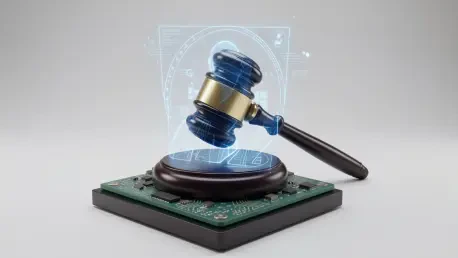

The digital architecture of human persona is currently undergoing a radical transformation as generative models transition from simple data processing toward the near-perfect replication of individual human essence. This evolution has fundamentally shifted the conversation from simple digital manipulation to a complex debate over human authorship and the sanctity of personal identity. While early concerns regarding artificial intelligence focused on deepfake visual forgeries, the industry has rapidly expanded into the realm of stylistic impersonation and the replication of unique creative voices. This technological shift affects a wide spectrum of players, from Silicon Valley tech giants and startups to journalists, scholars, and creative professionals. As the market for AI-driven content creation grows, existing regulations are being put to the ultimate test, forcing a reevaluation of how legal systems define and defend the essence of a professional persona in an automated age.
The rapid advancement of these systems has fundamentally altered the landscape of digital authenticity, moving the conversation beyond simple visual deepfakes to a more complex interrogation of identity and intellectual property. While initial public concern focused on the creation of forged videos or non-consensual imagery, the locus of concern has shifted toward more subtle forms of impersonation. A pivotal moment in this evolution is the recent legal tension surrounding platforms that allow users to mimic the specific writing styles of identifiable scholars and journalists without prior consent. This serves as a vital case study for a broader legal and ethical debate: whether existing legal frameworks are sufficient to combat the challenges of generative AI or if a fundamental legislative overhaul is required.
Emerging Dynamics in Synthetic Media and Identity Replication
Technological Mimicry and the Shift Toward Stylistic Impersonation
The most significant trend currently impacting the AI industry is the move toward personality-driven outputs. New generative models are no longer just producing generic text or images; they are increasingly capable of mimicking specific stylistic nuances, rhetorical patterns, and professional reputations. This capability has created a new market driver: the demand for branded content that carries the weight of an established expert’s voice without their active participation. As consumer behaviors shift toward personalizing AI interactions, the opportunity for companies to offer writing in the style of specific individuals has become a lucrative but legally perilous frontier.
This practice does more than just mimic a technical skill; it suggests a level of participation or endorsement by the individuals being imitated. For a professional writer, a style is not merely a technical preference but a manifestation of professional identity and a cornerstone of livelihood. When an AI company uses a name to sell a stylistic imitation service, it creates a false impression of a partnership. This raises profound questions about the right of individuals to control the commercial use of their identity in an era where software can convincingly replicate human output.
Market Growth and the Economic Projections of the Generative Era
Data indicates that the generative AI market is on a trajectory of exponential growth, with investment flowing into tools that enhance creative productivity. From 2026 to 2028, the industry is expected to see a surge in specialized models that cater to niche professional aesthetics. However, this economic expansion is increasingly tied to the data used for training. Performance indicators now include not just the accuracy of the AI, but the authenticity of its stylistic replication. Future forecasts suggest that if left unregulated, the unauthorized use of professional identities could become a multi-billion-dollar shadow industry, potentially devaluing the human labor of the very individuals whose styles the machines are designed to emulate.
The shift toward these high-fidelity replicas is driving a reorganization of the digital economy. Companies are racing to secure datasets that include the complete catalogs of prolific authors and thinkers to gain a competitive edge in stylistic accuracy. This trend places the individual creator in a precarious position, where their past work becomes the engine for a future competitor that bears their name but offers them no compensation. If the market continues to prioritize replication over original contribution, the economic foundation of the creative class could face a systemic collapse.
Navigating the Complex Hurdles of AI-Driven Misappropriation
The industry faces a primary challenge in distinguishing between creative inspiration and unauthorized commercial exploitation. One of the most complex obstacles is the identity thicket—a web of overlapping claims where technological capabilities outpace clear legal definitions. Strategies to overcome these hurdles involve developing more robust technical watermarking and proof-of-personhood protocols. However, the fundamental difficulty remains: how can a system protect a style that was previously considered non-copyrightable when that style can now be perfectly replicated for commercial gain?
Moreover, the lack of transparency in AI training sets makes it difficult for individuals to even know when their identity is being utilized. Many large-scale models are trained on vast scrapes of the open internet, absorbing the linguistic and creative fingerprints of millions of people without clear attribution. This lack of visibility complicates the ability to seek legal recourse, as the causal link between a specific person’s output and an AI’s resulting behavior can be obscured by the sheer volume of data involved. Consequently, the industry is struggling to find a balance between the open nature of digital information and the private rights of the individuals who generated it.
The Current Regulatory Arsenal: Leveraging Established Legal Doctrines
The Versatility of the Right of Publicity and Common Law
Contrary to the belief that AI requires a brand-new legal framework, the current regulatory landscape is anchored by the Right of Publicity. This long-standing doctrine allows individuals to control the commercial use of their name, likeness, and voice. Despite being governed largely by state statutes in places like California and New York, the flexibility of common law provides a robust shield against identity misappropriation. These legacy laws are often adaptable to modern synthetic media because they focus on the unauthorized exploitation of an individual’s commercial value rather than the specific technology used to achieve that exploitation.
The primary tool currently available to plaintiffs is the assertion that their identity has been commodified without permission. While it is true that the right of publicity is governed by state law—leading some to believe it is a fragmented system—the reality is that virtually every state offers protection through either statutory law or a deep history of judicial precedents. Courts have consistently recognized the right to privacy and the right against identity misappropriation, proving that the inherent flexibility of these century-old legal principles can address the nuances of modern digital mimicry.
Federal Safeguards and the Role of the Lanham Act
Beyond state-level protections, federal statutes like the Lanham Act provide a critical defense against false endorsement and consumer confusion. If an AI service leads users to believe a specific journalist or scholar has authorized a stylistic mimicry, it triggers federal protections against deceptive business practices. These existing compliance measures regarding consumer fraud offer a significant menu of legal recourse that can be deployed without waiting for new legislative interventions. The core issue remains the prevention of confusion in the marketplace, a standard that the Lanham Act has successfully upheld for decades.
If a company leads consumers to believe that a professional has authorized or participated in the creation of a product, several other causes of action become relevant. These include defamation and false light if an AI generates content in a person’s style that attributes views or statements to them that they do not hold. Furthermore, state-level protections against unfair competition can be invoked when a company uses a reputation to gain a commercial advantage. By aggregating these various legal theories, it becomes clear that victims of unauthorized replication have access to a wide array of existing protections.
Future Projections: Evolution of Digital Autonomy and Global Standards
The trajectory of the AI industry points toward a future where digital replica rights will become a standardized component of intellectual property law. The emergence of more sophisticated licensing models is likely, where individuals can formally manage their digital twins through smart contracts and blockchain-based authentication. However, global economic conditions and the push for innovation may lead to a tug-of-war between high-protection zones and regions with more permissive AI training laws. This regulatory fragmentation could create safe havens for identity scraping, complicating the enforcement of personality rights across international borders.
Evolution in this sector will depend heavily on whether future regulations empower the individual or inadvertently shift control of digital identities to large-scale aggregators. There is a growing risk that the push for a unified federal standard could lead to a regression in rights if the new laws preempt more protective state-level regulations. A central theme of the coming years will be the battle to prevent the creation of an identity floor that lowers the standard of protection. The goal for policymakers must be to foster a system that respects individual autonomy while allowing for the continued growth of technological innovation.
Concluding Perspective: The Case for a Measured Legal Approach
The analysis of the current legal landscape showed that existing frameworks provided a powerful and often underestimated set of tools for the protection of personal identity. The litigation environment suggested that the impulse to demand immediate federal intervention, such as the NO FAKES Act, carried risks of creating loopholes or lowering the protection floor already established by state laws. Instead, the focus moved toward the rigorous enforcement of established publicity rights, trademark laws, and fraud protections. These traditional mechanisms demonstrated a unique resilience in the face of synthetic media, proving that the most effective strategy for preserving human identity lay in the intelligent application of laws that defended personal autonomy for over a century.
Moving forward, the industry needed to prioritize the development of clear authentication standards and transparent attribution models to prevent the erosion of professional reputations. Legal scholars and practitioners emphasized that the solution resided in refining existing doctrines to specifically address the nuances of stylistic mimicry and generative output. Rather than abandoning historical protections for unproven legislative experiments, the path toward a secure digital future was paved by strengthening the rights of individuals to govern their own creative and personal personas. The preservation of trust in the digital age depended on a legal system that remained as adaptable as the technologies it sought to regulate.