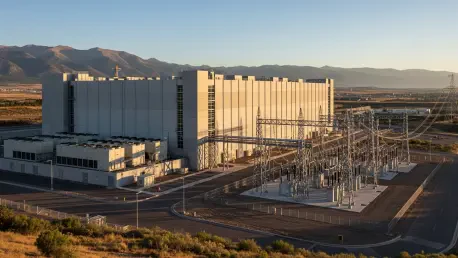

The once-quiet landscape of the Rocky Mountain foothills is currently undergoing a structural transformation as massive, windowless fortresses rise to house the silicon brains of the modern digital economy. This evolution marks a departure from the era of modest corporate server rooms toward a reality dominated by hyperscale facilities that span millions of square feet. These industrial-scale buildings are no longer merely auxiliary storage spaces but have become the primary engines of global commerce, processing the vast streams of data that fuel everything from predictive logistics to generative machine learning. The sheer physical scale of these investments reflects a broader societal reliance on cloud-based infrastructure that operates with invisible but absolute necessity.
The global transition to high-performance computing requires specialized hardware capable of handling immense workloads with minimal latency. Traditional data storage solutions have proved insufficient for the rigorous demands of artificial intelligence models, which require dense clusters of graphic processing units and advanced networking components. Consequently, major market players like Amazon Web Services, Google, and Microsoft are aggressively expanding their physical footprints. This expansion represents a colossal capital investment, yet it has simultaneously created a palpable friction between the technical requirements of the digital frontier and the finite resources of the physical environments that host them.
Initial observations of this sector reveal a growing tension between the rapid pace of technological advancement and the ability of local municipalities to manage their land and utilities. While the industry promises economic modernization, the sudden arrival of high-density industrial loads has caught many planning departments off guard. As these facilities become more common, the focus of the conversation has shifted from the excitement of innovation to the practicalities of resource management. Balancing the global demand for processing power with the local need for sustainable growth has emerged as the defining challenge for urban planners and state regulators alike.
Emerging Industry Dynamics and Projected Market Trajectories
Technological Drivers: The Transition to Hyperscale and High-Performance Computing
The current shift toward generative artificial intelligence requires a fundamental redesign of data center architecture. Unlike standard web hosting or document storage, training complex neural networks demands a sustained and intense draw of power that generates extreme thermal output. This has forced a move away from air-cooled systems toward more sophisticated liquid cooling solutions, which allow for higher server density. The hardware itself has evolved to prioritize raw throughput, with specialized chips designed specifically for the parallel processing tasks essential to modern algorithms.
Evolving consumer behaviors are further accelerating this demand for high-performance infrastructure. As real-time data processing becomes a standard expectation for services ranging from autonomous vehicle navigation to interactive entertainment, the need for low-latency edge computing has spiked. This trend necessitates placing larger facilities closer to urban hubs, ensuring that the delay between a user request and a server response remains imperceptible. The resulting design innovations focus on hardware integration that maximizes efficiency while attempting to mitigate the heat generated by these high-intensity operations.
Statistical Indicators: Assessing Current Energy Demand and Growth Estimates
Statistical reviews of national infrastructure indicate that data centers currently account for approximately 4.4 percent of total energy consumption within the United States. This figure is expected to rise sharply as the industry seeks to triple its total capacity between 2026 and 2028. In Colorado, the demand from these facilities is projected to outpace the growth of residential and commercial sectors combined, placing the energy sector in a defensive posture. The sheer volume of electricity required to support planned projects has led utility providers to reevaluate their long-term grid stability and generation capabilities.
Market analysts are also monitoring performance indicators to determine if the current surge in hyperscale investment represents a sustainable growth phase or a speculative bubble. While the demand for AI processing power is undeniable, some economists warn that the rapid over-building of massive industrial shells could lead to a surplus of capacity if technological efficiencies improve faster than demand grows. This uncertainty has introduced a level of caution into the market, as investors and local governments alike weigh the potential for high tax revenues against the risk of hosting underutilized, energy-draining infrastructure.
Critical Hurdles: Balancing Massive Infrastructure with Environmental Stewardship
The arrival of hyperscale facilities has placed an unprecedented strain on local power grids, raising concerns about the long-term stability of utility costs for the average resident. High-density data centers consume as much electricity as small cities, often requiring dedicated substations and high-voltage transmission lines. When these facilities enter a market, they can trigger costly grid upgrades, the burden of which often falls on residential consumers through increased rates. This economic dynamic has created a rift between tech-heavy industrial zones and the surrounding communities that fear being priced out of their own utility markets.
Water scarcity represents another significant barrier, particularly in the arid climate of the American West. Millions of gallons of water are often required daily to maintain optimal temperatures for server hardware, a demand that competes directly with agricultural and domestic needs. In regions where water rights are already a contentious issue, the introduction of a high-consumption industrial neighbor is frequently viewed as a threat to local sustainability. Finding ways to cool these facilities without depleting precious aquifers has become a primary focus for designers seeking to avoid a complete regulatory blockade.
Beyond the consumption of resources, the localized physical impact of data centers includes noise and air pollution that can degrade the quality of life in adjacent neighborhoods. The constant hum of industrial cooling fans and the periodic testing of massive backup diesel generators create an environment that is often incompatible with residential zoning. Furthermore, the land use itself is highly intensive, often resulting in vast “dead zones” of windowless concrete that contribute little to the aesthetic or social fabric of a city. Reconciling these industrial realities with the desire for livable, sustainable communities is a primary motivator for the current wave of legislative pauses.
The Regulatory Framework: Navigating the Intersection of Policy and Compliance
The lack of a centralized regulatory framework at the state level has created a legislative vacuum, forcing individual municipalities to pioneer their own standards. During recent sessions, state-level attempts to unify data center policy stalled, leaving local councils to navigate complex issues of zoning and environmental impact on their own. This localized approach has led to a patchwork of regulations across Colorado, where one city might offer tax incentives while a neighboring county imposes a strict moratorium. The absence of a “regulatory floor” has sparked a bottom-up movement where communities act independently to protect their specific interests.
Current policy discussions often feature a sharp contrast between environmental mandates and economic incentives. Some advocates push for “large load” facilities to be powered entirely by renewable energy, ensuring that the digital boom does not derail state carbon reduction goals. On the other hand, proponents of industrial growth argue that excessive mandates and the lack of tax breaks will drive investment to more hospitable states. This tension is further complicated by municipal moratoriums, which serve as temporary tools to prevent new construction while officials work to modernize zoning codes that were written long before the advent of the modern data center.
Public sentiment has become a powerful driver of these regulatory shifts, with community advocacy groups increasingly vocal about energy usage caps and cooling restrictions. Residents are no longer passive observers of industrial development; they are active participants in city council meetings, demanding transparency regarding the resource demands of proposed projects. This heightened awareness has forced local leaders to adopt more cautious stances, prioritizing the preservation of community resources over the quick influx of property tax revenue. The resulting shift in the political landscape suggests that future data center projects will face much higher hurdles for approval.
Future Perspectives: Innovations and Market Disruptors Beyond the Moratorium
Looking toward the 2027 legislative session, there is a clear push for standardized state-level oversight that could replace the current fragmented system of moratoriums. Proponents of such legislation hope to create a predictable environment for investors while establishing clear environmental and utility-usage baselines. This transition would likely involve the creation of a state-wide permitting process that accounts for cumulative impacts on the regional power grid and water table. If successful, this framework could provide the stability needed for the next phase of infrastructure development, moving past the current era of emergency pauses.
Technological innovation continues to offer potential solutions that could alleviate some of the most pressing resource concerns. Emerging cooling technologies, such as two-phase immersion systems, significantly reduce the amount of water and energy required to manage thermal loads. Additionally, the development of renewable micro-grids and onsite energy storage allows some facilities to operate with less reliance on the public utility system. As these technologies mature, they may provide a path forward for data centers to exist in resource-constrained environments without compromising the needs of the surrounding population.
Future capital movements will likely favor markets that offer a clear regulatory “floor” combined with the necessary infrastructure for high-performance computing. As the AI sector stabilizes and the initial speculative rush subsides, investors will seek locations that provide long-term operational security. This could lead to a geographic shift in data center development, with companies moving away from volatile regulatory environments toward regions that have successfully integrated technological growth into their community planning. The next phase of development will be defined by a more mature relationship between the tech industry and the municipalities that host its physical infrastructure.
Final Assessment of Colorado’s Evolving Digital Landscape
The regulatory environment in Colorado shifted significantly as local governments asserted their authority over the rapid expansion of high-density industrial facilities. This movement reflected a widespread realization that existing zoning laws failed to address the unique resource demands of the modern data center. Municipalities throughout the state utilized moratoriums to create the necessary time for research and the development of more sophisticated policy tools. These actions indicated that the era of unchecked technological growth at the expense of local stability had reached a turning point.
Community resource preservation emerged as a primary filter through which all future infrastructure investments were viewed. State and local leaders acknowledged that while the digital economy offered substantial property tax revenues, those benefits could not outweigh the potential for grid instability or water depletion. The dialogue between the tech industry and public officials evolved into a more complex negotiation regarding the shared responsibility for environmental stewardship. Consequently, the long-term prospects for data center development in the region became tied to the industry’s ability to adopt more efficient and less intrusive operating models.
Recommendations for the coming years emphasized the necessity of finding a sustainable equilibrium between the needs of the global AI boom and the quality of life for Colorado residents. Success required a collaborative approach where technological innovation was matched by forward-thinking legislation that prioritized the resilience of the local environment. The transition toward a more regulated and efficient infrastructure landscape proved that economic progress did not have to occur at the cost of community well-being. Ultimately, the state demonstrated that a proactive and cautious approach to industrial development provided the best foundation for a stable and prosperous digital future.