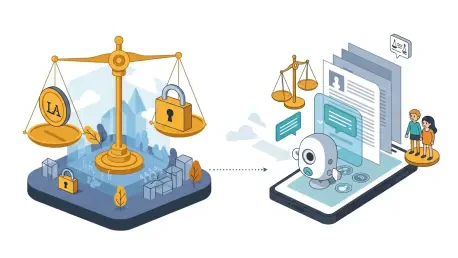

Desiree Sainthrope has spent years in the trenches where law, technology, and global compliance collide. She has drafted and analyzed cross-border agreements and advised on evolving digital risks, from intellectual property to AI governance. In this conversation, she dissects Colorado’s efforts to regulate youth interactions with AI chatbots and to limit access to adult content through device-level age attestation. The discussion weaves through practical enforcement design, constitutional constraints, and how to build systems that are fast and humane when kids are in crisis. Instead of hovering at 10,000 feet, Desiree details how penalties, disclosures, crisis protocols, and data-minimizing signals can work together, how to measure progress in year one, and what compromises can move a tech-friendly governor without losing the core protections that families are pleading for. She underscores the painful stakes with a story shaping this debate: a 13-year-old’s suicide in 2023 after months of grooming and dozens of unheeded messages about self-harm to a chatbot embedded in an app. Against that backdrop, she argues Colorado can move now with narrow, defensible rules, build a solid evidentiary record, and iterate—because in a landscape changing faster than statute, first steps and feedback loops matter.
Lawmakers raised per-violation penalties for AI chatbot harms to $5,000. What outcomes do you expect from that number specifically, and what metrics—complaints, settlements, recidivism—would show it’s working? Can you share examples where similar penalty levels changed company behavior?
Moving the ceiling from $1,000 to $5,000 signals that Colorado wants companies to budget for safety, not for fines as a nuisance. I’d expect to see faster compliance turnarounds and earlier settlement offers when the facts are clear, especially for design defects like failure to provide regular bot disclosures or to suppress sexually explicit outputs to minors. To prove it’s working, I would track the rate of unique complaints month over month, the share of those complaints that resolve without litigation, and repeat-violation rates by product version. If the penalty bites, we’ll see a visible drop in recidivism after the first enforcement wave and an uptick in internal remediation memos appearing in settlement negotiations. The raw number isn’t a magic wand, but paired with publicized actions and a dashboard showing case resolution times, $5,000 per violation can force executive teams to prioritize fixes before an issue multiplies across thousands of interactions.
Requiring chatbots to regularly remind users they’re not human aims to reduce emotional dependence. What cadence and phrasing actually shifts behavior in minors? How would you test effectiveness, and what failure indicators would trigger new guardrails?
The reminder has to feel like a gentle bump, not a scold—clear, plain, and woven into the flow. Short prompts that stress “I’m a robot and not a sentient entity” and redirect to trusted people work best, particularly after emotionally heavy turns or long sessions. I would run structured A/B tests across different dialogue lengths and topic categories, using blinded review to compare whether minors express fewer parasocial cues after the reminder and whether they exit or pivot to an offline resource. If we still see prolonged sessions tied to self-harm, intensified romantic scripts, or kids returning after the reminder and escalating intimacy, that’s a hard failure signal. At that point, the next guardrails include earlier reminders after sensitive keywords, session timeouts with cooling-off intervals, and a requirement to nudge toward a parent, counselor, or crisis support when patterns mirror dependency. The text should be short, humane, and repeated enough to be felt without turning into wallpaper.
The bill bars chatbots from presenting themselves as licensed professionals in health, legal, accounting, or finance. How should enforcement work in edge cases like wellness advice or tax estimators? What documentation should companies keep to prove compliance?
Edge cases are where intent, labeling, and user journey matter. A wellness bot can share general, non-diagnostic tips if every surface—onboarding, profile, and in-conversation—makes clear it is not a licensed provider and does not offer individualized clinical advice. A tax estimator can describe itself as an educational tool and must avoid claiming credentialed status; if it routes users to a human professional, that handoff has to be unmistakable. For proof, companies should maintain versioned disclosure language, screenshots of user flows, training data filters that exclude prompts suggesting licensure, and logs of prompts that trigger a “seek a licensed professional” response. During audits, that paper trail shows the bot resists user attempts to confer licensure, and that the product team rejected or corrected copy that drifted into professional title territory. It’s a compliance muscle: document the design intent, the guardrails, and the refusal patterns.
When a user expresses suicidal ideation, bots must provide crisis resources. What minimum triage flow should be mandatory—keywords, escalation thresholds, human review? Describe a step-by-step protocol that balances speed, privacy, and false-positive risks, with training and audit requirements.
Start with a sensitive keyword and pattern detector tuned to phrases that mirror urgent risk, like explicit intent or recent attempts, and to softer signals that still warrant care. Step one: immediate acknowledgment that the user’s safety matters, coupled with nonjudgmental language and a direct link to crisis support, because time and tone both count. Step two: a short sequence of clarifying questions that never demand identity but assess immediacy, followed by an opt-in prompt to connect with a human helpline. Step three: if the user repeats or escalates risk phrases, the bot should pause nonessential content and cycle supportive messages plus additional resources, avoiding any romanticization of self-harm. Training must include simulated dialogues with dozens of variations, peer-reviewed by clinicians, and updated when audits find misses. For audits, retain anonymized incident logs that show trigger phrases, the provided resources, and whether the user accepted help; review them periodically with external advisors. False positives are safer than misses, but the script should de-escalate respectfully when the user clarifies they were not expressing self-harm.
“Technically feasible” filters on sexually explicit content for minors are controversial. What exact benchmarks—precision/recall thresholds, latency limits, human-in-the-loop review—should define feasibility today? How should those benchmarks evolve quarterly as models and safety tooling improve?
Feasibility should be defined by demonstrable, repeatable suppression of explicit outputs in child-labeled contexts without making the system unusable. Practically, that means companies show they can reliably identify explicit prompts and responses, intercept them before display, and steer the conversation to safer ground with a neutral tone. If latency is introduced, it needs to be short enough that kids don’t experience delays that nudge them to riskier services; visible buffering can be paired with a simple “checking safety” note. Human-in-the-loop should be reserved for post-hoc review of anonymized samples and edge-case tuning, not live surveillance. Quarterly, I’d require vendors to run standardized safety test sets across sensitive categories and publish deltas showing improved capture and fewer wrongful blocks. The idea is a ratchet: present your baseline, then show concrete iteration every quarter as your models and tooling mature.
Parents may have to report violations to the Attorney General. What reporting channel design—forms, evidence standards, response times—would make enforcement real for families? Share examples of effective consumer enforcement pipelines from other tech sectors.
Parents need a single front door with clear language and mobile-first design: a short form that accepts screenshots, timestamps, and the product version if known. Evidence standards should stress “submit what you have,” then let the investigator request more; families shouldn’t be paralegals to be heard. A triage clock should start upon submission, with a confirmation and a plain-English explanation of next steps and expected response windows. In other sectors, consumer-friendly pipelines pair intake with routine status emails and a searchable portal so families aren’t shouting into a black box. For Colorado, I’d add a fast lane for minors’ safety complaints and a data-sharing handshake with school counselors who often see patterns first. When the state publishes monthly summaries and closes the loop with visible case actions, families see their reports lead to real outcomes rather than disappear.
Device setup would ask users to attest an age range, then send a binary access signal to apps or sites. How would you architect that flow to minimize data sharing, support open-source OSs, and prevent spoofing? What logs should be retained, and by whom?
Keep the signal as simple as promised: a yes/no answer to “is this user old enough,” with no birthdates or IDs, and enforce that in the OS-level API so apps can’t request more. For open-source systems, publish a reference implementation and conformance tests so community builds can interoperate while preserving the narrow signal. To deter spoofing, tie the signal to a device-bound attestation that verifies the OS module is unmodified, while still avoiding collection of personal identifiers. Logs should be minimal: timestamp, app identifier, and binary result, kept locally and rolled on a short schedule, with aggregate counts available to the platform for audits. The state’s guidance should discourage central databases of individual age attestations, and require vendors to document how they prevent apps from inferring age beyond the access decision. The experience should feel quick—tap, confirm range, done—so parents don’t route around it.
Multiuser devices complicate controls. What practical approach—parental and subordinate profiles, session switching, PINs—reduces circumvention without ruining usability? Walk through a day-in-the-life scenario for a shared tablet in a household.
Profiles with fast session switching hit the sweet spot: a parent profile controls settings and a subordinate profile inherits age-appropriate rules. Picture a school morning: the tablet wakes to a lock screen with two tiles, the child taps theirs, enters a simple PIN, and the OS quietly sets the binary access signal for apps and sites. After homework, a parent switches to their profile, approves a new app, and the system logs that approval with a brief note. In the evening, the child’s profile times out automatically; when they try to switch to the parent’s profile, it requires the parent’s credential or a physical confirmation. The flow respects family routines—no maze of menus—while making it harder to slip into an adult session. Over time, the audit log helps spot patterns like repeated attempts to access restricted content without turning the living room into an interrogation room.
Sponsors cite California-style provisions as models. Which elements translate well to Colorado’s legal and tech ecosystem, and which need local tailoring? Can you point to measurable outcomes from other states that inform these choices?
Clear bot identity disclosures and prohibitions on claiming professional licensure travel well; they’re simple, intuitive, and aligned with consumer protection principles. Reporting duties and youth-oriented privacy settings also map cleanly to Colorado’s enforcement capacity, especially with an Attorney General office that can publish periodic compliance digests. Where Colorado needs tailoring is around age attestation at the device layer, because local debates have been shaped by prior vetoes and privacy concerns; the yes/no signal design reflects that. Another local factor is the tech-friendly posture of state leadership, which means pilot programs and transparent dashboards can build trust while new rules take hold. The measurable outcomes we can point to here are shaped by votes and court actions: a House passage tally of 40-24 shows legislative appetite, while a 2024 judicial block on a separate youth law underscores the need for narrow tailoring. Those data points should guide how tightly Colorado drafts and defends these provisions.
Courts have blocked some youth online safety rules on First Amendment grounds. What narrowly tailored content rules could survive strict scrutiny here? Outline the evidentiary record, least-restrictive-means analysis, and enforcement design you’d assemble to defend them.
Start with conduct-focused rules rather than broad content bans: require crisis referrals upon suicidal ideation, forbid false claims of professional licensure, and block sexual content specifically when a user is flagged as a minor through device-level attestation. The evidentiary record should be concrete: testimony about a 13-year-old who sent dozens of messages about suicide without intervention, expert declarations on grooming risks, and usability studies showing that disclosures reduce parasocial attachment. For least-restrictive means, show that the state rejected identity document checks in favor of a binary signal, avoided sweeping takedowns, and allowed adult access to remain unimpeded. Enforcement should rely on clear, published standards, notice-and-cure windows, and targeted penalties so companies can comply without over-filtering adult speech. By anchoring the law to child safety, false credentialing, and crisis triage—specific harms with direct remedies—the state stands a better chance against strict scrutiny.
A parent described grooming and vulgar content from a chatbot embedded in a scripting app. What due diligence and product labeling should be mandatory for third-party integrations? How would you audit app stores and SDK providers to catch high-risk embeddings?
Integrations must be treated as products in their own right: require developers to disclose when an embedded model can generate open-ended conversation and to display the same identity and safety disclosures as the core bot. The host app should label “AI chatbot features included,” with a link to safeguards and a clear statement that it is not a licensed professional. Due diligence means the integrator runs safety tests on prompts the app’s users are likely to enter and keeps records of blocked outputs and redirection scripts. App stores and SDK providers can require a safety attestation at submission and sample test runs against risk scenarios common to the app’s category. Periodic audits should pull anonymized transcripts that match red-flag patterns, and apps that fail must fix issues before updates are approved. This closes the back door where kids might meet a chatbot in an unexpected corner of a familiar tool.
The bill bars incentivizing children to keep chatting or form emotional dependence. What specific design patterns—streaks, push rewards, parasocial scripts—should be prohibited? How would you detect them in black-box systems and A/B tests?
The red lines are well known in design circles: streak counters tied to daily chats, rewards unlocked only after long sessions, and scripts that state the bot “missed you,” expresses jealousy, or frames itself as a secret confidant. Push notifications that lure kids back with emotional bait should be off-limits in youth contexts. Detection starts with reviewing copy libraries, notification templates, and experimentation briefs; when teams propose variants that increase session length, ask how they prevent parasocial escalation. In black-box systems, require disclosure of experiment goals and guardrail checks, and audit retention metrics that spike after changes to tone or persona. If we see patterns where return rates climb alongside dialogue that mimics romantic attention or dependency, that’s evidence of a prohibited tactic. The fix is to change the script, cap session length, and redirect to offline relationships.
With a tech-friendly governor wary of over-regulation, what near-term compromises could still meaningfully reduce harm—pilot programs, sunset clauses, safe-harbor-plus-audit regimes? Share examples where incremental steps created leverage for tougher follow-on rules.
A pilot phase with public dashboards can make the case: run the crisis-referral requirement and the no-licensure rule first, measure outcomes, and show families how enforcement works in practice. A sunset clause focused on the “technically feasible” standard can force periodic reauthorization tied to documented improvements, creating a built-in accountability checkpoint. Safe harbor paired with audits rewards early movers who implement disclosures and youth privacy settings while keeping a pathway to penalties for laggards. The House’s 40-24 vote shows there’s already traction; pairing that with transparent pilots gives a governor room to support iteration without locking in a forever framework. Once the public sees fewer untriaged crises and cleaner disclosures, it becomes easier next session to tighten sexually explicit content controls for minors with stronger support.
Federal leaders have signaled resistance to state-level AI rules, yet states are moving ahead. How should Colorado draft for interoperability and preemption risk? What model reporting formats, registries, or reciprocity agreements would ease multi-state compliance?
Draft with modularity: define core duties—identity disclosures, crisis triage, professional non-misrepresentation, and youth privacy settings—that can plug into other states’ regimes. Offer a model reporting format that captures incident counts, response times, and remediation notes in consistent fields, so a company can file the same package across jurisdictions. A voluntary registry for chatbot providers operating in youth contexts can streamline communication and compliance updates, especially when security advisories or tooling improvements roll out. Reciprocity can be as simple as recognizing another state’s verified safety report if it covers the same categories, reducing duplicative audits. This approach lowers preemption risk by focusing on consumer protection and child safety while demonstrating a good-faith effort to reduce the compliance burden. If the federal landscape shifts, Colorado’s modular framework can adapt without scrapping the whole system.
Success will require measurement. What KPIs would you track in year one—youth exposure rates to sexual content, hotline referral uptakes, complaint resolution times, model safety test scores? Describe the data pipeline and public dashboard you’d build.
I would track four headline metrics: the count of complaints involving minors and sexually explicit content, the rate at which bots presented crisis resources when users expressed suicidality, median complaint resolution time, and quarterly safety test results against standardized prompts. The pipeline starts with secure intake at the Attorney General’s portal, merges with anonymized vendor reports, and aggregates into monthly snapshots that strip identifying information. Vendors submit evidence of their own internal tests and the number of sessions where disclosures were shown, which helps validate that reminders are actually delivered. The dashboard would show statewide trends, vendor-by-vendor compliance bands, and narratives that explain what changed after a policy update, so parents and policymakers can connect the dots. Over time, the combination of public metrics and private corrective action plans builds a feedback loop that sharpens the rules.
Parents can mark a child as an adult during setup, effectively opting out. What safeguards—delayed activation, parent education prompts, annual reconfirmations—could mitigate that loophole without invading privacy? Do you have real-world examples where soft friction worked?
Soft friction can do a lot without collecting more data. Add a short delay before adult access activates on a child-marked device, with a clear, calm explanation of what the change means for content and safety. Pair it with a brief education prompt about risks, delivered in simple language and a single screen—no lectures, just facts and the option to keep youth protections. An annual reconfirmation can catch changes in family choices without storing birthdays; the OS simply asks, “Do you want to keep the current protections?” Soft friction has worked in other consumer settings where a small pause and a reminder prompt reduce impulsive choices; the key is to make it respectful and easy to reverse. Families feel in control, and many will choose the safer path when given a moment to think.
Implementation often lags intent. If you had to roll this out in 90 days, what is your step-by-step plan across agencies, OS vendors, app stores, and schools? Include testing milestones, communication scripts, and contingency triggers.
Days 1–15: finalize guidance on disclosures, crisis triage, licensure claims, and the binary age signal; publish sample scripts and API specs. Days 16–30: vendors integrate the reminder and crisis modules; app stores update submission checklists to require attestations; schools receive a one-page explainer for families. Days 31–45: run sandbox tests with anonymized test prompts, verify that reminders appear and crisis referrals trigger on dozens of variants; hold office hours for developers who hit edge cases. Days 46–60: launch a soft rollout with a feedback channel; the Attorney General opens the complaint portal and trains staff on triage. Days 61–75: public communications—short videos and plain-English FAQs—explain what parents will see during device setup and in chat experiences. Days 76–90: full enforcement begins, with contingency triggers to pause penalties for vendors who can show concrete progress but hit unforeseen technical hurdles. Through it all, publish weekly status notes so everyone knows what’s on track and what needs attention.
What is your forecast for AI chatbot and youth online safety policy in Colorado over the next two years?
In the near term, I see the core pillars—bot identity reminders, crisis referrals, and bans on false licensure—taking effect and surviving initial scrutiny, helped by careful drafting and a visible commitment to privacy. The device-level age attestation will roll out with bumps, but its yes/no design and support for open-source systems will keep it on the right side of public opinion. Legal challenges will come, echoing a 2024 ruling in another context, yet the record of a 13-year-old’s tragedy and dozens of unheeded pleas will anchor the state’s argument for targeted, least-restrictive interventions. By the second year, as a new administration takes shape, I expect lawmakers to revisit the “technically feasible” standard, tighten definitions, and require quarterly safety improvements backed by published test results. If Colorado pairs enforcement with honest, public metrics and listens to families and builders, it can set a pragmatic model that other states follow, even in a fragmented national landscape.