
Desiree Sainthrope is a preeminent legal authority whose career has been defined by the intricate dance of global compliance and trade law. With a deep well of experience in drafting agreements that balance commercial innovation with public safety, she has become a sought-after voice on the legal implications of emerging technologies like artificial intelligence. As the debate over AI regulation reaches a fever pitch in Washington, Desiree offers a unique perspective on the shifting political tides and the growing public demand for federal intervention. In this conversation, we explore why voters across the spectrum are suddenly calling for mandatory guardrails and how the current administration’s “no-rules” philosophy is clashing with the concerns of the average American.
How do you interpret the surprising reversal in political sentiment where Republicans are now more eager for government-led AI safety testing than their Democratic counterparts?
It is a fascinating development that defies our traditional understanding of partisan leanings regarding regulation. Historically, Republicans have been the champions of deregulation, yet we are seeing a visceral shift where 61% of Republicans now express confidence in the government’s ability to regulate AI, compared to a staggering 74% of Democrats who lack that same confidence. This shift likely stems from a growing realization that AI isn’t just another economic sector, but a fundamental shift in how our society operates, touching on everything from cybersecurity to national identity. In a poll of 1,007 likely voters, the data clearly showed that the “hands-off” approach is losing its luster among the very base that usually supports it. There is a sense that the technology is moving too fast for the industry to police itself, and voters on the right are increasingly looking to the federal government to act as a necessary referee to prevent chaos.
When voters are faced with the choice between unregulated AI and a total ban, why do you think there is such a heavy lean toward a complete shutdown rather than a middle ground?
The public’s response to AI is becoming increasingly binary because the stakes feel existential. The survey data reveals that two-thirds of respondents would prefer AI systems with guardrails over a ban, but if you take those guardrails away, they would rather see the technology banned entirely than have it run wild. This “all-or-nothing” sentiment is a direct reaction to the perceived lack of control over these advanced systems. We see this play out in the physical world too, where a massive data center boom is being met with over 300 local bans and moratoriums. People are essentially saying that if they can’t be sure the technology is safe and controlled, they don’t want it in their backyards or their digital lives. This isn’t just theoretical fear; it has real economic consequences, with opponents already blocking or delaying projects worth nearly $130 billion this year alone.
Given that over 60% of respondents want the federal government to set the rules, what are the implications for the current model where AI companies largely police themselves?
The “trust us” model that many tech companies have relied on is rapidly eroding in the eyes of the public. When 84% of Democrats and 83% of Republicans agree that companies should not build AI systems smarter than humans until they can prove they can control them, it sends a powerful message to Washington. Currently, the Trump administration has favored an “opt-in” review process, which feels woefully inadequate to a public that wants mandatory, formal safety reviews before any powerful model is released. This friction is already causing high-level clashes, such as when Commerce Secretary Howard Lutnick recently directed Anthropic to take its two most powerful systems offline due to national security concerns. We are moving toward a reality where the government will be forced to move beyond voluntary vetting and establish clear, enforceable safety standards that companies must follow, whether they want to or not.
The backlash against data centers has become a flashpoint for AI anxiety; how should policy leaders balance the need for physical infrastructure with the public’s growing skepticism?
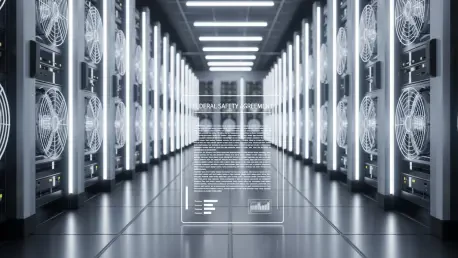
Policy leaders are currently navigating a minefield because data centers have become a proxy for the broader fears people have about AI. The AIPI survey found that 47% of people would allow data centers if the systems being developed had strict safety and security standards, while 38% would still opt for a total ban. This suggests that the path forward for infrastructure depends entirely on the transparency of the regulation governing the software inside those centers. If the government can demonstrate that it is effectively testing models like Mythos 5 or GPT-5.6 for safety concerns before they reach the public, the local resistance to the physical buildings might soften. However, as long as the perception remains that these centers are hubs for “uncontrolled” intelligence, the nearly $130 billion in stalled projects will likely continue to grow. Leaders need to realize that physical expansion and regulatory oversight are now inextricably linked in the public’s mind.
What is your forecast for the future of AI regulation as we move closer to more powerful models being released?
I expect AI regulation to become the dominant political issue of the next election cycle, moving from a niche tech concern to a central pillar of national security and economic policy. We have already seen this trend emerge in New York’s 12th Congressional District, where a single race drew over $40 million in spending, much of it from groups focused specifically on AI issues. As nearly three-quarters of voters believe AI will only become more important politically, the pressure on federal agencies to formalize their currently vague vetting mechanisms will become overwhelming. I forecast that the era of voluntary cooperation is coming to an end; within the next few years, we will likely see the implementation of a mandatory federal safety framework. The public has made it clear that they do not want to wait for a catastrophe to happen before the government steps in to ensure these “smarter than human” systems are truly under our control.