
In the shifting landscape of media regulation, few figures have sparked as much debate as the current FCC leadership regarding the enforcement of the “equal time” rule. As a legal expert who has spent years dissecting the intricacies of trade agreements and global compliance, I find the intersection of 1934-era broadcasting laws and modern political strategy to be a fascinating, if volatile, case study. The recent moves by the FCC to reinvigorate these nearly century-old statutes represent a significant pivot that could fundamentally alter how Americans consume political discourse during election cycles.
This conversation explores the logistical hurdles broadcast stations face when balancing candidate appearances with entertainment programming and the precarious nature of “bona fide news” exemptions for talk shows. We also examine the strategic migration of political content to digital platforms like YouTube, the potential regulatory blowback on conservative talk radio, and how the pressure of license renewals shapes editorial decisions in the boardroom.
How does the 1934 “equal time” rule specifically alter the daily operations of a broadcast station, and what logistical challenges arise when trying to balance candidate appearances with entertainment? Could you provide a step-by-step breakdown of how a station manages these competing requests to stay compliant?
The “equal time” rule forces broadcast stations to operate with a high degree of mathematical precision and legal caution that can disrupt a standard entertainment lineup. When a candidate appears on a non-exempt program, the station must be prepared to offer comparable time to all other legally qualified rivals, which creates a logistical nightmare for scheduling. For example, if a Texas Democratic Senate candidate appears for 10 minutes and 6 seconds, as seen in recent filings, the station must track that exact duration to ensure they can provide the same window to opponents. To manage this, a station first identifies if a guest is a “legally qualified candidate,” then monitors the exact airtime down to the second, including incidental appearances like photos which might only last 7 seconds. Finally, they must maintain public notices with the FCC to document these appearances, a process that often leads internal legal teams to veto high-profile interviews altogether to avoid the “chilling effect” of potential penalties.
Late-night and daytime talk shows often rely on “bona fide news” exemptions to host political guests without triggering regulatory requirements. What specific criteria currently define this status, and how does losing this exemption impact a program’s ability to feature candidates? Please share any examples of how these designations influence viewer reach.
The “bona fide news” exemption traditionally applies to programs where the guest selection and interview format are based on newsworthiness rather than a desire to advance a specific political agenda. While shows like “The Tonight Show” earned this status decades ago, the current FCC leadership has warned that programs motivated by “partisan purposes” may no longer qualify, demanding that stations petition for specific rulings. When a program loses this status, it is no longer a “safe haven” for candidates to reach mass audiences without the network incurring the obligation to host every other rival in the race. This was clearly illustrated when “The Late Show” had to sideline an interview with a Democratic candidate to avoid triggering equal time for his primary opponents. Such a loss in exemption status essentially forces these programs to choose between becoming a revolving door for every minor candidate or cutting political interviews entirely, depriving millions of viewers of accessible political engagement.
Many candidate interviews are now migrating to digital platforms like YouTube to bypass traditional broadcast regulations. How does this shift affect a campaign’s demographic reach, and what are the strategic trade-offs when losing broadcast airtime for a digital-only presence? Explain the long-term impact this could have on voter engagement.
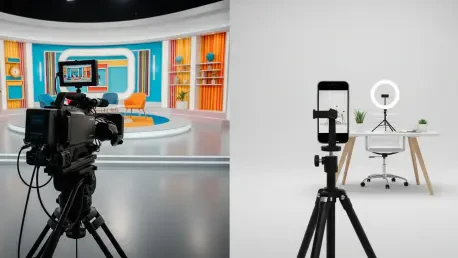
The migration to digital platforms like YouTube allows campaigns to circumvent the FCC’s strict “equal time” mandates, but it comes at the cost of losing the broad, accidental reach of traditional broadcast television. While a YouTube clip can be targeted to specific demographics, it lacks the “mass audience” appeal of a late-night talk show that reaches viewers who might not otherwise seek out political content. The strategic trade-off is significant: a candidate might gain more freedom to speak without regulatory hurdles, but they lose the cultural “merger of politics and pop culture” that helps humanize them to the general public. Long-term, this could lead to a fragmented electorate where voters only see candidates within their own digital echo chambers. This shift risks reducing overall voter engagement among moderate or less-politically-active citizens who previously encountered candidates during their regular entertainment viewing.
Strict regulatory enforcement on television could eventually extend to the world of conservative talk radio. If future officials applied these rules to radio formats, how would it disrupt that medium’s business model and mobilization efforts? Please describe the potential cascading effects on political discourse across different broadcast formats.
Conservative talk radio is currently the “beating heart” of its movement, relying on long-form interviews and partisan commentary that would be decimated if “equal time” rules were strictly applied. If a future FCC required hosts like Glenn Beck or Sean Hannity to provide comparable time to every liberal opponent of their guests, the format’s core business model—which is built on a specific ideological brand—would collapse. Such a disruption would likely lead to an “obituary of conservative radio,” as hosts have already threatened to stop interviewing candidates altogether rather than provide a platform for opposing views. The cascading effect would be a silenced medium, where the mobilization efforts that have defined GOP strategy since the 1990s are neutered. This would drive political discourse even further into unregulated, niche digital spaces, leaving the traditional broadcast airwaves sanitized but devoid of meaningful political debate.
The potential for a broadcast license to be challenged can heavily influence editorial decisions behind the scenes. How does this pressure specifically shape the selection or rejection of political guests? What practical steps can media conglomerates take to safeguard their licenses while ensuring voters still have access to diverse political viewpoints?
The threat of losing a broadcast license is the “nuclear option” of media regulation, and it creates a climate of extreme risk aversion among corporate lawyers and executives. When the FCC suggests that “news distortion” or failure to operate in the “public interest” could lead to license revocation, stations often preemptively pull controversial guests or cancel segments to avoid any appearance of bias. To safeguard their licenses, media conglomerates are increasingly documenting every second of political airtime and filing proactive notices with the commission to demonstrate transparency. They may also separate their broadcast segments from digital extras, hosting the “risky” political content on YouTube while keeping the broadcast signal strictly focused on entertainment or “bona fide” news. This defensive posture, while legally sound, often results in a sanitized broadcast environment where diverse or challenging political viewpoints are sacrificed for the sake of regulatory survival.
What is your forecast for the future of political broadcasting?
I forecast a period of “regulatory balkanization,” where traditional broadcast television becomes almost entirely devoid of candidate interviews, leaving those conversations to migrate permanently to unregulated digital and streaming platforms. We are likely to see a “chilling effect” where network lawyers increasingly veto appearances by major political figures to avoid the logistical and legal burdens of the “equal time” rule. While the FCC may claim this encourages “more speech,” the practical reality will be “less speech” on the airwaves and more polarized, curated content on YouTube and podcasts. Eventually, this could lead to a legal showdown over whether these 1934 standards are even constitutional in a world where the distinction between a “broadcaster” and a “content creator” has all but vanished. This transition will ultimately force a legislative rethink of the Communications Act to address the realities of the 21st-century media environment.