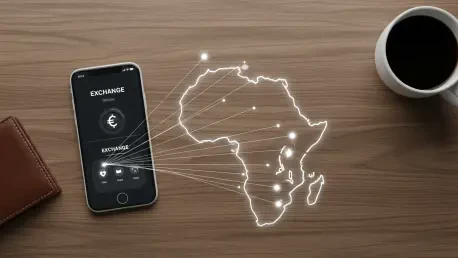

While much of the global north views digital assets through the lens of investment portfolios, the African continent has transformed blockchain into a lifeline for daily economic survival and commercial efficiency. The region currently boasts a remarkable 52% year-over-year growth in on-chain transaction value, signaling a departure from speculative trading toward a utility-first economy. This expansion is not a fleeting trend but a fundamental restructuring of how capital moves across borders.
The synergy between existing mobile money infrastructure and decentralized protocols has created a unique environment for rapid scaling. As digital assets transition into a formalized economic sector, key market players are moving beyond simple exchanges to build complex financial ecosystems. This evolution marks the moment where decentralized technology meets a population already comfortable with non-traditional banking.
The Transformation of African Finance Through Digital Assets
The shift from speculation to utility is visible in how businesses and individuals utilize stablecoins to bypass fragmented banking systems. Instead of waiting days for international transfers, merchants are using blockchain to settle invoices in minutes. This shift has allowed small and medium enterprises to participate in global trade with a level of agility previously reserved for large corporations.
Furthermore, the integration of blockchain into the broader economy is being driven by the necessity of moving money safely in volatile markets. Institutional players are increasingly entering the fray, providing the liquidity needed to sustain high transaction volumes. This formalization is turning the continent into a testing ground for real-world blockchain applications that solve structural inefficiencies.
Catalysts and Market Dynamics Shaping the Crypto Landscape
Emerging Trends and the Mobile Money Evolution
Africa’s dominance in the global mobile money market, which accounts for roughly 70% of the worldwide share, has created a deep well of digital literacy. Citizens who are already accustomed to managing funds via mobile devices find the transition to digital wallets intuitive. Consequently, stablecoins have emerged as a vital hedge against local currency inflation, providing a stable medium for both savings and commerce.
Strategic partnerships are now bridging the gap between global blockchain firms and local financial institutions. By leveraging existing networks, these collaborations reduce the costs of cross-border remittances, which have historically been among the highest in the world. This synergy ensures that digital assets are not just an alternative to cash but a more efficient upgrade to the existing financial rail.
Data-Driven Insights and Growth Projections
The surge in transaction volume is not limited to retail users; institutional participation is growing at an unprecedented rate. Nigeria, South Africa, and Kenya remain the primary engines of this growth, showing high performance across all major blockchain metrics. Data indicates that as internet penetration continues to climb, the velocity of asset adoption will likely accelerate through the end of the decade.
Decentralized finance (DeFi) is also gaining traction as a viable alternative to traditional credit systems. By removing the need for physical collateral or extensive credit histories, these protocols are democratizing access to capital. Forecasts suggest that as these platforms mature, they will become the primary source of liquidity for the unbanked and underbanked populations.
Navigating Structural Obstacles and Security Risks
Despite the momentum, the industry must still contend with the persistent threat of fraudulent schemes and sophisticated cyberattacks. As the volume of digital assets increases, so does the sophistication of those looking to exploit technical vulnerabilities. Strengthening cybersecurity protocols is becoming a non-negotiable requirement for any service provider operating within the region.
Infrastructure limitations, such as inconsistent internet connectivity and high data costs, remain significant hurdles for rural adoption. To overcome these barriers, developers are focusing on building lightweight, low-data applications that can function on basic smartphones. Improving financial literacy remains the most effective defense against bad actors, ensuring users can navigate decentralized protocols safely.
The Shift Toward Comprehensive Regulatory Frameworks
South Africa and Nigeria have set the pace by establishing clear legal guidelines that classify digital assets as financial products and securities. This regulatory clarity provides a level of certainty that was previously missing, making the market more attractive to international investors. These frameworks are designed to weed out illicit activity while providing a safe harbor for legitimate innovation.
Other nations, including Mauritius, Ghana, and Rwanda, are currently developing their own comparative guidelines to compete for venture capital. The focus is shifting toward a balanced approach that protects consumers without stifling the creative potential of fintech startups. This wave of legislation is effectively legitimizing the sector, moving it from the fringes of the economy to the center of national financial strategies.
The Future Path: Integration, Inclusion, and Innovation
The potential for Central Bank Digital Currencies (CBDCs) to coexist with private cryptocurrencies represents the next frontier of African finance. This dual system could offer the stability of government-backed assets alongside the flexibility of private blockchain protocols. Such an arrangement would likely streamline government disbursements and tax collections while maintaining a vibrant private sector.
As the market matures, there will be a visible shift in consumer preferences toward non-custodial wallets and integrated payment apps. This transition empowers individuals with total control over their assets, further reducing reliance on centralized intermediaries. The arrival of long-term venture capital will likely fuel the development of specialized tools tailored to the unique needs of African SMEs.
Final Perspective on Africa’s Role in the Global Crypto Economy
The evidence gathered during this period showed that Africa had effectively moved beyond the trial phase of digital asset adoption to become a global leader in utility. The integration of blockchain with mobile money proved to be a decisive factor in creating a more inclusive financial ecosystem. Stakeholders who recognized the importance of local partnerships and regulatory compliance were the ones who found the most success.
Moving forward, the focus shifted toward building interoperable systems that connected various national frameworks into a unified digital market. It became clear that the sustainability of the industry depended on continuous investments in both physical infrastructure and human capital. Ultimately, the continent demonstrated that digital assets were not merely a technological novelty but a fundamental tool for economic sovereignty and global integration.