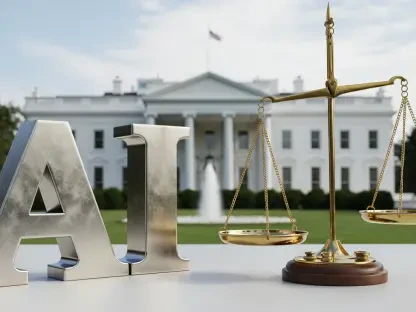

The relentless progression of generative artificial intelligence has fundamentally destabilized the traditional pillars of intellectual property, forcing a radical reappraisal of how creative works are protected in the digital age. This technological surge has placed developers of Large Language Models and the creative sector on a direct collision course. Currently, the primary focus resides on the tension between the necessity of massive datasets for training and the fundamental rights of content creators. As machine learning moves from experimental to ubiquitous, the UK and EU serve as the primary laboratories for legislative experimentation, balancing economic promise with established protections.
These jurisdictions are defining the global standard for how intellectual property is harvested, processed, and protected. The current environment demands a nuanced understanding of how data is treated when it is no longer just consumed by humans but ingested by algorithms. This transformation is not merely technical but philosophical, as it challenges the very definition of authorship. By establishing clear rules now, regulators hope to foster an ecosystem where innovation does not come at the expense of those who provide the raw material for that very progress.
The Convergence of Generative AI and Intellectual Property Systems
The integration of generative tools into the mainstream economy has triggered a structural shift in how value is assigned to creative outputs. In the current landscape, the friction between AI firms needing vast amounts of training data and rights holders seeking to protect their catalogs has reached a fever pitch. This convergence highlights a fundamental gap in existing legal frameworks that were designed for a world where humans were the sole creators and consumers of information.
The move toward machine-assisted creativity has necessitated a re-evaluation of the “droit d’auteur” principle, which has long prioritized the human spirit in creative works. As AI systems become more autonomous, the legal systems in London and Brussels are tasked with determining if a machine can ever truly be an author. This determination will influence billions of dollars in investment and decide the future of entire industries, from journalism and literature to software development and visual arts.
Navigating the Shift Toward Machine-Learning Exceptions
Evolving Regulatory Models for Text and Data Mining
The legislative philosophy regarding Text and Data Mining (TDM) currently demonstrates a significant divergence between the EU and the UK. While the EU has implemented a permissive framework under the Digital Single Market Directive, allowing for a general TDM exception unless a rights holder explicitly opts out, the UK has taken a more conservative path. The British government recently shifted its focus back to a non-commercial research exception, reflecting a desire to protect its robust creative sector from unauthorized commercial exploitation.
This divergence creates a complex map for AI developers who must navigate different levels of accessibility. In the EU, the burden is often on the creator to provide machine-readable tags to signal their refusal of data scraping. Conversely, in the UK, the default remains more protective of the creator for commercial purposes. This creates a fascinating experiment in regulatory competition, as each region tries to attract tech investment while maintaining the integrity of its domestic intellectual property laws.
Market Projections and the Economics of AI Training Data
As the demand for high-quality training data increases from 2026 to 2028, the industry is witnessing the rapid emergence of a new licensing economy. The era of unregulated scraping is coming to an end, replaced by structured remuneration models and bilateral agreements between technology firms and media conglomerates. Data suggests that legal certainty has become a more valuable commodity than the sheer volume of data, leading to a tiered market where premium, licensed datasets command significant prices.
Economic forecasts indicate that AI models trained on “clean” and ethically sourced data will likely outperform those built on legally ambiguous foundations due to the reduced risk of litigation and better data quality. This shift favors large-scale publishers and archives that can offer vast, organized libraries for training. Consequently, the relationship between AI companies and content creators is evolving from one of adversarial litigation to one of strategic partnership, where data is treated as a high-value industrial input.
Structural Hurdles in Balancing Innovation with Creator Rights
The primary obstacle for lawmakers remains the inherent opacity of AI training processes, frequently described as the “black box” problem. It is exceptionally difficult for a photographer or author to prove that their specific work was used to train a particular model without access to the underlying training logs. This evidentiary hurdle has led to a growing movement demanding mandatory transparency reports, where AI providers must disclose a summary of the copyrighted works used in their development cycles.
Furthermore, the risk of regulatory arbitrage looms large as developers might seek to relocate their training operations to jurisdictions with the weakest intellectual property enforcement. To counter this, the UK and EU are exploring technical solutions such as digital watermarking and robust tracking mechanisms. These tools aim to ensure that even if the training occurs elsewhere, the resulting products cannot be easily commercialized in regulated markets without demonstrating compliance with local copyright standards.
The Evolving Regulatory Framework in London and Brussels
The regulatory landscape is anchored by the landmark EU AI Act and the evolving post-Brexit strategy in the UK. The European approach is characterized by a high degree of formalization, placing strict transparency requirements on general-purpose AI models. This framework ensures that any entity operating within the single market must adhere to a set of harmonized rules regarding data usage. This proactive stance aims to provide a predictable environment for both developers and rights holders, reducing the need for constant litigation.
In contrast, the UK is currently refining its position to align with international norms that favor human-centric creativity. By reconsidering the historic protections for computer-generated works, London is moving toward a model that requires a clear “human-in-the-loop” for copyright to be granted. This shift reflects a strategic decision to prioritize the quality and originality of human work, ensuring that the UK remains a global hub for high-value creative services while still allowing AI to function as a sophisticated tool.
Future Frontiers: From Machine Autonomy to Human-Centric IP
The Minimum Threshold of Creativity and Human Input
The central legal debate is moving from the input of training data to the output of AI-generated content. Courts are increasingly asked to define the exact amount of human intervention required for a work to qualify for copyright protection. This involves scrutinizing the role of prompt engineering and the iterative process of selection and refinement. If a human provides a simple prompt and the machine does the rest, the consensus is leaning toward a denial of copyright, viewing the machine as the primary creator.
However, when a human uses AI as a sophisticated brush or instrument, involving significant creative choices and arrangement, the path to protection becomes clearer. The next few years will see a flurry of test cases designed to establish these thresholds. These rulings will determine whether the future of creative industries will be dominated by a flood of public domain AI content or a new genre of legally protected, AI-augmented human artistry.
Disruptors and the Next Generation of Intellectual Property Litigation
Emerging technologies are already beginning to disrupt current enforcement strategies, particularly the development of unlearning algorithms. These tools allow developers to selectively remove the influence of specific copyrighted works from a trained model without needing to retrain the entire system from scratch. This could offer a powerful remedy in copyright disputes, allowing for the “deletion” of infringing data and providing a middle ground between total model destruction and continued infringement.
Moreover, decentralized AI training networks are complicating the traditional notions of corporate liability. As training becomes more distributed across global networks, identifying a single responsible entity becomes a significant challenge. The long-term trajectory suggests a move toward a fair remuneration model, where AI systems contribute to a collective fund that compensates creators. This approach would treat AI not as a replacement for the creative ecosystem but as a participant that must pay its way to ensure the continued production of high-quality human content.
Closing the Chapter on Autonomous Machine Authorship
The reshaping of copyright law in the UK and EU signaled the end of an era where machine-generated content existed in a legal vacuum. While the two jurisdictions maintained distinct paths regarding commercial data mining, they converged on a shared vision. Copyright remained a human right, reserved for human ingenuity, and the role of the machine was firmly established as that of a tool rather than a peer. The successful integration of AI into the legal fabric depended on the continuous refinement of licensing frameworks and the transparency of developers. For investors and creators, the prospects for growth remained high as the legal foundations proved to be as dynamic as the technology itself. Moving forward, the industry adopted a proactive stance, where the focus shifted toward decentralized licensing and automated royalty systems. These innovations ensured that creators were compensated in real-time as their works were utilized by evolving models. Ultimately, the transition from a defensive legal posture to a collaborative framework allowed the creative and technological sectors to find a sustainable equilibrium that prioritized both innovation and individual rights.