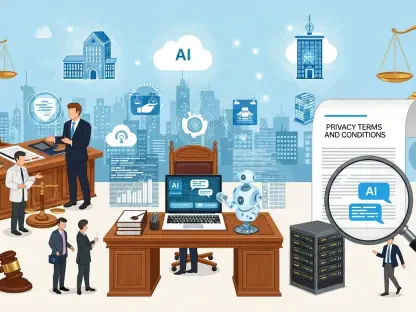

Desiree Sainthrope is a distinguished legal expert with a profound background in drafting complex trade agreements and managing global compliance frameworks. Her career has evolved alongside the digital transformation of the legal sector, making her a leading voice on the integration of intellectual property rights and emerging technologies. In this discussion, we explore the shift from simple automation to agentic AI, focusing on how these tools act as orchestrators for contract lifecycles, metadata extraction, and cross-functional financial decision-making.
When a central AI assistant acts as an orchestrator for specialized agents, how does it determine which tool—such as a renewal or archive agent—is best suited for a user’s problem? Please describe the step-by-step logic used to route these queries and provide an anecdote regarding a complex request.
The orchestrator functions essentially as a sophisticated brain that triages incoming natural language requests by analyzing intent and required data outputs. When a user asks a question, the assistant first parses the text for keywords and semantic context, then maps those needs to the specific capabilities of specialized agents like those used for archiving or renewals. For example, if a user expresses frustration about managing the efficiency of their upcoming contract expirations, the orchestrator recognizes this as a performance-optimization task and routes it directly to the renewal agent. I recall a scenario where a legal team was overwhelmed by a massive influx of legacy documents from a recent merger; the assistant seamlessly directed them to the archive agent to clean up the data before shifting to the cost-saving agent to find redundant subscriptions. This step-by-step logic ensures that the user doesn’t need to know the technical names of the tools, just the problems they need to solve.
Extracting metadata to ensure consistency in archived contract data is a significant challenge for legal departments. What specific metrics do these archive agents use to verify data accuracy, and how does the system handle conflicting information found across different legacy agreements?
The archive agent is specifically designed to pull key data points and metadata from vast repositories to ensure that every record in the contract lifecycle management system is uniform and reliable. It verifies accuracy by cross-referencing extracted fields against existing data schemas, looking for high-confidence matches in dates, party names, and financial obligations. When the system encounters conflicting information—such as two different expiration dates for the same vendor—it flags these discrepancies for human review while providing a summary of the most likely correct version based on document timestamps. This level of automated scrutiny helps legal professionals move away from manual data entry, which is often the source of the most persistent errors in legal databases.
Before a contract renewal, identifying cost-saving opportunities like discounts or rebates is often a manual task. How do AI agents surface these financial insights during the decision-making process, and what contextual data do they provide to help a professional justify a “no-go” decision on a renewal?
The cost-saving agent acts as a financial analyst that scans the fine print for specific triggers like volume discounts, loyalty rebates, or price-matching clauses that are often buried in hundreds of pages. By surfacing these insights right before a renewal deadline, the AI provides a clear financial picture that would otherwise take hours of manual research to compile. Beyond just finding savings, the agent provides contextual suggestions, such as showing that a service is underutilized, which gives a professional the evidence needed to make a “no-go” decision. This prevents the common mistake of teams spending weeks negotiating a contract that they ultimately didn’t even want to keep, saving both time and money.
Modern contract platforms often leverage a mix of large language models from developers like OpenAI, Anthropic, and Google. What are the technical trade-offs of using multiple models simultaneously, and how does this multi-model approach specifically improve the reliability of contract redlining and intake?
Utilizing a multi-model approach allows a system to play to the individual strengths of various engines like those from OpenAI, Anthropic, and Google, rather than relying on a single point of failure. The trade-off involves managing the complexity of these integrations and ensuring data remains secure across different providers, but the benefits in reliability are substantial. For sensitive tasks like contract redlining and intake, one model might be superior at understanding complex legal nuance, while another excels at high-speed data extraction or summarization. By layering these models, the system can cross-check outputs, which significantly reduces the risk of “hallucinations” and ensures that the final legal advice or summary is as accurate as possible.
Automation now allows systems to identify internal contract owners and send emails regarding upcoming deadlines. What practical steps are necessary to ensure these autonomous communications remain professional, and how do you prevent automated workflows from overwhelming stakeholders with too many notifications?
The practical magic of this automation lies in the agent’s ability to not only find a contract but also identify the specific individual responsible for it and initiate a professional inquiry. To keep these communications professional, the system uses templated yet dynamic language that mimics a standard business inquiry, asking the owner for their intent to renew or terminate. To prevent “notification fatigue,” the workflow is designed to be an “automated first step” that only triggers based on specific time-based milestones or financial thresholds. This targeted approach ensures that stakeholders only receive emails that require their direct input, rather than being bombarded by every minor update in the contract lifecycle.
Some systems are moving toward an agentic operating system where AI agents from legal, finance, and procurement can interact with each other. How does this cross-functional interaction change the traditional contract lifecycle, and what specific anecdotes illustrate the efficiency gains seen in high-volume environments?
Moving toward an agentic operating system transforms the contract lifecycle from a series of silos into a unified, conversational ecosystem where legal agents can “talk” to finance and procurement agents. This means that a legal agent can verify a contract’s terms while simultaneously checking with the finance agent to see if the budget for that specific vendor has been approved. In high-volume environments, we have seen this eliminate the traditional “waiting game” where a contract sits in an inbox for days; instead, the agents handle the routine verifications in seconds. An excellent example of this is when a procurement agent identifies a vendor breach and immediately alerts the legal agent to pull the termination clause, all without a single human having to manually search the database.
What is your forecast for the evolution of agentic AI in legal technology?
I believe we are rapidly moving toward a future where “agentic” legal assistants will no longer just be features within a software, but the primary interface through which all legal and corporate work is conducted. We will see these agents become increasingly proactive, transitioning from answering questions to predicting legal risks before they even appear on a professional’s radar. My forecast is that within the next few years, the measure of a successful legal department will be the quality of the instructions they provide to their AI agents, as these systems take over nearly 80% of the routine administrative and analytical tasks. This will ultimately free up human lawyers to focus on high-level strategy, ethics, and the complex human relationships that no machine can truly replicate.