
Desiree Sainthrope is a leading legal authority with deep expertise in global trade agreements and cybersecurity compliance. Her work bridges the gap between complex regulatory frameworks and the practical realities of protecting intellectual property in an era of AI-driven development. With her extensive background in navigating international law, she provides a unique perspective on how software transparency and supply chain integrity serve as the new foundation for global market access.
With the EU Cyber Resilience Act taking effect in 2026 and FDA requirements currently active, how should manufacturers synchronize global compliance workflows? What practical challenges do organizations face when reporting exploited vulnerabilities within strict 24-hour windows while maintaining accurate documentation across different jurisdictions?
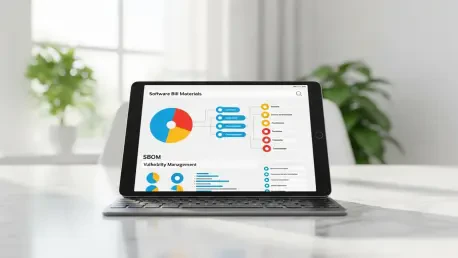
Synchronizing global workflows requires a transition from reactive documentation to a unified, continuous management system that treats compliance as a real-time operational requirement. The 24-hour reporting window mandated by the EU CRA creates a high-pressure environment where manual data entry or siloed spreadsheets simply fail. Organizations struggle because they must not only identify a breach but also accurately cross-reference which products and jurisdictions are affected before the clock runs out. To manage this, manufacturers are increasingly relying on centralized platforms that automate the generation and correlation of Software Bill of Materials (SBOMs), ensuring that when a vulnerability surfaces, the documentation is already validated and ready for submission.
Digital products often hide dependencies within binary software and deeply embedded firmware. What specific methodology ensures these hidden components are accurately captured? How does this granular visibility change the secure-by-design development process compared to traditional post-production security audits?
Accurately capturing these hidden layers requires a methodology that goes beyond looking at source code to include the analysis of binary software, firmware, containers, and closed-source dependencies. By scanning the actual “as-built” software package, organizations can uncover deeply embedded third-party components that often bypass traditional audits. This granular visibility shifts the focus from post-production “patch-and-pray” cycles to a secure-by-design approach where developers can see the entire digital stack during the creation phase. It turns security into a proactive gatekeeper, preventing risky components from ever reaching the production stage and ensuring the product’s foundation is transparent from day one.
Security teams are often overwhelmed by raw vulnerability data that might not be exploitable in their specific environment. How can Vulnerability Exploitability eXchange (VEX) be used to filter irrelevant alerts? What steps are necessary to correlate components with multiple authoritative sources without increasing developer fatigue?
The sheer volume of vulnerability noise can lead to “alert fatigue,” where critical risks are buried under thousands of irrelevant warnings. VEX acts as a vital filter by providing a standardized way for manufacturers to signal whether a vulnerability is actually exploitable in their specific configuration. By correlating SBOM data with multiple authoritative vulnerability sources and then applying VEX, teams can discard the noise and focus on meaningful risks that require immediate action. This automation is essential because it allows developers to spend their time on innovation rather than manually investigating “false positive” vulnerabilities that have no actual impact on their specific deployment.
Scaling software transparency requires secure sharing through controlled access and version tracking. What strategies help organizations balance customer transparency with the need to protect sensitive proprietary data? How can data normalization ensure these records consistently meet the evolving minimum requirements for global market access?
The balance between transparency and secrecy is maintained through role-based access controls and rigorous version tracking, ensuring that only authorized stakeholders see the necessary levels of detail. Organizations must adopt data normalization practices to ensure their SBOMs meet the baseline requirements of various global regulators, such as U.S. Executive Order 14028 or emerging frameworks in Asia. By using a centralized manager to validate these records, a company can provide a “single version of truth” that satisfies a regulator’s demand for transparency without exposing sensitive intellectual property to the public. This structured approach builds trust with customers who now demand proof of security as a prerequisite for purchase.
Regulatory compliance is shifting toward mapping software lists directly to actual deployed assets. How can organizations transition from static documentation to real-time impact analysis in operational environments? What metrics best demonstrate that a transparency program is successfully lowering supply chain risk and improving response times?
Transitioning to real-time impact analysis involves moving away from static PDF documents and toward dynamic SBOMs that are mapped directly to live digital assets in the field. When a new threat emerges, an organization should be able to instantly query their inventory to see exactly which deployed devices contain the vulnerable component. Success in these programs is measured by the reduction in “Time to Detect” and “Time to Remediate,” as well as the overall reduction in the number of high-risk third-party dependencies over time. A mature transparency program doesn’t just list components; it provides the actionable intelligence needed to automate response workflows at scale across the entire product lifecycle.
What is your forecast for the future of software transparency as AI-assisted development and cryptographic requirements become more prevalent in global regulations?
I forecast that software transparency will evolve from a niche compliance checkbox into a comprehensive “Digital Identity” for every product, encompassing not just code, but also AI models, cryptographic protocols, and hardware components. As AI-assisted development accelerates, the speed of code creation will demand even tighter governance and automated controls to manage the influx of third-party and open-source fragments. We will likely see a global convergence of standards where the inability to provide a machine-readable, verified SBOM results in immediate exclusion from major markets like the EU, India, and the United States. Ultimately, transparency will become the primary currency of trust in the global digital supply chain, making automated management tools an absolute necessity for any company that wishes to remain competitive.