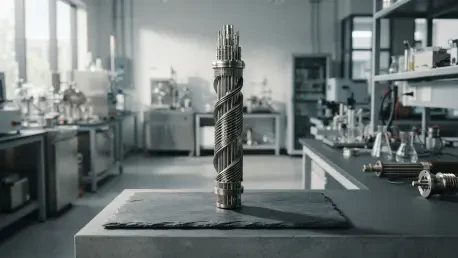

With South Korea aiming to increase its nuclear energy share to over 35 percent by 2038, the protection of advanced fuel designs becomes a vital component of the nation’s energy infrastructure. The recent announcement by Lightbridge Corporation regarding a patent grant from the South Korean Ministry of Intellectual Property marks a transformative expansion of the company’s technological footprint. This development, which specifically concerns a sophisticated nuclear fuel assembly design, represents a decisive milestone in the company’s efforts to secure its intellectual property within the global energy landscape. By examining the technical nuances of the patent and the strategic importance of the Korean market, a comprehensive understanding of this corporate shift emerges. This patent allows Lightbridge to safeguard its innovations as the industry moves toward higher efficiency and improved safety margins, ensuring its metallic fuel technology remains a central pillar of the carbon-free transition currently sweeping through East Asia and beyond.
Sophisticated Architecture: The Mixed-Grid Fuel Design
The core of this recent advancement is the securing of seventeen specific claims directed at a mixed-grid nuclear fuel assembly design that optimizes the distribution of fuel elements to improve reactor performance and longevity. At its technical heart, the patent describes a sophisticated arrangement that combines two distinct grid configurations within a single bundle, departing from traditional uniform fuel assemblies. This allows for a more controlled flow of coolant and a more balanced thermal distribution across the reactor core, which is essential for maintaining high safety standards. The circular perimeter formed by the outermost fuel elements is a specific engineering choice that ensures compatibility with pressurized heavy water reactors, such as the CANDU-type units currently operating in South Korea. By focusing on this geometry, the company ensures that its fuel can be integrated into existing infrastructure without requiring massive mechanical overhauls or expensive redesigns of internal reactor components.
The fuel elements themselves feature a multi-lobed profile integrated with spiral ribs, creating a sophisticated self-spacing mechanism that provides structural stability without the need for additional hardware. These ribs are designed to touch those of neighboring elements at specific intervals along the length of the assembly, maintaining the geometry of the bundle under the extreme pressures of a reactor environment. This innovation is crucial because traditional support hardware can often interfere with coolant flow or absorb neutrons unnecessarily, reducing the overall efficiency of the power generation process. By eliminating these obstacles, the Lightbridge design achieves better thermal-hydraulic performance and increases the available safety margin during high-power operations. This self-supporting structure also simplifies the manufacturing process, making it easier to maintain tight tolerances and ensure consistency across large production batches of fuel assemblies destined for commercial utility deployment.
Strategic Expansion: Strengthening Korean Market Presence
The newly allowed claims represent a significant strategic upgrade over previous filings by broadening the scope of the company’s legal protections within South Korea. While a patent secured in early 2022 was relatively narrow, focusing on a specific combination of rectangular and triangular grid patterns, the current divisional application covers the general concept of the mixed-grid arrangement. This shift creates a much larger exclusionary zone in the South Korean market, preventing competitors from utilizing various mixed-grid configurations that might have bypassed the more restrictive earlier patent. By securing these broader rights, the company ensures that its foundational design philosophy is protected against minor variations or alternative engineering attempts. This proactive legal strategy is essential in an industry where research and development cycles span decades and intellectual property serves as the primary barrier to entry for potential competitors in the advanced nuclear fuel sector.
South Korea serves as a critical hub for global nuclear technology, operating a diverse fleet consisting of both pressurized water reactors and pressurized heavy water reactors. Currently, the nation operates 26 reactors that provide approximately one-third of its domestic electricity, and it remains a major exporter of reactor designs to international markets. Securing patent protection in this jurisdiction ensures that any future exports of South Korean technology that might incorporate advanced fuel designs must account for Lightbridge’s intellectual property rights. This creates a powerful leverage point for the company as it seeks to partner with major state-owned utilities and international engineering firms. Furthermore, the robust government commitment to expanding nuclear capacity provides a fertile environment for deploying fuel technologies that offer higher efficiency. As the region moves toward a more decarbonized energy grid, these legal safeguards will play a vital role in determining which technologies dominate the market.
Global Integration: Moving Toward Commercial Scalability
The versatility of the patented design allows reactor operators to mix different types of rods within a single assembly, including metallic fuel rods, conventional ceramic pellets, or reactivity control rods. This modularity gives utility providers the flexibility to tailor their fuel loads to meet specific operational goals, such as extending cycle lengths or increasing power uprates to meet peak demand. This capability is particularly relevant to the modern energy transition, where power grids are increasingly integrating variable renewable energy sources like wind and solar. Nuclear reactors must become more flexible to handle the thermal and mechanical stresses of load-following, and Lightbridge’s technology is being developed specifically to support this requirement. By providing a fuel assembly that can withstand frequent power changes without compromising its structural integrity, the company positions its technology as a necessary component for the next generation of resilient, carbon-free energy systems.
The strategic evaluation of the South Korean energy market indicated that the success of Lightbridge’s patent application was more than a legal formality; it functioned as a definitive maneuver that secured a foothold in a critical region while broadening the technological scope of its metallic fuel designs. Stakeholders recognized that as the global community looked toward nuclear power for reliable carbon-free energy, the ability to protect and deploy efficient designs became a primary factor in identifying technology leaders. This expansion prompted a shift toward higher safety standards and encouraged other innovators to prioritize modularity for small reactor systems. Future considerations focused on the seamless integration of these fuel assemblies into existing grid architectures to manage fluctuating demands. By consolidating these findings, the industry prepared for a new era where technical resilience and legal protection formed the backbone of sustainable energy infrastructure across international borders.