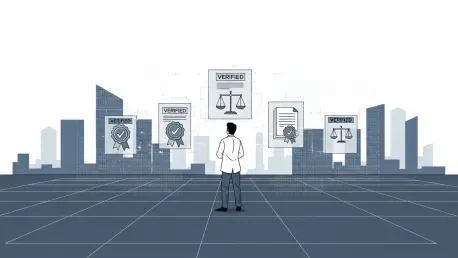

The integration of sophisticated large language models into the American judicial system has reached a critical juncture following a high-profile disciplinary action against Mississippi legal professionals who relied on fabricated technological outputs. This incident serves as a stark reminder that while generative AI can significantly accelerate document drafting, it lacks the inherent ability to verify the factual existence of the precedents it cites within legal briefs. The practitioners involved inadvertently introduced hallucinated case laws into their official court filings, leading to a significant loss of credibility and formal reprimands from the presiding judge. This failure highlights a growing disconnect between the rapid adoption of productivity tools and the fundamental ethical obligations of the legal profession. As courts across the United States implement mandatory disclosure rules regarding the use of automated software, this specific case stands as a definitive cautionary tale for those attempting to shortcut the process of research.
The Challenge: Maintaining Integrity in the Age of Automation
The specific penalties handed down in the state were not merely punitive but were designed to serve as a public corrective for the entire legal community regarding the dangers of unchecked automation. In this particular matter, the legal team utilized an AI-driven platform to generate a motion for summary judgment, which included citations to three entirely non-existent judicial opinions that appeared superficially authentic to the casual reader. When the opposing counsel and the court clerk attempted to locate these specific records, they discovered that the cases did not exist in any reputable legal database, including Westlaw or LexisNexis. The judge noted that the practitioners had violated their duty of candor to the court by failing to verify the accuracy of their submissions before affixing their signatures. Consequently, the team was ordered to pay monetary fines and complete additional hours of continuing legal education focused specifically on the ethical implications of using advanced software.
This phenomenon, commonly referred to as a hallucination, occurs when a large language model predicts the most statistically probable next word in a sequence without possessing a grounding in external reality. Because the model is trained to mimic the structure and tone of professional writing, it can easily invent plausible-sounding case names, docket numbers, and even detailed internal quotations that look legitimate to an uncritical eye. This inherent technical limitation becomes a profound liability in the legal field, where the authority of an argument relies entirely on the validity of its sources and the precision of its citations. The incident demonstrated that even seasoned practitioners can be lulled into a false sense of security by the confident tone of an AI’s output. To mitigate these risks, technical experts suggested that firms should view AI as a creative collaborator, emphasizing that the software lacks the semantic understanding required to distinguish between reality and fiction.
The resolution of the case provided a definitive blueprint for how the judiciary addressed the intersection of technology and professional ethics throughout 2026. Firms that successfully avoided similar penalties focused on comprehensive training programs that educated staff on the specific mechanical limitations of large language models. It became clear that the primary solution was not to ban the technology but to refine the human-in-the-loop requirement, ensuring that digital tools remained subordinate to human judgment. Leading organizations established dedicated audit committees to review high-stakes filings for patterns of synthetic error and citation validity. These actions shifted the strategic focus from mere speed to the preservation of institutional trust within the courtroom environment. By reinforcing personal liability, the legal system created a durable framework for innovation while prioritizing the original source materials that form the foundation of our legal heritage.