
The unprecedented convergence of computational logic and mechanical actuation demands a reassessment of the institutional structures that have historically governed digital innovation without considering physical risk. Physical AI represents a transformative leap where intelligence is no longer confined to the screen but is embodied in machines that navigate, manipulate, and interact with the tangible world. This shift necessitates a sophisticated interplay between high-level software and ruggedized hardware, moving beyond the simple automation of the past toward truly intelligent, autonomous systems.
The evolution of this technology has transitioned from static industrial robots to mobile, context-aware systems capable of managing complex logistics, urban transportation, and even delicate clinical workflows. This review examines the current state of physical AI in 2026, focusing on how institutional frameworks are pivoting to accommodate the unique challenges of machine-environment interaction. The purpose is to analyze the shift from restrictive oversight to enabling structures that treat safety as a collaborative, data-driven process.
Introduction to Physical AI and Institutional Evolution
Physical AI is the practical application of artificial intelligence within systems that physically manipulate their surroundings. Unlike generative or purely digital AI, which processes information to produce text or images, physical AI uses real-time sensory data to make kinetic decisions in unpredictable settings. This technology has progressed rapidly from controlled laboratory experiments to a critical component of the global industrial landscape, bridging the gap between digital intelligence and the human physical experience.
The institutional response to this evolution has been forced to adapt at a similar pace. Traditional software regulations, which focus on data privacy and algorithmic bias, are insufficient when dealing with machines that possess kinetic energy and the potential for physical impact. Consequently, a specialized regulatory context has emerged, one that prioritizes the safe integration of autonomous hardware into public spaces and industrial zones. This evolution marks the end of the era where technology was “self-governed” and the beginning of a structured, institutionalized approach to embodied intelligence.
The Pillars of Physical AI Deployment
Regulatory Pathways and Evidence-Based Safety
A fundamental change in the current deployment strategy is the transition from “guardrails” to “pathways.” While guardrails are typically understood as prohibitive policies intended to stop negative outcomes, pathways are structured, predictable routes that allow developers to prove the safety of their systems through empirical performance. This distinction is vital because it shifts the burden of proof from hypothetical risk modeling to the generation of “regulatory evidence.” By participating in these defined pathways, companies can demonstrate exactly how an autonomous system behaves in real-world scenarios.
The significance of this feature lies in its ability to turn every trial into a source of legal and technical validation. For instance, when an autonomous delivery vehicle navigates a crowded sidewalk, the data generated serves as a verifiable record of its interaction with human pedestrians. This evidence then informs the drafting of permanent legislation, ensuring that safety rules are grounded in practical reality rather than abstract fears. This iterative feedback loop between hardware performance and policy drafting has become the gold standard for responsible scaling in the sector.
Integrated Manufacturing and Rapid Scaling
The success of physical AI is inextricably linked to the synergy between research expertise and manufacturing capacity. In the current global landscape, a division of labor has emerged where fundamental AI research often originates in one region while the complex hardware integration occurs in another. This synergy is particularly visible in the relationship between European design centers and Asian manufacturing hubs, such as those in the Greater Bay Area. This integration allows for a significantly faster iteration cycle, where software updates can be instantly tested on new hardware prototypes.
Moreover, the availability of deep supply chains for specialized sensors, actuators, and chassis components allows for rapid scaling that was previously impossible. When a startup develops a new robotic assistant, the proximity to high-volume manufacturing ecosystems means that a prototype can move to commercial production in months rather than years. This ability to scale hardware at the speed of software is what differentiates the current market from the experimental phases of previous decades, allowing physical AI to move into the mass market with unprecedented velocity.
Emerging Trends in Global AI Governance
The most prominent trend in contemporary governance is the widespread adoption of “regulatory sandboxes.” These are geographically defined zones or sector-specific environments where emerging technologies are granted temporary exemptions from certain rules to facilitate testing under flexible conditions. In these spaces, policymakers act as active observers and partners, collecting data alongside the innovators to understand the nuances of machine behavior. This collaborative approach prevents the stifling of innovation while allowing for the identification of unforeseen risks before a technology reaches the general public.
In addition to sandboxes, there is a growing reliance on intermediary mediation to resolve the friction between private innovation and government legislation. Trade councils and industry associations have taken on the role of “translators,” reframing technical challenges as policy questions that lawmakers can address. This mediation is essential for cross-border operations, where a company must navigate conflicting legal requirements in different jurisdictions. These organizations help standardize expectations, ensuring that a system approved in one market has a clear route to certification in another, thereby reducing the “red tape” that historically hindered international expansion.
Real-World Applications and Sector Integration
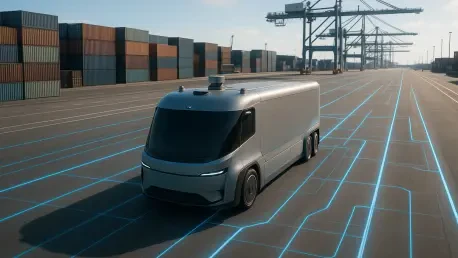
Physical AI has moved beyond the pilot phase into deep integration across several critical sectors, most notably in maritime logistics and port automation. In major shipping hubs, autonomous cranes and transport vehicles coordinate the movement of millions of tons of cargo with a precision that exceeds human capability. This integration streamlines global trade and reduces the carbon footprint of logistics operations by optimizing fuel consumption and minimizing idle times. The success in this sector demonstrates that physical AI can handle high-stakes, heavy-duty industrial tasks with a high degree of reliability.
The healthcare sector has also seen a significant transformation through the deployment of robotic assistants and AI-driven clinical workflows. These systems are not replacing human practitioners but are instead addressing the logistical burdens of an aging demographic and rising clinical costs. From automated medication delivery to robotic-assisted surgeries, physical AI is enhancing the capacity of hospitals to provide high-quality care. Furthermore, the emergence of Urban Air Mobility, specifically electric vertical take-off and landing aircraft, represents a new frontier where autonomous flight protocols are being coordinated across multi-jurisdictional airspaces.
Technical Hurdles and Market Obstacles
Despite the progress, significant technical hurdles remain, particularly regarding operation in “unstructured” environments. While a robot can easily navigate a warehouse with predictable flooring and lighting, the chaos of a public street presents a different set of challenges. Human behavior is often erratic, and physical AI systems must be able to interpret intent and context in real-time. Ongoing development is focused on improving the “common sense” of these machines, ensuring they can make safe decisions even when encountering edge cases that were not included in their training data.
Market obstacles are equally daunting, as the lack of a universal regulatory framework creates a fragmented global landscape. Companies often find themselves building different versions of the same product to satisfy the varying safety standards of different countries. This fragmentation increases costs and slows down the global dissemination of life-saving or efficiency-enhancing technologies. The industry is currently striving toward “platform models” that allow for more seamless data and technology exchange, but achieving true international standardization remains a work in progress for the coming years.
Future Outlook and Long-Term Impact
The trajectory of physical AI suggests a move toward a “triple helix” model of cooperation involving government agencies, academic institutions, and private industry. This collaborative structure is expected to lead to breakthroughs in autonomous protocols, which would allow machines from different manufacturers to interact and communicate safely. Imagine a future where an autonomous truck from one company and a delivery drone from another can share a localized data map to avoid collisions. Such interoperability will be the cornerstone of a fully integrated autonomous economy.
In the long term, the ubiquity of physical AI will likely reshape urban infrastructure and labor markets. Cities may be redesigned with dedicated lanes for autonomous vehicles or specialized docking stations for service robots. While this transition will undoubtedly disrupt traditional employment in sectors like transport and manual logistics, it also promises to create new categories of high-tech jobs focused on the maintenance, oversight, and ethical governance of these systems. The goal is a world where autonomous tools are as integrated and trusted as the mechanical tools of the industrial revolution.
Summary and Assessment of Physical AI
The investigation into physical AI regulatory frameworks demonstrated that the successful deployment of these technologies was contingent on the move from static guardrails to dynamic pathways. It was found that the most effective strategies involved the use of regulatory sandboxes, which allowed for the collection of empirical evidence to inform future legislation. The review established that the synergy between European research and Asian manufacturing capacity acted as a primary driver for scaling, while intermediary organizations played a crucial role in bridging the gap between innovators and policymakers.
The analysis concluded that for physical AI to reach its full potential, regulatory planning had to be treated as a core component of the engineering process rather than an afterthought. Actionable next steps for the industry included the prioritization of shared autonomous protocols and the expansion of international “platform models” to reduce market friction. By shifting toward evidence-based safety and collaborative governance, the sector moved closer to a future where autonomous machines operated as seamless extensions of human intent. Ultimately, the integration of these systems was recognized as a feat of both technological innovation and institutional coordination.