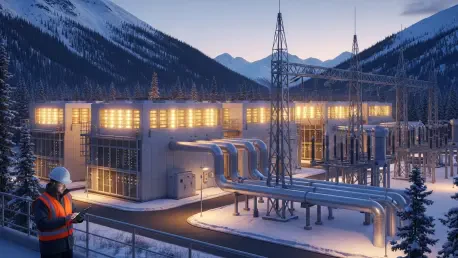

The decision to integrate high-density artificial intelligence infrastructure into a local economy often represents a critical fork in the road between rapid industrial expansion and the long-term preservation of community standards. In Anchorage, this tension has materialized through the introduction of Ordinance AO 2026-27, a legislative framework designed to impose foundational rules on the construction and operation of massive data centers. While some critics argue that these regulations act as premature roadblocks that could frighten away tech investment, supporters view them as essential guardrails intended to prevent foreseeable social and environmental accidents before they occur. The debate currently centers on whether a municipality should wait for the physical impacts of a new industry to manifest or establish a clear set of operational terms while the technology is still in its nascent stages of local deployment. This legislative effort reflects a growing realization that the digital frontier requires physical boundaries to ensure that the arrival of big tech does not come at the expense of local quality of life.
Navigating the Physical Impact of Digital Infrastructure
Zoning and the Preservation of Residential Standards
One of the primary objectives of the proposed ordinance is to ensure that industrial-scale data centers are not permitted to encroach upon established residential neighborhoods. These facilities are often characterized by their massive physical footprints and the necessity for constant, high-volume cooling systems that generate significant acoustic disruption. By implementing strict zoning restrictions, the Anchorage Assembly seeks to provide a predictable environment for both developers and homeowners, preventing the kind of friction that has occurred in other metropolitan areas where industrial sites were placed too close to housing. The requirement for specialized enclosures for cooling machinery is another critical component, designed specifically to mitigate noise pollution that can degrade property values and mental health. Without such regulations, the city would effectively be granting a blank check to developers, allowing them to prioritize operational efficiency over the basic right of residents to live in a quiet and peaceful environment.
Beyond immediate zoning concerns, the legislation introduces a level of infrastructure accountability that has previously been absent from the discussion of tech expansion in Alaska. The mandate for utility companies to perform comprehensive power capacity assessments before any project receives approval is a pragmatic response to the unique challenges of the regional energy landscape. Anchorage is currently navigating a delicate period regarding its energy security, making the sudden arrival of massive, electricity-hungry tenants a potential risk to the stability of the entire grid. By requiring these assessments upfront, the ordinance ensures that the burden of proving feasibility falls on the developers and the utilities rather than the public. This approach transforms the regulatory process from a series of bureaucratic hurdles into a diagnostic tool that identifies whether the existing electrical infrastructure can actually sustain the high-performance computing required for modern artificial intelligence without causing brownouts.
Mitigating the Strain on Regional Energy Resources
The energy demands of artificial intelligence infrastructure are staggering, with recent projections indicating that data centers could consume up to twelve percent of the total United States energy capacity by 2028. For a region like Southcentral Alaska, which is already grappling with fluctuating energy prices and supply challenges, the prospect of adding several hundred megawatts of demand is not a trivial matter. Proponents of the ordinance argue that it is fiscally irresponsible to allow such intensive energy users to connect to the grid without a dedicated plan for new generation sources, such as hydroelectric upgrades or the long-discussed trans-Alaska gas line project. Without clear regulatory oversight, the entry of these massive consumers could lead to an artificial spike in demand that drives up costs for every residential and small business customer in the area. The legislation serves as a safeguard against this scenario, ensuring that the local energy market remains balanced and that the cost of expansion is borne by the primary beneficiaries.
Furthermore, the push for regulation highlights a fundamental shift in how cities view industries that matter in the modern era. While the traditional view suggested that high-growth sectors should be given total freedom to operate, the reality of data center operations reveals a high level of externalities that the public often ends up subsidizing. In the absence of the proposed ordinance, there is no legal mechanism to ensure that a data center developer contributes to the modernization of the local electrical grid they intend to utilize. By establishing these rules now, Anchorage is positioning itself as a sophisticated partner that understands the true value of its resources. The goal is not to drive away the technology sector but to invite it in under terms that are sustainable and mutually beneficial. This ensures that the economic diversification promised by artificial intelligence does not become a net loss for the community due to overlooked operational costs or infrastructure fatigue.
Evaluating the Integrity of Public Discourse
The Intersection of AI and Media Influence
A particularly unsettling aspect of the ongoing debate in Anchorage involves the suspected use of artificial intelligence to influence public opinion regarding these very regulations. Observers have pointed out that several editorials and public statements opposing the ordinance exhibit the hallmark characteristics of large language model outputs, including repetitive platitudes and a distinct lack of local context. This has led to concerns about the dilution of local journalism, where automated content is used to create a facade of broad opposition to community-driven policy. The irony of an AI-generated argument lobbying against the regulation of the AI industry is not lost on local advocates, who suggest that such tactics undermine the democratic process. When the quality of discourse is diluted by algorithmic scripts, the genuine concerns of human residents are often drowned out by a high volume of low-substance rhetoric designed to favor corporate interests over the public good.
The use of AI writing detectors on various public-facing critiques has flagged several prominent pieces as being highly likely to have been generated by automated tools. This trend suggests a potential shift in how industry groups interact with local governments, moving away from traditional advocacy toward a model of automated persuasion. For the residents of Anchorage, this means that the information they consume regarding the impact of data centers must be scrutinized more heavily than ever before. The loss of human-centric investigative rigor in local media creates a vacuum where sophisticated lobbying can thrive, often at the expense of factual accuracy. By recognizing these patterns, the community can begin to demand more transparent and authentic communication from those who seek to shape the city’s future. Protecting the integrity of public information is just as important as protecting the physical environment from the noise and power demands of the hardware itself.
Establishing a Foundation for Sustainable Growth
Ultimately, the battle over Ordinance AO 2026-27 is a fight for local autonomy in an increasingly centralized digital world. The push for regulation is a rational response to an industry that is notorious for its high environmental and social footprint, even if its outputs are purely digital. Rather than acting as an insurmountable barrier to success, these laws provide a necessary framework for developers to follow, ensuring that the city’s expansion into the tech sector is handled with foresight and accountability. By prioritizing the needs of residents over industry-led scripts, Anchorage has the opportunity to foster a technology sector that actually serves the community rather than merely extracting resources from it. This proactive stance sends a clear message to the broader tech industry that while the city is open for business, it will not sacrifice the well-being of its people or the stability of its infrastructure for the sake of rapid, unregulated growth.
The debate over AI data centers in Anchorage ultimately concluded that proactive legislation was the only viable path forward for a community facing unique energy and environmental challenges. By passing Ordinance AO 2026-27, the Assembly established a precedent for other municipalities to follow, demonstrating that technological progress and residential protection were not mutually exclusive goals. This move empowered local planners to demand transparency from developers and ensured that the power grid remained resilient in the face of unprecedented demand. The focus then shifted toward the long-term integration of these facilities, with an emphasis on creating a symbiotic relationship between tech giants and local utilities. Leaders recognized that setting clear guardrails early prevented the costly legal and social conflicts that plagued other regions. Moving forward, the city maintained its commitment to periodic reviews of these regulations to keep pace with the rapidly evolving nature of high-performance computing.