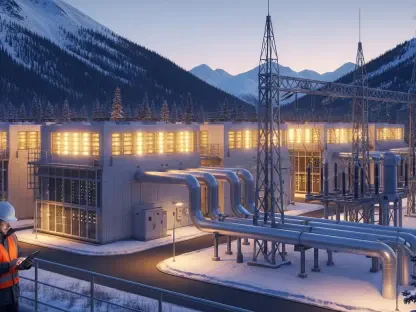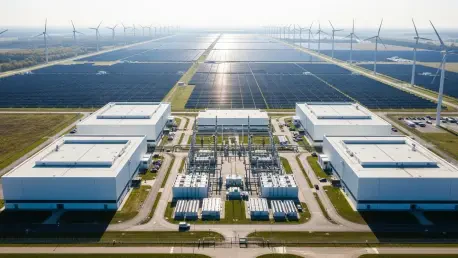

The hum of a thousand cooling fans vibrating through a massive concrete shell represents more than just a technological feat; it is the physical manifestation of the invisible intelligence now rewriting the rules of the global economy. While the cloud is often discussed as a spectral, weightless entity, the reality on the ground is far more industrial and resource-intensive. These sprawling complexes, filled with row after row of high-performance servers, serve as the essential hardware layer for the artificial intelligence applications and digital services that modern society has come to depend upon. Without this physical foundation, the sophisticated algorithms and vast datasets that define the current era would have nowhere to reside and no way to process.
The economic significance of these facilities has undergone a dramatic transformation, moving from niche industrial projects to central pillars of state-level economic development strategy. In previous years, governors and local officials competed fiercely to attract data center operators, offering lucrative tax incentives and streamlined permitting processes in exchange for the promise of high-value investment. Today, however, these facilities are viewed as foundational to national competitiveness, acting as the critical infrastructure required to host the next generation of industrial and consumer technologies. The scale of investment has reached a point where the presence of a hyperscale data center can single-handedly alter a region’s economic trajectory and energy profile.
The primary catalyst for this massive surge in demand is the relentless advancement of Large Language Models and high-performance computing requirements. These AI-driven workloads require significantly more power and more sophisticated cooling systems than the standard web hosting or corporate storage of the previous decade. As technology giants race to deploy more capable generative models, the demand for facility space has outpaced the available supply, forcing developers to look toward new geographic regions. This expansion is not just a matter of building more sheds; it is about engineering specialized environments capable of handling the extreme heat and power density associated with modern silicon.
Consequently, there is a visible regulatory shift occurring across the United States, transitioning away from unconditional state-level tax incentives toward a model of rigorous legislative oversight and resource management. Public officials are no longer satisfied with the mere presence of these facilities; they are now asking difficult questions about their long-term impact on shared resources. This new era of governance is defined by a desire to balance the undeniable economic benefits of the digital economy with the practical realities of grid stability and environmental stewardship. Legislative bodies are increasingly viewing data centers as industrial utilities that must be managed with the same level of scrutiny as power plants or water treatment facilities.
The Digital Backbone Under Scrutiny: The Current State of Data Center Infrastructure
Understanding the physicality of the cloud is essential for anyone analyzing the current legislative environment. Data centers are the essential hardware layer for global artificial intelligence, acting as the physical sites where data is ingested, processed, and stored. These are not merely warehouses for computers; they are highly integrated systems of power distribution, thermal management, and fiber-optic connectivity. As AI models grow in complexity, the density of these systems increases, requiring more electricity and more sophisticated cooling solutions to prevent hardware failure and maintain operational efficiency.
The economic significance of these projects has reached a level where they are now considered national assets. States that successfully host large-scale data center clusters find themselves at the forefront of the technological frontier, attracting additional investments in software development and specialized hardware manufacturing. However, this status as an economic pillar comes with heightened expectations from the public. Residents and policymakers are becoming more aware that the digital services they use every day have a tangible footprint in the real world, often occupying hundreds of acres and consuming as much power as a small city.
The AI catalyst has fundamentally changed the design and operation of these facilities. High-performance computing requires a departure from traditional air-cooling methods, leading to the adoption of liquid cooling and more advanced rack architectures. This technical evolution has direct implications for regulatory oversight, as the resource requirements for an AI-focused facility differ significantly from those of a standard enterprise data center. The sheer scale of the power and water needed to support these advancements has made it impossible for local governments to ignore the cumulative impact of multiple facilities operating within a single jurisdiction.
Navigating the Shift: Key Trends and Market Dynamics in Facility Regulation
Emerging Standards for Resource Consumption and Sustainability
Managing energy demands and grid integration has become the top priority for state regulators dealing with the rise of hyperscalers. Data centers are categorized as large-load customers, a designation that brings both opportunity and risk for utility providers. To manage this, several states are implementing targeted utility tariffs specifically designed for high-demand users. These tariffs often require data centers to pay a premium for their connection to the grid or to fund the construction of new transmission lines and substations. This ensures that the massive power requirements of a few large companies do not place an unfair financial burden on residential ratepayers.
Water scarcity has emerged as a major point of political and environmental friction, particularly in arid regions where the cooling requirements of massive server farms can strain local supplies. In response, mandatory disclosure laws are becoming more common, requiring operators to report their water usage effectiveness and the source of their cooling water. This transparency is intended to push the industry toward more innovative, water-efficient cooling technologies, such as closed-loop systems or reclaimed water usage. In areas facing persistent drought, the competition between industrial cooling and agricultural or residential needs has forced a reevaluation of how permits are granted.
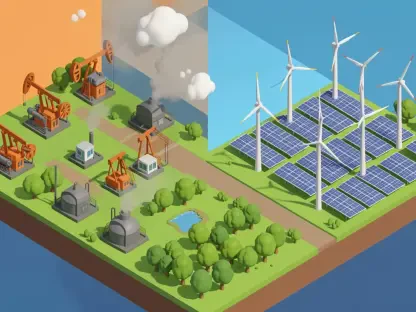
The move toward green mandates is also accelerating, as states push data centers to align with broader carbon-neutral goals. Many operators are now entering into Renewable Power Purchase Agreements to ensure their energy consumption is matched by new wind or solar generation. However, some jurisdictions are going further by introducing legislation that mandates carbon-neutral operations within a specific timeframe. These clean energy requirements are transforming the data center from a passive energy consumer into an active participant in the energy transition, often serving as an anchor tenant for large-scale renewable projects that might not otherwise be economically viable.
Market Projections and the Economic Impact of Oversight
Despite the increasing regulatory hurdles, growth indicators for the data center sector remain remarkably strong. The demand for AI processing power is so high that developers are often willing to navigate complex compliance landscapes if it means securing a reliable source of power and a strategic location. Market data from the current period shows that vacancy rates in major hubs remain at historic lows, while pre-leasing activity for facilities still under construction is at an all-time high. This suggests that while regulation may change how these facilities are built and operated, it has yet to dampen the overall appetite for new capacity.
However, the cost of compliance is expected to rise significantly, influencing the capital expenditure projections for major tech providers and infrastructure developers. New state laws requiring enhanced environmental reporting, grid upgrades, and specialized cooling systems add layers of cost to every project. For many developers, these costs are becoming a permanent part of the business model, shifting the focus from finding the cheapest location to finding the most stable and predictable regulatory environment. This change in CapEx allocation means that regions with clear, consistent rules may actually gain a competitive advantage over those with lax but unpredictable oversight.
The long-term impact of a fragmented regulatory patchwork on the speed of AI deployment in the United States remains a concern for many industry analysts. If every state develops its own unique set of rules for energy usage, water reporting, and carbon offsets, the complexity of managing a national portfolio of data centers could become a bottleneck. This fragmentation may favor larger players who have the legal and engineering resources to handle diverse compliance requirements, potentially leading to greater market consolidation. Forward-looking forecasts suggest that the industry will increasingly advocate for more unified standards to streamline the expansion of the digital infrastructure.
Critical Obstacles: Addressing Grid Strain and Community Resistance
The debate over rate pressure represents a central conflict between industrial growth and consumer protection. Skeptics argue that the rapid expansion of data centers forces utilities to invest billions in new infrastructure, the cost of which is eventually passed down to residential consumers who do not directly benefit from the facilities. In contrast, industry proponents maintain that data centers provide a steady, predictable source of revenue that stabilizes utility rates and funds essential grid modernization. Deconstructing this conflict requires a nuanced look at how utility commissions allocate costs and whether the current regulatory framework is equipped to handle such rapid shifts in load.
Zoning hurdles and the rise of local opposition, often referred to as NIMBYism, have become significant barriers to development. Massive server farms, while economically beneficial, are often seen as unappealing neighbors due to their physical footprint, the noise generated by cooling systems, and the limited number of permanent jobs they create relative to their size. Some localities have responded by implementing development moratoriums to catch their breath and study the long-term impact of these facilities. Managing this resistance requires developers to engage more deeply with communities, offering more than just tax revenue by investing in local parks, educational programs, or infrastructure improvements.
Infrastructure bottlenecks remain a persistent challenge, particularly regarding the aging electrical grid and the slow pace of the interconnection process. In many regions, the time it takes to get a new data center connected to the power grid has stretched from months to several years. Strategies for overcoming these limitations include the development of on-site microgrids and the use of large-scale battery storage to help balance the load. However, until there is significant reform in how the national grid is planned and funded, these bottlenecks will continue to dictate the geography of AI infrastructure, favoring areas where power is readily available over those that might be more strategically located.
The Legal Landscape: Compliance, Security, and Jurisdictional Challenges
The intersection of state regulation and federal authority is creating a complex legal landscape that may lead to significant litigation. Developers often point to the Commerce Clause of the Constitution, arguing that overly restrictive state laws unconstitutionally burden interstate commerce by hindering a national digital network. Furthermore, the Federal Power Act and the Telecommunications Act of 1996 provide a framework for federal oversight that may conflict with state-level mandates. As states become more aggressive in their oversight, the courts will likely be called upon to determine where state authority ends and federal jurisdiction begins, particularly regarding energy markets and digital communication.
National security concerns are also driving a new wave of state-level restrictions on foreign-controlled data infrastructure. Several jurisdictions have introduced or passed laws that limit the ability of entities from specific foreign countries to own or operate data centers, citing risks to data privacy and the integrity of the power grid. These restrictions have significant implications for global tech firms that operate across borders, potentially forcing a restructuring of ownership or operational models. This trend reflects a broader geopolitical shift where digital infrastructure is viewed as a frontline of national defense, requiring a higher level of scrutiny than traditional commercial real estate.
Regulatory preemption is a growing point of tension, as states attempt to impose mandates that may conflict with federal rules governing wholesale energy markets. When a state requires a data center to adhere to specific power-sourcing or pricing models, it can inadvertently interfere with the competitive markets overseen by federal regulators. This tension creates a high degree of uncertainty for operators who must navigate a dual system of oversight. Legal analysts are closely watching several high-profile cases where state-level environmental or utility rules are being challenged on the grounds that they are preempted by federal authority over interstate commerce and energy.
Future Horizons: Innovation and the Evolution of Digital Governance
Technological disruption may offer a way for the industry to bypass some of the traditional regulatory constraints associated with the grid. On-site power generation, including the potential use of small modular reactors, is being explored as a method for data centers to become energy-independent. By generating their own power, these facilities can reduce their reliance on the public grid, potentially avoiding the lengthy interconnection delays and the political friction associated with large-load consumption. Similarly, the widespread adoption of liquid cooling could significantly reduce the water and energy footprint of facilities, making them more palatable to local regulators and environmental advocates.
The potential for federal intervention is a significant wildcard in the future of data center governance. As AI is increasingly viewed as a matter of national interest, there is a possibility that the FCC or other executive branch agencies could establish a unified national framework to streamline the deployment of AI infrastructure. Such a move would aim to reduce the fragmentation caused by the current state-level patchwork, providing a clearer path for developers and ensuring that the United States remains a leader in the global AI race. While federal intervention could simplify compliance, it would also represent a significant shift in the balance of power between state and federal authorities.
Global competitive positioning is ultimately at stake as states weigh the costs and benefits of oversight. If the regulatory environment in the United States becomes too burdensome or unpredictable, developers may look to other regions with more favorable conditions. However, the United States currently holds a significant lead in AI talent and investment, providing a strong incentive for companies to navigate even the most complex domestic regulations. Predicting how state-level oversight will influence the nation’s standing requires a careful analysis of how other global powers are managing their own digital infrastructure and whether a more regulated domestic market will lead to more resilient and sustainable growth in the long run.
Strategic Outlook: Balancing Innovation with Public Responsibility
The transition from an incentive-based model to a resource-based regulatory framework marked a fundamental shift in how the data center industry operated within the United States. State governments moved away from simple tax breaks, focusing instead on the long-term sustainability of the power grid and the preservation of local water supplies. This evolution forced developers to move beyond traditional site selection criteria, placing a much higher value on regulatory transparency and the availability of clean energy. The focus became less about finding the path of least resistance and more about building infrastructure that could coexist with the needs of the surrounding community.
Investment moved toward energy-efficient cooling and grid-stabilization technologies as a direct result of these new regulatory pressures. Companies that successfully integrated on-site power generation or advanced liquid cooling systems gained a competitive edge by reducing their reliance on volatile energy markets and avoiding the most stringent local restrictions. Furthermore, the industry began to prioritize partnerships with utility providers to fund grid modernization projects, essentially turning a primary source of conflict into an opportunity for collaborative infrastructure development. These proactive strategies allowed the sector to maintain its rapid growth while addressing the most pressing concerns of policymakers and the public.
Ultimately, the industry evolved to maintain public trust by embracing its role as a critical public utility rather than just a private industrial sector. The move toward mandatory reporting and carbon-neutral mandates was adopted as a necessary step to secure the long-term viability of the digital economy. By demonstrating a commitment to resource efficiency and national security, data center operators successfully navigated the transition toward a more regulated environment. This shift did not stifle the AI revolution but rather provided it with a more sustainable and socially responsible foundation, ensuring that the infrastructure supporting the future of intelligence remained both robust and respected.