
Tesla’s highly anticipated autonomous taxi initiative, the Cybercab, is navigating a turbulent path as it confronts significant and simultaneous challenges on both the legal and operational fronts that threaten to delay its revolutionary vision. A critical administrative oversight has unexpectedly thrust the electric vehicle manufacturer into a trademark dispute with a French beverage company, jeopardizing the very name of the project. This legal predicament is alarmingly intensified by pressing public safety concerns, following a series of accidents during the vehicle’s crucial pilot testing phase. Together, these hurdles paint a comprehensive picture of an ambitious project facing substantial real-world obstacles that extend far beyond technological innovation into the complex domains of corporate due diligence and public trust.
The Branding Battle for ‘Cybercab’
A Critical Filing Failure
At the heart of Tesla’s current legal entanglement is a fundamental procedural failure: the company did not secure the ‘Cybercab’ trademark in a timely manner, an oversight that has created a significant vulnerability for the project’s brand identity. Public records confirm that a French beverage company, Unibev, successfully filed for the trademark with the United States Patent and Trademark Office (USPTO) several weeks before Tesla submitted its own application. In the rigid world of intellectual property law, this chronological precedence is a decisive factor. As a direct consequence of Unibev’s prior filing, the USPTO has taken official action by formally suspending Tesla’s application. A letter from the agency to Tesla explicitly states, “Action on this application is suspended until the prior-filed application(s) below either registers or abandons.” This communication unequivocally confirms that Unibev’s claim takes priority, effectively freezing Tesla’s attempt to secure the name until the beverage company’s pending application is fully resolved one way or another.
The strategic implications of this filing lapse are profound, extending well beyond a simple naming dispute and highlighting a rare gap in the company’s typically meticulous planning. In the highly competitive and rapidly evolving technology sector, a strong and distinct brand name is a cornerstone of market strategy, essential for building consumer recognition and trust for a novel service like a robotaxi network. The failure to promptly secure a name as integral as ‘Cybercab’ represents a significant misstep in administrative diligence, an unforced error that places a multi-billion dollar initiative in a precarious position. This situation shifts the narrative away from the project’s cutting-edge technology and toward the more mundane but equally critical aspects of business operations, such as legal preparedness and intellectual property management. For a company known for its bold vision and aggressive execution, this oversight serves as a stark reminder that even the most ambitious technological ventures are subject to foundational business protocols.
Legal Hurdles and a Costly Solution
The legal framework governing this dispute is clear and unforgiving, operating under established USPTO guidelines that prioritize the first entity to file an application. These regulations mandate that trademarks must be distinct and must not create a likelihood of confusion with existing marks already in commercial use or those with a demonstrated intent for use. Because Unibev submitted its paperwork first, its application is granted primary consideration. Should Unibev’s currently “pending” application successfully navigate the review process and become a registered trademark, Tesla’s legal right to use the ‘Cybercab’ name for its highly publicized robotaxi service would be rendered entirely void. This outcome would force Tesla into a difficult position, potentially requiring a costly and disruptive rebranding campaign for a service that has already been announced and promoted to the public and investors under the ‘Cybercab’ identity, creating confusion and undermining early marketing efforts.
Despite the significant legal obstruction, the situation does not represent an insurmountable dead end for the automaker, though the most likely path forward involves an unforeseen financial cost. The most pragmatic and probable remedy would be for Tesla to enter into negotiations to purchase the trademark rights directly from Unibev, effectively transforming a legal challenge into a financial transaction. This would allow Tesla to secure its desired brand name, albeit at a price determined by the French beverage company. Adding a layer of intrigue to the dispute is the fact that Unibev also owns the trademark for ‘Teslaquila,’ a name associated with a limited-edition liquor brand that Tesla had previously planned but ultimately abandoned. This recurring intersection between the two companies suggests a curious pattern and adds a fascinating subplot to the current trademark conflict, underscoring the unexpected ways in which corporate paths can cross in the global marketplace.
Operational Hurdles and a Grand Vision
Compounding Safety Setbacks
The trademark issue does not exist in a vacuum; rather, it is compounded by significant and more visceral operational difficulties that have plagued the Cybercab project’s development. This administrative problem has emerged “on the heels of” other pressing challenges, as the robotaxi initiative has endured what can only be described as a “rough few months.” Most notably, the project has been marred by no fewer than eight accidents involving the driverless cabs during the crucial pilot testing phase on the public streets of Austin, Texas. These incidents are not minor technical glitches occurring in a controlled environment but are real-world events that raise serious and immediate questions about the safety, reliability, and overall readiness of the autonomous driving technology. This series of public accidents adds a critical layer of public and regulatory scrutiny on top of the company’s legal and branding woes, creating a multi-front challenge for the project team to navigate as it pushes toward a commercial launch.
The broader impact of these accidents is substantial, striking at the very core of the robotaxi value proposition. For a service that is fundamentally predicated on the promise of being significantly safer than human-driven vehicles, every single accident, regardless of fault, serves as a major setback to its public image and credibility. These incidents threaten to create a cascade of negative consequences, including potential delays in securing necessary regulatory approvals, increased insurance premiums for the fleet, and a growing hesitancy among potential customers to trust and utilize the service. The unfortunate combination of a public legal fight over its brand name and a series of documented safety failures creates a complex crisis for the Cybercab project. It powerfully highlights the immense difficulty of transitioning autonomous vehicle technology from the controlled confines of private test tracks to the chaotic and unpredictable reality of public roads, where every misstep is magnified under an intense public and media microscope.
The Evolving Vehicle and a Disruptive Business Model
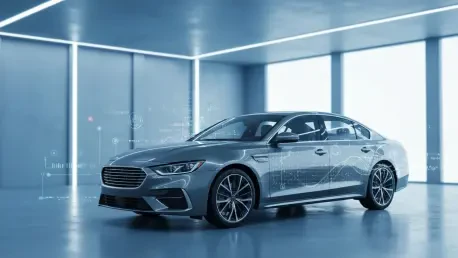
The ambitious vision for the Cybercab, as originally articulated by Elon Musk, centered on a futuristic, purpose-built vehicle designed from the ground up for autonomous ride-hailing. The concept, unveiled in the previous year, depicted a small, sleek car featuring dramatic scissor-style doors, with plans for advanced features like wireless charging and an aggressive target price of US$30,000. However, the initial launch of the service will diverge significantly from this bespoke concept. Instead, the robotaxi fleet will commence operations using existing, unmodified Model Y vehicles straight from the factory. The key enabling technology for this pivot is a new, more advanced version of Tesla’s Full Self-Driving (FSD) software. Musk’s perspective is that this approach validates the capability of their current production cars, stating, “These are unmodified Tesla cars coming straight from the factory, meaning that every Tesla coming out of our factories is capable of unsupervised self-driving!” This pragmatic shift suggests a strategic focus on leveraging the existing vehicle platform to launch the service more quickly.
The monetization strategy for this fleet is described as a novel and disruptive business model, which Musk has characterized as “a combination of Airbnb and Uber to some degree.” This plan involves creating a decentralized fleet composed of both Tesla-owned vehicles and cars owned by private individuals, a model designed to facilitate rapid scaling. Tesla owners will have the option to add their personal vehicles to the robotaxi network through a simple function on their Tesla app, allowing the car to generate passive income for them when it is not in use. Musk has painted a compelling picture of this potential, envisioning a scenario where an owner going on vacation can add their car to the fleet and have it generate revenue automatically. He has further speculated that the income-generating potential could be so significant that the money earned might exceed the owner’s monthly car payment. This innovative approach aims to dramatically expand the available fleet without the massive capital expenditure of purchasing every vehicle.
Navigating the Path Forward
Tesla’s groundbreaking Cybercab initiative ultimately found itself at a critical juncture, defined by a challenging confluence of administrative missteps and operational stumbles that tested its resilience. The unexpected failure to promptly secure its chosen brand name created a preventable legal and financial vulnerability, forcing the company to confront the consequences of a procedural oversight. Concurrently, a series of public accidents during the crucial testing phase cast a significant shadow over the core technology’s immediate readiness for widespread deployment, raising valid concerns about public safety. These dual challenges powerfully underscored the immense complexity of launching a truly transformative service, revealing that ultimate success depended not only on groundbreaking engineering and visionary software but also on meticulous legal strategy and an unimpeachable public safety record. The journey toward a driverless future, as this chapter demonstrated, was paved with as many bureaucratic and practical obstacles as it was with technological breakthroughs.