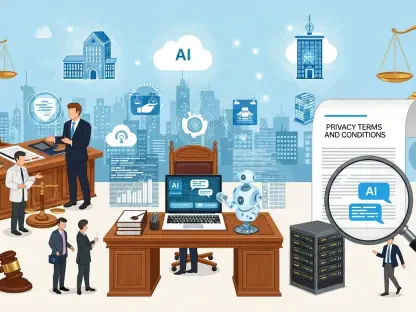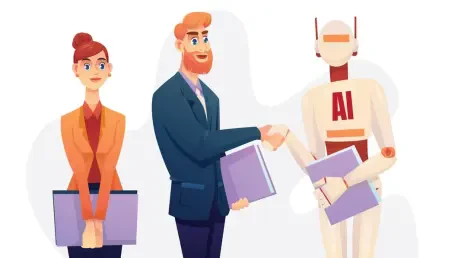

A technology meticulously engineered to bring unparalleled efficiency to the modern workplace is paradoxically making the hiring process a miserable ordeal for nearly everyone involved. Artificial intelligence, once heralded as the solution to cumbersome recruitment cycles, now sits at the center of a growing disconnect between companies seeking talent and candidates looking for their next opportunity. This trend is particularly significant in a shifting labor market, where the push for automation has inadvertently created a dysfunctional “doom loop” — a cycle where technological escalation on one side begets more escalation on the other, to the detriment of all.
The rapid integration of AI into talent acquisition is not merely a background process; it is actively reshaping how candidates are discovered, evaluated, and hired. This analysis will explore the meteoric adoption of AI in recruitment, examine its real-world consequences for both employers and job seekers, and delve into the critical ethical and legal challenges that have emerged. Ultimately, it considers what this technological arms race means for the future of finding and securing talent in an increasingly automated world.
The Rise and Reality of AI in Recruitment
The Data-Driven Surge in Automated Hiring
The adoption of artificial intelligence in hiring has moved from a niche experiment to a mainstream practice with astonishing speed. According to the Society for Human Resource Management, over half of all organizations now leverage some form of AI in their recruitment efforts, a figure that underscores a fundamental shift in talent acquisition strategy. This trend is backed by significant financial investment, with the AI in hiring market projected to swell to an impressive $3.1 billion, signaling long-term commitment from businesses to automated solutions.
This surge is not a one-sided phenomenon; it is a response to, and a driver of, changes in applicant behavior. While companies automate to manage volume, job seekers are turning to the same technology to navigate the application process. Research from Greenhouse reveals that a staggering 54% of U.S. job seekers have already encountered an AI-led interview. Simultaneously, it is estimated that roughly one-third of ChatGPT users have utilized the platform to craft job application materials, illustrating a landscape where both sides are increasingly reliant on algorithms.
AI in Action from Automated Screening to Digital Interviews
The interplay between AI-powered applicants and AI-powered employers has created the “doom loop” in practice. Aspiring candidates use Large Language Models (LLMs) like ChatGPT to generate polished, keyword-optimized resumes and cover letters, enabling them to apply for hundreds of jobs with minimal effort. This tsunami of applications, in turn, forces companies to deploy their own AI screening tools to filter the noise, creating a feedback cycle where technology, not human skill or interest, drives the initial stages of hiring.
This automation extends beyond document screening and into the interview process itself. Asynchronous video interviews, pioneered by companies like HireVue, have become a common hurdle. In this format, candidates do not speak with a person; instead, they record answers to pre-set questions for an algorithm to analyze. The system evaluates their responses, word choice, and even non-verbal cues, turning what was once a deeply human interaction into a transactional, data-driven assessment.
Expert Perspectives The Human Cost of Automation
The technological escalation in hiring has been identified by industry leaders as a core problem. Daniel Chait, CEO of recruiting software firm Greenhouse, defines the “doom loop” as a detrimental arms race. As candidates use AI to scale their applications, employers deploy AI to manage the resulting volume. This dynamic, he argues, makes the entire process less personal and ultimately less effective, leaving both parties with the distinct feeling that the system is not only broken but actively worsening.
This sentiment is supported by empirical evidence. A study from researchers Anaïs Galdin and Jesse Silbert found that the widespread use of AI-generated cover letters fundamentally devalues the information they contain. While algorithmically written letters were often grammatically superior, their uniformity made it impossible for employers to distinguish between genuinely interested candidates and those simply mass-applying. Consequently, hiring rates dropped, and average starting wages for new hires fell, suggesting that AI’s homogenization of applications actively impairs a company’s ability to identify top talent.
Beyond inefficiency, experts warn of more insidious consequences. Labor groups such as the AFL-CIO have voiced strong opposition, cautioning that AI systems can amplify existing human biases and lead to discriminatory outcomes. Researcher Djurre Holtrop reinforces this, noting that algorithms are not inherently objective and can unfairly penalize candidates based on arbitrary data points. This concern is not merely theoretical; it is experienced directly by job seekers like Jared Looper, a former recruiter who described his interaction with an AI interviewer as so “cold” and alienating that he hung up. His experience highlights a profound loss of the human element, raising fears that great candidates are being left behind because they cannot perform for an algorithm.
Navigating the Future Challenges Regulations and Whats Next
The Emerging Battleground of Ethics and Bias
One of the most pressing challenges in AI-driven hiring is the problem of inherent bias. Algorithms trained on historical data can learn and perpetuate discriminatory patterns, disqualifying candidates based on criteria that have no bearing on their ability to perform a job. Factors as arbitrary as a person’s name, their zip code, or even their facial expressions during a video interview can trigger automated rejection, creating systemic barriers for qualified individuals from certain demographics.
This algorithmic gatekeeping contributes to a broader sense of dehumanization in the hiring process. When the first point of contact is a machine, the opportunity for genuine connection, nuanced conversation, and the evaluation of critical soft skills is lost. The process becomes transactional rather than relational, stripping away the humanity that has long been central to building effective teams. This not only frustrates candidates but also diminishes a company’s ability to assess cultural fit and interpersonal strengths.
Ultimately, this trend may lead to reduced hiring efficacy. As AI tools encourage the submission of homogenized, keyword-stuffed applications, it becomes increasingly difficult for employers to discern true talent and potential. The very technology intended to find the best candidates may, in fact, be making them harder to spot, forcing companies to rely on flawed, impersonal metrics that fail to capture the full picture of a candidate’s value.
The Push for Regulation and Human-Centered Solutions
In response to these growing concerns, a regulatory landscape is beginning to take shape. States like California, Illinois, and Colorado are at the forefront, developing new legislation to govern the use of automated decision-making systems in hiring. These efforts aim to introduce transparency, accountability, and fairness into a largely unregulated market, ensuring that technological advancements do not come at the cost of civil rights.
This legislative momentum is complemented by legal challenges testing the applicability of existing anti-discrimination laws to new technologies. A prominent lawsuit against HireVue, backed by the ACLU, alleges that its automated interview system failed to provide legally required accommodations for a deaf applicant. Such cases are critical in establishing legal precedents for how fairness and accessibility must be maintained in an era of algorithmic recruitment.
Looking ahead, the future of talent acquisition may hinge on a fundamental re-evaluation of AI’s role. The current trajectory suggests a need to shift from using AI as a replacement for human judgment to using it as a tool to augment it. A more thoughtful, human-centric approach would prioritize systems that support recruiters, reduce administrative burdens, and provide objective data points, all while ensuring that the final, critical decisions remain in human hands. This balanced approach is essential to preserving fairness, effectiveness, and humanity in the search for talent.
Conclusion Reclaiming the Human Element in Hiring
The rapid and widespread adoption of AI in recruitment created a dysfunctional system fraught with unintended consequences. It has given rise to a “doom loop” of escalating automation, devalued traditional application materials like the cover letter, and introduced significant ethical and legal risks related to bias and discrimination. The initial promise of efficiency has, for many, been overshadowed by a process that feels impersonal, unfair, and profoundly broken.
This analysis has shown that the critical need to balance technological advancement with human-centered values is more urgent than ever. The current trajectory is failing both employers, who struggle to identify the best candidates amid a sea of homogenized applications, and job seekers, who face algorithmic gatekeepers and a dehumanizing experience. The goal of building talented, diverse teams is being undermined by the very tools designed to achieve it.
Therefore, the path forward requires a deliberate recalibration. Companies must move toward a more thoughtful integration of AI, one that prioritizes tools that support and enhance human judgment rather than supplanting it. By focusing on systems that augment decision-making, reduce unconscious bias, and handle administrative tasks, organizations can reclaim the human element in hiring. Ensuring that fairness, genuine connection, and nuanced evaluation remain at the core of talent acquisition is not just an ethical imperative—it is a strategic one.