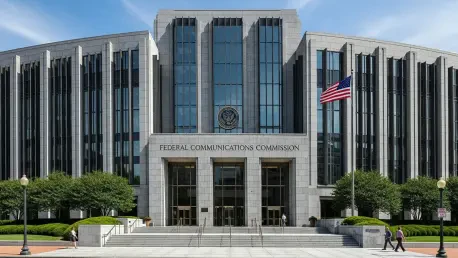

Desiree Sainthrope has spent years inside the machinery of federal rulemaking and trade-law compliance, reading the footnotes and watching how politics bends process. She brings that same lens to broadcast ownership: the 39 percent cap was born in another era, but it now sits at the nexus of media power, conservative politics, and a regulator who relishes cultural combat. In this conversation, she unpacks how an FCC led by a Trump-aligned chair could move to change the cap, the fierce split on the right between major station owners and conservative cable voices, and what viewers, investors, and lawmakers should watch as lobbying and litigation collide. We cover the legal levers in play, the timeline to 2026, Nexstar and Sinclair’s ambitions, Newsmax’s counteroffensive, and how a single social post from the former president can redraw the map overnight.
Brendan Carr put the 39 percent TV ownership cap out for comment this summer. What specific legal hooks is he likely to use to change it, and can you walk us through the step-by-step rulemaking and probable court challenges you expect, with timelines and past-case examples?
The cleanest path is to argue that the 21-year-old cap is an artifact of a pre-streaming era and that the FCC has room to interpret and update how “national audience reach” is measured and managed. You’d likely see reliance on the idea that the Commission can harmonize legacy ownership rules with current market realities—particularly where the statute leaves gaps that need implementing details. Practically, that means an NPRM that frames the cap as misaligned with competition from “larger-scale big-tech and big-media players,” followed by a record heavy on broadcaster economics and localism commitments. The sequence looks like this: notice (already out), a long comment cycle with economic studies and oppositions, a reply round, then an order adopting changes—timed to show progress before the Dec. 17 oversight hearing but with final action more likely in 2025. Expect immediate petitions for review arguing the cap is a congressional command, not an FCC dial, plus major-questions and Chevron fights about the scope of agency power. Courts will ask whether the Commission is making a modest interpretive adjustment or rewriting a politically salient ceiling—so the order will need painstaking reasoning, concrete findings on local news and competition, and a record that shows the agency answered opponents’ core critiques.
Trump posted “NO EXPANSION OF THE FAKE NEWS NETWORKS… If anything, make them SMALLER!” How do you read that conditional stance, and can you share anecdotes of how similar Trump posts have shifted regulatory outcomes, including any measurable lobbying surges or message tests that followed?
I read it as a yellow light, not a red. The conditional clause—if this helps “Radical Left Networks”—signals space for proponents to recast the reform as empowering “red-state” owners who claim to be closer to local audiences. We’ve seen before that a single presidential post can turn quiet lobbying into a public pile-on; in this case, a broadcast lobbyist described exactly that—private persuasion “spilling out into the public.” That sort of signal tends to trigger rapid-fire filings, op-eds like the early October push, and coordinated calls to Capitol offices, which Newsmax has already mobilized by directing its audience to the switchboard and to GOP leadership. The practical effect is to make every regulator’s calendar and inbox a battlefield within hours, and you can almost feel the temperature rise in the record as both sides race to define the “conservative” position.
Newsmax’s Chris Ruddy says loosening the cap would hurt conservative cable channels. What’s the concrete mechanism he fears—carriage leverage, ad market share, or affiliate fees—and can you quantify the potential impact on cable rates and audience reach using recent industry metrics?
His worry is leverage, full stop. When a broadcaster owns a national network, a portfolio of local stations, and a marquee cable brand, it can bundle carriage, prioritize channel placement, and squeeze shelf space for rivals. He’s also focused on retransmission leverage—bigger station groups can push harder in negotiations and then steer promotional oxygen toward their own cable properties. Quantifying the impact with fresh metrics is tough without proprietary data, but the basic geometry is clear: a station owner capped at 39 percent reach has less national weight than one operating 265 stations across “more than half the country.” If consolidation increases that footprint, the bargaining table tilts—affecting affiliate fees, ad inventory prioritization, and the ability to starve a mid-tier cable channel of prime EPG real estate.
Broadcasters like Sinclair (185 stations) and Nexstar (201) say the cap is outdated. What specific digital-era pressures justify larger scale, and can you give examples—by market or revenue line—where scale changed negotiating power with streamers, ad-tech firms, or sports rights?
The pressure points they cite are secular: cord cutting erodes pay-TV, digital ad markets reward scale, and sports rights escalate faster than local revenues. In that world, owning 185 or 201 stations is less about vanity and more about negotiating in bulk—central ad-tech deals, unified data stacks, and cross-market sponsorships that smaller owners can’t command. For example, a group with national reach can standardize CTV and FAST distribution terms, then force better splits with aggregators because they can threaten to pull entire DMAs at once. On sports, even regional rights look different when you can deploy uniform production, sell multi-market ad buys, and amortize costs across dozens of stations instead of a handful.
Nexstar’s proposed $6.2 billion Tegna deal hinges on relief from the cap. How would that merger rewire local news production, newsroom headcount, and retransmission fees, and can you compare the projected post-merger margins or cash flow to recent broadcaster consolidations?
Operationally, you’d expect hub-and-spoke production—centralized editing, graphics, and investigative units feeding local anchors—with some market-by-market consolidation of crews. That often means headcount rationalization in back-office and duplicative news slots, offset by a few high-impact regional teams that produce content across multiple stations. On the distribution side, a company operating 265 stations with reach “more than half the country” would sit across the table with materially stronger retrans leverage; that typically flows into higher fee asks and stricter bundling conditions. As for margins and cash flow, the thesis mirrors prior broadcaster roll-ups: near-term cost saves from integration, capex discipline through shared facilities, and uplift from retrans and political ad cycles. Given the cap constraint today, the delta with and without relief is the difference between a defensible nationwide footprint and a patchwork that leaves synergies on the table.
Sinclair’s CEO expects the cap raised or eliminated in the first half of 2026 and is eyeing E.W. Scripps. What milestones would need to happen between now and mid-2026, and what market signals—bond spreads, M&A chatter, or station valuations—should we watch?
Milestones start with building an airtight record: complete the current comment cycle, float a draft order, and shore up votes by tying reform to local news deliverables. The Dec. 17 oversight hearing is a waystation—how Carr handles scrutiny will shape momentum. After that, watch for a vote on an order well ahead of 2026 to leave room for litigation and potential stays. Market signals will be unmistakable: spreads tightening for highly levered broadcasters, bankers quietly modeling Scripps-like targets, and station multiples inching up as buyers price in regulatory delta. You’ll also hear it in earnings calls—coded language about “secular headwinds” paired with “scale” and “national reach” is the tell.
Ruddy warns consolidation will shrink local voices and raise prices, while broadcasters promise “more access to local news.” How would you test those claims with data—station-level news minutes, staffing, and pricing trends—and can you cite any markets that prove or refute them?
I’d design a pre/post event study around transactions, comparing station-level news minutes, headcount, and the diversity of locally produced segments six and 18 months after close. On pricing, I’d track local ad rates and cable bills for systems overlapped by the consolidating groups, alongside carriage disputes and blackout durations. You’d also survey viewer perceptions of localism—do they recognize unique, community-specific coverage, or is the content uniform across sister stations? While I won’t point to specific markets here, the method surfaces whether consolidation trades away on-the-ground reporters for slicker centralized packages, or whether promised “more access to local news” shows up as measurable minutes and beats covered.
Carr publicly scolded Jimmy Kimmel, and some ABC affiliates quickly reacted. How unusual is that kind of regulator-media dynamic, and can you share historical anecdotes where FCC leverage influenced programming decisions or corporate behavior, with outcomes and lessons?
It’s unusual in tone but familiar in effect: when a regulator signals displeasure, station groups that depend on his sign-off tend to read the room. Here, the sequence was stark—public criticism, then rapid action by station owners to pull the show, underscoring how ownership rules become quiet leverage over content decisions. The broader lesson is that “culture-war” moves are not just rhetoric; they can ripple across programming lineups because companies calibrate risk. An agency leader who wraps policy in populist messaging can move boardrooms without issuing a single formal order, simply by reminding the industry who controls the dials.
Daniel Suhr says there’s broad conservative support for reform, while CPAC and OANN back the cap. What explains that split, and can you map the funding, policy goals, and media assets behind each camp, including any measurable grassroots or donor activity you’ve seen?
The split reflects business models. Large station owners want scale to bargain with “big-tech and big-media,” and free-market groups align with that deregulatory story. Cable-first outlets like OANN, and advocacy groups worried about concentrated voices, see the cap as a bulwark that prevents broadcasters from crowding them out. On the activity front, you can see the contours: the National Association of Broadcasters, Heritage Action, and Americans for Tax Reform publicly backing reform; CPAC and OANN warning that “independent & diverse voices will disappear.” Add Newsmax’s direct-to-viewer mobilization—asking audiences to call the switchboard—and you have a grassroots pressure machine on both sides, even if donor specifics aren’t public.
Fox Corp’s mix—network, stations, and Fox News—worries Newsmax. If caps loosen, how might a vertically integrated player reshape carriage talks and ad pricing, and can you quantify likely changes in CPMs, retrans rates, or channel placement for smaller cable networks?
Integration lets a company bundle across platforms: clearances on local stations, network must-haves, and a flagship cable channel travel together. That bundle changes the physics of negotiations—distributors weigh the risk of losing a broadcast network and dozens of stations against saying no to a cable channel. In that world, CPMs tend to reflect premium placement and exclusive sponsorships, while retrans asks climb in tandem with footprint. I won’t put numbers on it here, but the direction is unmistakable: smaller cable networks face tougher tiers, less favorable placement, and more frequent “take it or leave it” moments as the integrated player leans on its broadcast reach.
Democrats have condemned Carr, and even Sen. Ted Cruz called his Kimmel threats “dangerous as hell.” How do you expect the Dec. 17 Senate Commerce hearing to unfold, and what specific lines of questioning or exhibits could move undecided Republicans or moderate Democrats?
Expect a two-track hearing. Democrats will press on process—authority to change the cap, the integrity of the record, and whether cultural skirmishes are chilling speech. Republicans will split: some amplifying free-market reform and local news arguments, others echoing concerns about regulator overreach flagged by the “dangerous as hell” comment. What moves the middle are receipts: staffing charts before and after recent deals, line-by-line retrans rate growth, and side-by-side clips that show either homogenization or genuine local reporting. If Carr arrives with commitments on local news minutes and measurable community investment, he improves his odds; if opponents show evidence of pressure tactics linked to programming decisions, they’ll peel votes.
Critics say only Congress can change the cap, not the FCC. What statutory language or precedents does each side rely on, and can you walk us through the strongest Chevron or major-questions arguments you expect in litigation, with example cases and likelihoods?
The jurisdictional fight will pivot on whether the 39 percent cap is read as a fixed congressional command or as a directive implemented through agency-administered rules. Reformers will argue the statute leaves room to define how reach is calculated and to reconcile the cap with today’s marketplace structure, invoking deference where the text is ambiguous. Opponents will cast it as a major-questions issue—an agency cannot, on its own, greenlight sweeping consolidation in a politically salient sector without an unmistakable congressional nod. Without naming cases, you can imagine the briefs: one side says routine interpretation within a delegated space; the other says seismic policy change masquerading as housekeeping. The outcome will turn on how surgical the FCC’s order looks—incremental recalibration is more defensible than wholesale abandonment.
NAB, Heritage Action, and Americans for Tax Reform back reform; Newsmax urges supporters to call GOP leadership to stop it. What lobbying tactics are actually moving votes or minds right now, and can you share metrics—call volumes, whip counts, or ad buys—that tell the story?
Three tactics matter. First, identity framing: tying reform to “red-state consumers” and local news access, which resonates beyond industry circles. Second, pressure campaigns: op-eds, coalition letters, and on-air calls to action—Newsmax’s invitation to flood the switchboard is straight from the modern playbook. Third, deal specificity: pointing to live transactions like the $6.2 billion tie-up that hangs on the cap’s fate, which concentrates lawmakers’ attention. Hard metrics are mostly private, but you can hear the gears turning—lobbyists saying Trump’s post “accelerated” the push, and committee staff bracing for a deluge of constituent contacts as the hearing nears.
If Carr raises the cap but doesn’t scrap it, what middle-ground options—UHF discount tweaks, market-by-market caps, or diversity conditions—could balance scale and localism, and can you lay out a step-by-step policy package with measurable guardrails and enforcement?
A pragmatic package would do four things. One, adjust how reach is counted so legacy quirks don’t distort the 39 percent calculation, while setting a revised ceiling that still constrains absolute dominance. Two, condition additional scale on concrete local news obligations—minimum weekly news minutes, newsroom staffing floors, and beat coverage in public-safety, schools, and local government. Three, embed competition and diversity triggers: if a group crosses specified thresholds, it must carry third-party local programming blocks or fund independent content in each DMA. Four, create an enforcement spine: annual public filings with audited metrics, automatic penalties for missed targets, and the possibility of divestitures if commitments lapse. The steps: NPRM proposing the hybrid cap and obligations; comment and reply focused on measurable definitions; an order adopting the cap and conditions; a compliance manual; then audits tied to license renewals to make it bite.
For viewers, what would they feel first—changes in local news quality, subscription prices, or channel lineups—and can you compare outcomes from prior broadcast M&A cycles, with concrete before-and-after numbers on news minutes, layoffs, bills, and cord-cutting rates?
The first sensation is usually programming sameness or polish—slicker graphics, shared investigative segments, and occasional disappearance of ultra-local features. Channel lineups can shift next, especially if carriage disputes flare; viewers experience that as a blackout followed by a new bundle. Subscription price changes show up later, and it’s hard to isolate causes, but larger station groups negotiating across “more than half the country” typically have the leverage to push retrans higher, which distributors often pass through. I won’t pin exact numbers here, but the arc is familiar: operational efficiencies paired with fewer unique local voices, some staffing consolidation, and a bargaining position that nudges bills and tune-in habits over time.
Do you have any advice for our readers?
Follow the paper trail and the pressure points. Read the comments filed since the FCC put the 39 percent cap out for input this summer, watch the Dec. 17 hearing with an ear for concrete commitments, and track how quickly broadcasters translate rhetoric about “more access to local news” into measurable minutes on-air. If you’re an investor, monitor how often “first half of 2026” pops up in earnings—timelines have a way of telegraphing regulatory confidence. And if you’re a viewer, hold your stations to their promises: ask your local newsroom what beats they’ll add if consolidation goes through, and then check back six months later to see if they delivered.