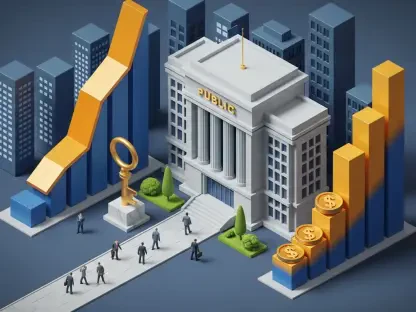

The digital asset landscape has transitioned from a volatile frontier into a sophisticated cornerstone of the global financial system, requiring a regulatory framework that matches its technological complexity. As of 2026, the market is no longer defined by speculative frenzies but by institutional integration, tokenized real-world assets, and a shift toward decentralized infrastructure that operates independently of traditional intermediaries. This maturation has necessitated a departure from the ambiguous enforcement-led oversight of previous years, leading to the issuance of definitive guidance that provides a roadmap for compliance and innovation.
Current market dynamics reflect a multi-trillion-dollar ecosystem where digital commodities, stablecoins, and functional utility tokens serve as the plumbing for a new internet economy. Technological influences, particularly the rise of zero-knowledge proofs and layer-2 scaling solutions, have enabled blockchains to handle high-frequency transactions that were previously impossible. Major market players, ranging from traditional investment banks to decentralized autonomous organizations, now operate under a regime that prioritizes transparency and consumer protection. The significance of this current era lies in the balance between maintaining the security of the financial system and fostering the growth of permissionless innovation.
A New Era for Digital Assets: Understanding the 2026 Regulatory Shift
The regulatory environment has undergone a fundamental transformation, moving away from the era of uncertainty toward a period of high-level legal clarity. This shift is characterized by the Securities and Exchange Commission’s move to provide a comprehensive interpretation of how legacy statutes, like the Securities Act of 1933, apply to modern cryptographic protocols. Instead of viewing every token as a potential security, the current approach recognizes the diverse economic realities of different assets. This evolution has been prompted by the sheer scale of the industry and the need to protect millions of participants without stifling the underlying technology.
Central to this new era is the acknowledgment that a digital asset is not a monolith; its legal status can change based on its utility and the degree of decentralization of its network. Regulators now look beyond the initial issuance to the ongoing functionality of the system. This means that while a project might start as a capital-raising effort, it can mature into a public utility that functions more like a commodity. This nuanced perspective has stabilized the market, allowing developers to build with a clear understanding of when they are crossing the line into regulated financial activity.
Deciphering the SEC’s Five-Part Crypto Taxonomy
Emerging Trends and the Shift Toward Functional Classification
One of the most notable trends in the current market is the abandonment of the one-size-fits-all regulatory model in favor of a specific five-part taxonomy. This classification system separates assets into digital commodities, collectibles, tools, securities, and stablecoins. For instance, the rise of soul-bound tokens—non-transferable identity markers—has created a need for a category that does not involve financial speculation. These digital tools are now recognized for their practical function in verifying credentials or memberships, exempting them from many of the burdens associated with traditional investment contracts.
Furthermore, consumer behavior in the non-fungible token space has shifted from speculative trading to functional ownership, where assets are valued for their artistic or social significance. In decentralized finance, new opportunities have emerged as protocols transition to autonomous operations. The SEC’s current guidance acknowledges that when a protocol achieves a certain level of automation, the role of a central party diminishes, changing the regulatory obligations of the participants. This functional classification allows for a more tailored approach to oversight, ensuring that the rules applied to a tokenized stock are not the same as those applied to a decentralized governance token.
Market Data and the Financial Impact of the 2026 Interpretation
The financial impact of this new interpretative clarity is evident in the surging volumes of digital commodities and tokenized securities. Market data suggests that platforms utilizing the newly established safe harbor provisions have seen a 40 percent increase in institutional capital inflows over the current year. Digital commodities, such as those powering functional decentralized networks, now represent a significant portion of the total market capitalization, as investors seek assets with programmatic utility rather than just speculative upside. Stablecoins, particularly those backed one-to-one by high-quality liquid assets, have become the primary medium for cross-border settlements.
Forward-looking projections indicate that the tokenized securities market will continue to expand as traditional assets like real estate and corporate bonds move onchain. The SEC’s recognition that the technology used for issuance does not change the legal status of a security has encouraged legacy financial institutions to migrate their operations to blockchain infrastructure. This has created a secondary market for tokenized instruments that benefit from the transparency and 24/7 liquidity of digital networks. As more projects meet the criteria for non-security classification, the diversity of the market is expected to grow, providing investors with a broader range of risk-adjusted opportunities.
Overcoming the Complexity of the Howey Test and Asset Separation
The Challenge: Navigating the Separation Doctrine
The industry has long struggled with the concept that a crypto asset could be permanently tethered to an investment contract. However, the current guidance introduces the separation doctrine, which distinguishes the asset itself from the circumstances of its sale. This is a major departure from the previous embodiment theory, which suggested that if a token was sold as part of an investment scheme, it remained a security indefinitely. Now, an asset can separate from its initial contract once the issuer’s managerial efforts are no longer the primary driver of value. This change addresses the obstacle of how an asset can transition into a digital commodity once its network becomes fully functional and decentralized.
Determining the exact moment of this transition remains a complex technical and regulatory challenge. Developers must demonstrate that a project is functional enough to operate without the essential efforts of a central team. This involves proving that the network can maintain its security, governance, and development through a distributed community of participants. The SEC now looks for specific indicia of separation, such as the abandonment of marketing promises by the original creators and the achievement of programmatic utility. For developers, the strategy involves building toward decentralization from day one, ensuring that the success of the project is tied to the code and the community rather than a specific corporate entity.
Strategies for Achieving Functional Decentralization
To meet the criteria for non-security classification, developers are increasingly adopting transparency-first models. This includes publishing open-source code, using decentralized governance structures, and ensuring that no single entity holds a majority of voting power or operational control. The goal is to reach a state where the asset is used for its intended programmatic purpose—whether as a medium of exchange, a voting credit, or a resource for a decentralized application. When the market no longer looks to a central party for profit, the asset is more likely to be classified as a digital commodity or tool.
Moreover, the use of onchain records provides a verifiable history of a project’s evolution toward decentralization. Regulators now utilize these records to assess whether a project has met the necessary thresholds for separation. Developers who successfully navigate this path can benefit from broader secondary market trading and reduced compliance costs. This shift has encouraged a new wave of innovation focused on building robust, autonomous systems that can survive and thrive without constant intervention from their original creators, aligning the interests of developers with the regulatory goal of a self-sustaining ecosystem.
The Joint Harmonization Initiative: A Unified Regulatory Landscape
A significant milestone in the current regulatory environment is the Joint Harmonization Initiative, a collaborative effort between the SEC and the Commodity Futures Trading Commission. This initiative, bolstered by the legislative framework of the GENIUS Act, aims to eliminate the jurisdictional overlaps that previously caused confusion for market participants. By creating a unified set of standards, the agencies have provided a clearer path for businesses that operate across different asset classes. This coordination ensures that if an asset is classified as a digital commodity by one agency, that status is recognized across the federal government, providing much-needed consistency.
This unified landscape also addresses specific industry practices such as protocol mining, staking, and airdrops. The current guidance establishes that basic infrastructure activities, like validating transactions on a proof-of-stake network, are generally administrative and do not constitute securities offerings. This protection extends to liquid staking and wrapping assets, provided these services are ministerial and do not involve discretionary management that creates an expectation of profit from others. These standards have been vital in maintaining the security and integrity of the underlying networks while ensuring that infrastructure providers can operate within a safe harbor.
The Future of Decentralized Finance Under the New Framework
Market Disruptors: Liquid Staking and Wrapped Assets
As the industry looks ahead, decentralized finance is poised to be redefined by liquid staking and the proliferation of wrapped assets. These technologies allow users to maintain liquidity while participating in network security, effectively creating a more efficient capital market. Under the current framework, these activities are viewed through a lens of functionality; if the wrapping process is a simple one-to-one exchange without added yield or management, it is treated as a technical service rather than a financial product. This clarity has cleared the way for massive growth in interoperability between different blockchain networks.
Consumer preferences are also driving a move toward total transparency, where every transaction and governance vote is recorded onchain. This demand for “onchain-by-default” records is pushing future growth toward protocols that prioritize auditability and user sovereignty. Future market disruptors are likely to be those that can leverage these preferences to build trustless financial services that are more resilient than their centralized counterparts. The ability to verify the reserves of a stablecoin or the collateralization of a loan in real-time is becoming a standard requirement for any project seeking widespread adoption.
Adoption Drivers: Global Economics and Startup Exemptions
The adoption of digital assets is increasingly influenced by global economic conditions and the introduction of targeted startup exemptions. As traditional currencies face inflationary pressures, digital commodities and stablecoins offer a compelling alternative for preserving value and conducting commerce. In the United States, the possibility of future safe harbors for early-stage projects would provide a crucial bridge for startups, allowing them to experiment and build their networks before facing the full weight of securities registration. These exemptions are expected to be a major factor in maintaining the country’s competitive edge in the global technology race.
Investment contract safe harbors would provide a clear timeline for projects to achieve decentralization, giving them the breathing room to develop a functional product. This approach acknowledges that innovation often starts in a centralized manner but must evolve to become truly decentralized. By providing a structured path forward, regulators are ensuring that the next generation of digital infrastructure can be built within a legal framework that encourages growth while protecting the interests of the public. This combination of institutional clarity and support for early-stage innovation is the cornerstone of the current market’s stability.
Charting the Path Forward: Recommendations for a Mature Crypto Market
The transition of the digital asset industry toward a mature, regulated market was largely facilitated by the shift from rigid enforcement to functional guidance. By providing a taxonomy that reflects the diverse nature of tokens and establishing the separation doctrine, the regulatory framework now aligns with the economic reality of modern technology. The collaboration between different federal agencies has further reduced friction, creating a more predictable environment for all participants. This stability was essential for the continued integration of blockchain technology into the broader financial system, ensuring that the benefits of decentralization could be realized without compromising the safety and soundness of the economy.
Market participants should prioritize the implementation of robust compliance and security measures to take full advantage of the current safe harbor protections. Developers must focus on achieving genuine decentralization and utility, while trading platforms should maintain rigorous standards for assessing the legal status of the assets they list. Investors, both retail and institutional, are advised to look for projects that provide high levels of onchain transparency and clear functional value. Looking ahead, the focus should remain on building sustainable, autonomous systems that can operate independently of any single central party, as this remains the most reliable path to long-term stability and growth. The foundation has been laid for a future where digital assets are a seamless and trusted part of the global financial infrastructure.