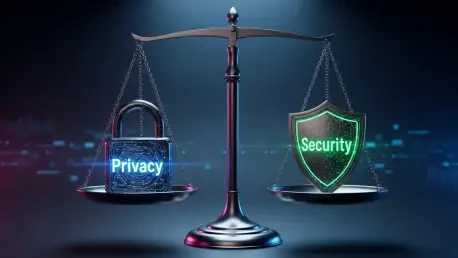

A legislative storm is gathering over Washington as one of the nation’s most powerful and controversial surveillance tools, Section 702 of the Foreign Intelligence Surveillance Act, faces an expiration deadline that has forced a profound ideological clash into the open. This critical provision, which authorizes the warrantless collection of communications from foreign targets abroad, frequently ensnares the data of American citizens, creating a fierce debate over whether law enforcement and intelligence agencies must obtain a warrant before searching this massive repository for information on Americans. While privacy advocates and national security hawks draw their battle lines, the entire conflict has become overshadowed by a single, unpredictable variable: the ultimate position of President Donald Trump, whose decision is universally seen as the decisive factor that will shape the future of surveillance and civil liberties in the United States for years to come.
The Core Conflict: Privacy Rights vs. National Security
The Pro-Reform Coalition
A formidable and ideologically diverse coalition of lawmakers is demanding a sweeping overhaul of the government’s surveillance authority, arguing that the protection of constitutional rights must take precedence. This group, which unites staunch conservatives like Republican Representatives Andy Biggs of Arizona and Jim Jordan of Ohio with progressive civil libertarians, is fiercely advocating for the inclusion of a mandatory warrant requirement. They contend that allowing federal agents to search through a database of communications for information on Americans without judicial oversight constitutes a flagrant violation of the Fourth Amendment. Rep. Biggs has asserted that the traditional arguments used to defend the status quo have lost their potency, stating, “I think a lot of the rationale that was used against us has just basically dissipated.” Their objective is not merely to tweak the existing law but to fundamentally reset the balance between security and liberty by erecting significant new guardrails around government surveillance capabilities.
This pro-reform movement’s agenda extends beyond the singular issue of a warrant requirement, reflecting a broader distrust of the government’s data collection practices in the digital age. A key component of their legislative push includes a proposed ban on government agencies purchasing consumer data from commercial data brokers, a practice they view as a loophole that allows law enforcement to bypass legal due process. By closing this back door to citizen information, they aim to create a more comprehensive privacy framework that prevents an end-run around constitutional protections. The coalition’s multi-pronged approach signifies a strategic evolution from past reform efforts, indicating a sophisticated understanding that modern surveillance threats are not limited to a single program but encompass an entire ecosystem of data gathering that they believe requires systemic and robust legislative checks to safeguard the rights of all Americans against potential overreach.
The National Security Establishment’s Defense
In stark opposition to the reform movement stands the national security establishment and its traditional allies within the congressional intelligence committees. This faction maintains that Section 702 is an absolutely indispensable instrument for protecting the United States from a range of foreign threats, including international terrorism, sophisticated cyberattacks, and the proliferation of weapons of mass destruction. They have consistently warned that imposing a warrant requirement before analysts can search the database would fatally undermine the program’s utility. The core of their argument is that speed is paramount in intelligence gathering; the delay involved in seeking a warrant, they claim, could allow critical threat information to be missed, with potentially catastrophic consequences. For this group, the incidental collection of American communications is a necessary, if unfortunate, byproduct of a program vital to the nation’s defense, and they believe the existing internal oversight rules are sufficient to prevent abuse.
However, the political ground beneath the program’s staunchest defenders appears to be shifting, creating a more challenging environment for reauthorization than ever before. Observers have noted a significant change in the political dynamics, with the intelligence community’s lobbying efforts appearing far less visible and aggressive compared to previous legislative battles. Rep. Jim Himes of Connecticut, a leading Democrat on the House Intelligence Committee, expressed concern over this diminished engagement, contrasting the current climate with past fights where “Cabinet secretaries were taking random members of Congress out to Starbucks.” This apparent lack of a full-court press suggests either an overconfidence that has proven misplaced or a recognition that their long-standing arguments are no longer as persuasive in a political landscape increasingly skeptical of government authority. This new level of political headwind has left the program’s supporters in an unusually defensive posture as they struggle to make their case.
The Trump Factor: The Ultimate Wild Card
A History of Hostility Towards Surveillance
President Trump’s unpredictable nature and his deeply ingrained animosity toward the nation’s intelligence apparatus have positioned him as the central and most powerful figure in the Section 702 debate. Described by one congressional aide as “the 800-pound gorilla in the closet,” his influence is seen as paramount. Privacy hawks have found an unlikely ally in Trump, whose long-running feud with what he derides as the “deep state” fuels their optimism that he will ultimately support their reform efforts. This hope is not without precedent; in 2020, as president, he defied his own Attorney General, Bill Barr, and sided with privacy advocates to ensure that three other controversial surveillance programs were allowed to expire. This history of siding with anti-establishment forces over his own administration’s national security officials provides a clear roadmap for how he might approach the current legislative impasse, giving the reform coalition a powerful, if unconventional, champion in their corner.
The former president’s public declarations have further amplified his pivotal role and emboldened the program’s critics. During the contentious 2024 reauthorization debate, then-candidate Trump issued a dramatic public call on social media to “kill” FISA, a statement that sent shockwaves through the national security establishment. While supporters of Section 702 argue that he was likely conflating the foreign-facing program with the separate FISA authorities that were notoriously used to surveil his campaign associates, the distinction was largely lost in the political fallout. His declaration provided a massive boost of momentum to the pro-reform wing of the Republican party, giving them political cover and a powerful rallying cry. This direct intervention has fundamentally altered the terms of the debate, transforming a complex policy argument into a loyalty test for many in his party and placing immense pressure on congressional leadership to heed his call.
The Persuasion of a Potential Administration
Despite President Trump’s public posture, those who wish to preserve Section 702 in its current form are not without a strategy, placing their hopes in the influential figures expected to populate a potential second Trump administration. They are banking on trusted advisors to persuade the president of the program’s critical necessity, framing it not as a tool of the “deep state” but as an essential weapon in his own arsenal to protect the country. Figures such as potential Vice President JD Vance, CIA Director John Ratcliffe, and Secretary of State Marco Rubio are seen as key advocates who could make a compelling case for national security. Rep. Darin LaHood, a Republican on the Intelligence Committee, highlighted this internal dynamic, noting that these individuals have a legislative record of “not supporting the warrant requirement and knowing it jeopardizes national security,” expressing his belief that “ultimately the president is going to have to make the decision on it.”
This sets the stage for a dramatic internal tug-of-war, pitting Trump’s populist, anti-establishment instincts against the pragmatic counsel of his hand-picked national security team. The outcome of this struggle is far from certain and represents the central drama of the entire reauthorization fight. On one side are the political benefits of siding with his base and delivering a blow to the intelligence agencies he has long distrusted. On the other is the immense responsibility of the presidency and the stark warnings from his advisors that weakening the nation’s premier intelligence tool would leave the country vulnerable. His final decision will likely depend on which set of voices proves more persuasive, making his personal judgment the fulcrum upon which the future of American surveillance policy now rests, a matter of intense and anxious speculation across the political spectrum.
A New Political Reality
Shifting Alliances in Congress
The political calculus for the Section 702 vote has been irrevocably altered, a shift crystallized in a pivotal moment in 2024 when an amendment to add a warrant requirement failed on a razor-thin 212-212 tie. The decisive vote was cast by House Speaker Mike Johnson, who, in a move that stunned and infuriated his former allies, abandoned his previous record as a pro-reform member of the Judiciary Committee to kill the amendment. This action has placed the Speaker in a major political bind, caught between the demands of the ascendant pro-reform wing of his party and the immense pressure from the traditional national security establishment. His vote not only saved the program in the short term but also set a new, higher baseline for the reformers, who now see a path to victory and are more determined than ever to secure the changes they believe are necessary to protect American liberties from government intrusion.
The ripple effects of this new political landscape are being felt in the very committees that have historically championed the surveillance program. The House Judiciary Committee, now led by staunch Trump ally Jim Jordan, has become the central organizing hub for the effort to reintroduce and pass the warrant requirement. More consequentially, the House Intelligence Committee, for decades a nearly unified bastion of support for the intelligence community, is facing unprecedented internal division. Its new chair, Rick Crawford, who opposed the warrant requirement in 2024, must now manage a committee that includes five newly appointed Republican members who all voted in favor of the Biggs amendment. This new composition threatens to shatter the committee’s long-standing consensus, potentially altering its legislative output and depriving the national security establishment of its most reliable and powerful congressional advocate.
Legislative Strategies and an Uncertain Path
Perhaps the most significant development in this evolving battle is the dramatic reassessment occurring among Democrats. While many in the party have traditionally sided with the intelligence community on matters of national security, the prospect of a second Trump administration wielding these powerful surveillance tools without any judicial oversight is causing a major re-evaluation. Rep. Jamie Raskin of Maryland, who voted against the warrant requirement in 2024, has since expressed deep concerns about a potential “assault on the FBI’s internal guardrails against abuse of Section 702 authorities” under a new Trump presidency. This sentiment is expected to be widespread, with one aide predicting that a significant number of House Democrats “will reject their ‘yes’ vote and switch just because of Donald Trump.” This potential migration of Democratic votes, when combined with the solidifying Republican reform bloc, has Rep. Jordan increasingly optimistic that his pro-warrant coalition will finally have the numbers to succeed.
Given the extreme volatility and deadlock in the House, some Republicans are privately looking to the Senate to break the impasse, though not in the way one might expect. Senate Intelligence Committee Chair Tom Cotton is reportedly considering a strategic maneuver to pass an 18-month extension of the authority, a move designed to punt the contentious reform debate until late 2027. The theory behind this strategy is that a “clean” extension, free of controversial amendments, could pass the Senate more easily, thereby creating momentum and placing immense pressure on the House to approve it without a protracted and divisive floor fight. Meanwhile, a palpable sense of uncertainty hangs over Washington, underscored by the official silence from the CIA, NSA, FBI, and the White House, all of whom have declined to comment on their official position. The first public clues may emerge from the upcoming Senate nomination hearings for Lt. Gen. Joshua Rudd to lead the NSA, where senators will likely signal their stances on this critical issue.
An Unwritten Future for American Surveillance
The legislative effort to reauthorize Section 702 became one of the most unpredictable and consequential battles in recent memory. What began as a niche policy debate evolved into a landmark political conflict that fractured long-standing alliances and redefined the intersection of technology, privacy, and national security. The pro-reform movement, once a fringe coalition, gained unprecedented mainstream traction, bringing the program to the brink of significant change and establishing a new political reality for surveillance legislation. Ultimately, all strategic calculations and political forecasts hinged on the singular question of what President Trump wanted. His decision, whether to align with his anti-establishment base or to heed the sober warnings of his national security advisors, was the final factor that determined not only the fate of the legislative impasse but also profoundly shaped the delicate balance between state power and individual liberty in the United States.