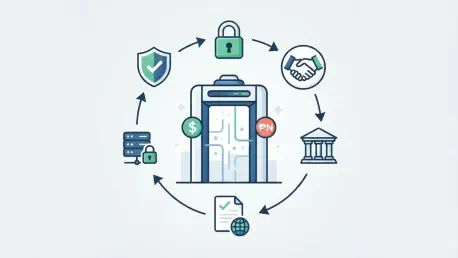

Digital payment gateways must provide regulatory authorities with immediate and direct access to transaction metadata to remain compliant with USMCA digital trade standards. As the manufacturing heart of the continent shifts toward a unified North American corridor, the reliance on outdated correspondent banking systems has created a friction point that modern industry can no longer afford to tolerate. The sheer volume of trade between the United States and Mexico, fueled by an unprecedented wave of nearshoring, has forced a total re-evaluation of how business-to-business settlements are handled. Traditional paper-heavy invoicing and multi-day clearing cycles are being aggressively dismantled in favor of high-speed digital architectures. This transformation represents more than just a technological upgrade; it is a fundamental shift in the economic plumbing of the region. For a gateway to survive in this high-stakes environment, it must balance the velocity of capital with a rigid, multi-layered regulatory framework that safeguards every movement.
Regional Treaties and Data Mobility
The Impact of USMCA: Financial Infrastructure
The United States-Mexico-Canada Agreement has fundamentally reshaped the legal terrain upon which digital payment platforms operate. By specifically addressing the nuances of the digital economy in Chapter 19, the treaty has effectively outlawed the practice of forced data localization, which previously hampered the scalability of cross-border fintech. In the past, companies were often burdened by mandates requiring the physical housing of servers within specific jurisdictions, a requirement that introduced redundant costs and slowed processing times. Now, the emphasis is placed on the mobility of information, allowing cloud-native providers to centralize their data processing while ensuring that authorities in both nations can access relevant records during audits. This provision has been instrumental in lowering the barrier to entry for innovative Software-as-a-Service aggregators that specialize in B2B transactions, allowing them to scale their operations across borders without the need for redundant and expensive physical server farms.
National Treatment: Cross-Border Parity
Building upon the foundation of data mobility, the USMCA also introduces a robust standard for the non-discriminatory treatment of financial services. This concept of “national treatment” ensures that a gateway originating in the United States is granted the same operational privileges and regulatory considerations as a local entity within the Mexican market. Such parity prevents the emergence of protectionist barriers that could otherwise fracture the regional financial ecosystem and hinder competition. By fostering a level playing field, the agreement encourages the deployment of advanced capital across borders, knowing that the regulatory goalposts will not shift based on the nationality of the provider. This legal certainty has catalyzed a surge in venture investment into platforms that bridge the two nations, resulting in a more resilient financial network that supports the complex needs of modern industrial supply chains, where the movement of money must be as synchronized as the logistics of raw materials.
Navigating Dual Sovereignties
The United States: Federal Requirements
Operating within the American side of the trade corridor requires a meticulous adherence to federal mandates overseen by the Financial Crimes Enforcement Network (FinCEN). Any digital gateway facilitating B2B settlements must formally register as a Money Services Business (MSB) and implement a comprehensive anti-money laundering program. This program is not merely a set of internal guidelines but a rigorous operational standard mandated by the Bank Secrecy Act. These protocols require gateways to report suspicious activities and maintain extensive records of transaction histories to assist in the prevention of illicit financial flows. The level of scrutiny has increased significantly as digital platforms handle a larger share of the industrial economy. Consequently, providers must invest heavily in specialized compliance officers and automated tracking software to ensure every dollar moving through their system is accounted for and documented according to federal standards, maintaining the integrity of the US financial system.
Mexico: Financial Regulations
On the Mexican side of the border, the regulatory environment is governed by a trio of powerful institutions, including the National Banking and Securities Commission (CNBV) and the Bank of Mexico (Banxico). These bodies have collectively worked to modernize the financial system through the implementation of the Fintech Law, which provides a clear path for digital platforms to operate as Electronic Payment Funds Institutions (IFPE). Securing this status is a prerequisite for any gateway that intends to handle significant volumes of B2B transactions. The authorization process involves exhaustive audits of technical infrastructure, security protocols, and capital reserves. For a gateway to remain in good standing, it must demonstrate a continuous capability to verify the identities of its users through multi-factor authentication, ensuring that the anonymity often associated with digital payments is thoroughly eradicated. This ensures that digital settlements are as secure and highly regulated as traditional banking transactions within the region.
The Intersection of Payments and Taxation
Tax Reconciliation: Digital Receipts
One of the most complex aspects of the US-Mexico trade corridor is the absolute necessity of aligning financial settlements with the requirements of the Tax Administration Service (SAT). In Mexico, every business-to-business transaction must be validated through a sophisticated system of digital tax receipts known as CFDI. This is not a voluntary practice but a core requirement for any business that wishes to remain compliant with federal tax laws. For a payment gateway, this means that the simple transfer of funds is no longer sufficient to meet the needs of corporate clients. The platform must be capable of cross-referencing every payment with the corresponding digital invoice to ensure that the economic activity is being reported accurately to the government. This integration prevents the “gray market” transactions that were once common in cross-border trade, bringing a new level of transparency and legitimacy to the industrial sector while ensuring that all financial flows are accounted for in real time.
The Role: Payment Supplement
The specific mechanism that connects a payment to its tax obligation is the “Complemento de Pago,” or Payment Supplement. This digital stamp must be generated and attached to the original invoice once the funds have been successfully transferred and received by the supplier. Without this documentation, a Mexican business is legally prohibited from deducting the expense from its taxable income, which can lead to significant financial penalties and increased tax liability. Modern payment gateways have solved this problem by embedding the generation of these supplements directly into their transaction workflows. When a US company pays a Mexican supplier through such a platform, the system automatically communicates with the tax servers to issue the necessary stamps in real time. This automation removes a massive administrative burden from the corporate treasury and ensures that the financial data remains perfectly synchronized with the tax record, creating a seamless and transparent audit trail for both parties.
Technological Innovation in Compliance
Artificial Intelligence: Risk Mitigation
As the scale of B2B trade continues to expand, traditional methods of manual compliance have become a significant liability. The industry has shifted toward an AI-driven model where machine learning algorithms handle the heavy lifting of risk assessment. These systems are capable of analyzing millions of data points in milliseconds to identify patterns of behavior that might indicate synthetic fraud or money laundering. Unlike legacy rule-based systems, these AI models can adapt to new threats as they emerge, providing a dynamic layer of defense that evolves alongside the techniques used by malicious actors. By deploying these advanced architectures, payment gateways can maintain high levels of security without compromising the speed of settlement. This balance of speed and safety is a critical requirement for businesses that rely on the just-in-time delivery models prevalent in the automotive and electronics industries that define the current manufacturing landscape.
Compliance: Strategic Advantage
In the competitive landscape of North American finance, compliance has transitioned from a back-office obligation into a primary strategic lever. Gateways that can offer a friction-free experience while maintaining a perfect regulatory record are rapidly capturing market share from traditional banks. This shift occurs because businesses are increasingly prioritizing the “cost of trust” when selecting their financial partners. A platform that guarantees adherence to both US anti-money laundering laws and Mexican tax requirements provides a level of insurance that is invaluable in a volatile global economy. By absorbing the complexity of dual-jurisdiction mandates, these gateways become an indispensable part of their clients’ business operations. This deep integration makes it difficult for competitors to displace them, as the gateway is no longer just a vendor but a vital infrastructure partner that protects the business from legal and financial risk while facilitating long-term regional growth.
The Unified Backbone: Regional Trade
The integration of the North American B2B payment ecosystem has reached a mature phase where regulatory excellence is no longer optional for those seeking market leadership. Moving forward, companies should prioritize the adoption of gateways that offer deep API integration with both the Mexican tax authorities and American federal reporting systems. It was once sufficient to simply provide a digital alternative to wire transfers, but the market shifted to demand a comprehensive suite of risk-management tools. Stakeholders are encouraged to conduct thorough audits of their current financial providers to ensure they are leveraging artificial intelligence for real-time monitoring and automated documentation. Investing in these technologically advanced platforms mitigates the risk of costly delays and legal complications. As the industrial corridor continues to expand, the businesses that flourish are those that view compliance not as a hurdle, but as the essential infrastructure for sustainable and secure international commerce.