
Desiree Sainthrope brings an impressive depth of knowledge to the table, having spent years deconstructing the legal frameworks that govern global trade and compliance. As a recognized authority on how emerging technologies like AI intersect with intellectual property and safety regulations, she offers a unique perspective on the EU’s latest push to modernize its chemical labeling landscape. Our conversation today centers on the provisional agreement between the EU Council and Parliament to simplify the Classification, Labelling, and Packaging (CLP) regulation. This legislative shift represents a pivotal moment for the packaging sector, aiming to resolve long-standing friction between strict administrative requirements and the practical needs of industry stakeholders.
The dialogue covers the move toward a generic readability standard over rigid font sizes for business-to-business products, the strategic use of digital labeling for small-scale packaging, and the controversial extension of transition periods that aligns chemical rules with cosmetics and fertilizers by 2030.
How does the shift from prescriptive font sizes to a generic readability clause for business-to-business labels fundamentally change the regulatory burden for companies?
This is a significant departure from the rigid, one-size-fits-all approach that has characterized EU regulations for years. By scrapping prescriptive font sizes for B2B labels and replacing them with a “readability” clause, the EU is providing a level of flexibility that industry stakeholders, especially small- and medium-sized enterprises, have been advocating for quite some time. It moves the focus from a checklist of measurements to the actual goal of the regulation: ensuring that the person handling the chemical can clearly understand the risks. For a business user, this means less time spent wrestling with millimetric adjustments and more room to design layouts that fit their specific packaging needs. However, it is vital to note that this flexibility is not universal; for the general public, the Council and Parliament have decided to keep specific font sizes to ensure that consumers, who may not have specialized training, are not left squinting at tiny, vital safety information.
The provisional agreement introduces more flexibility for small packaging, specifically mentioning items like printer ink cartridges. How do you see the integration of digital labels solving the physical limitations of these smaller containers?
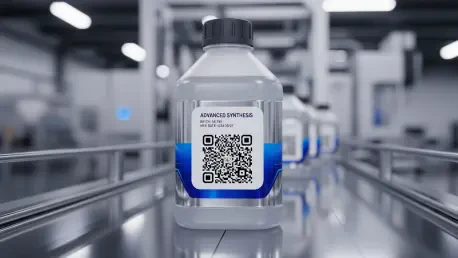
The physical reality of small packaging, like those inner containers for printer ink, has always been a point of legal and logistical tension. You simply cannot fit exhaustive hazard data on a tiny surface without making the text so small it becomes useless. The new agreement offers an elegant compromise by allowing digital labels to carry the bulk of the information for these small inner containers, provided the outer packaging still carries the full, printed safety data. It’s a sensory relief for manufacturers who no longer have to worry about the “crowding” effect on their products. This “generic and simplifying solution” isn’t just about ink; it paves the way for other small-scale industrial products to transition into a more modern, tech-integrated compliance model while maintaining a high standard for health and environmental protection.
Industry stakeholders have expressed that previous timelines for relabeling were too aggressive. What is your take on the new 15-month transition period and the alignment of deadlines to January 2030?
The decision to provide a 15-month window for relabeling after a classification change is a pragmatic recognition of how global supply chains actually function. When a substance is newly identified as hazardous or its classification becomes more severe, you cannot expect a company to pull every product and swap every sticker overnight. By calculating these transitional periods to accommodate the needs of the industry, the EU is providing “legal certainty” that prevents companies from being in technical violation simply because they couldn’t move fast enough. Furthermore, pushing the application dates for the CLP, cosmetics, and fertilizer rules all to January 1, 2030, creates a unified compliance horizon. It’s a massive relief for companies that deal across these sectors, as they can now plan a single, synchronized overhaul of their labeling and advertising strategies rather than dealing with a staggered rollout of different rules.
Some consumer and environmental groups, such as the BEUC, have voiced concerns that these extensions might weaken protections. How do you balance the need for industry flexibility against the risk of delayed hazard communication?
This is the central tension of the Omnibus VI package. While the industry sees a 2030 deadline as a necessary buffer for a smooth transition, advocates for public health see it as an extra two years where hazardous substances might remain on the market without updated warnings. The original “stop-the-clock” amendment had already moved some deadlines to 2028, so the jump to 2030 is perceived by groups like the BEUC as a step backward in transparency. From a legal standpoint, the agreement tries to mitigate this by including a new requirement for suppliers to cooperate across the entire supply chain to update labels “without undue delay.” This is meant to ensure that “flexibility” doesn’t turn into “procrastination,” but it remains to be seen how effectively that clause can be enforced when the hard deadline is still years away.
With the agreement currently provisional and formal adoption expected by the end of 2026, what should businesses be doing right now to prepare for this new legal landscape?
Even though the legislative act might not hit the EU’s Official Journal until 2026, the 15-month relabeling rule and the 2030 alignment are already the definitive targets. Businesses should be auditing their current label real estate now, particularly for B2B products where they can start thinking about how to leverage that new “readability” clause. For those dealing with small packaging, it’s the perfect time to invest in the digital infrastructure needed to host and maintain those labels, as the move toward digital-only inner packaging will require robust, accessible online databases. The goal is to avoid a scramble in late 2029; companies that start building their cross-supply chain cooperation protocols today will be the ones that benefit most from the “legal certainty” this agreement aims to provide.
What is your forecast for the long-term impact of these simplifications on the EU’s chemical safety framework?
I believe we are witnessing a permanent shift toward a more hybrid regulatory model where digital tools and qualitative standards like “readability” replace the rigid, paper-based metrics of the past. Over the next decade, this flexibility will likely encourage more innovation in packaging design, but it will also place a heavier burden of proof on companies to demonstrate that their labels truly are accessible to the user. While the 2030 alignment provides a temporary reprieve, the overarching trend is toward more frequent classification updates, meaning the industry must become more agile. Ultimately, if the “undue delay” clause is taken seriously by regulators, we could see a system that is both more business-friendly and faster at communicating risks than the old, prescriptive font-size regime ever was.