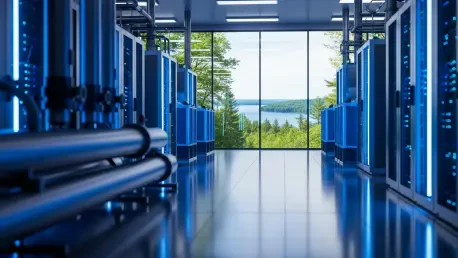

The Rise of Hyperscale Infrastructure in the Great Lakes State
The evolution of Michigan’s digital landscape has been swift, moving away from traditional data storage facilities that served as simple repositories for corporate records. These earlier iterations were largely benign, functioning as digital warehouses with minimal impact on the surrounding environment or utility grids. However, the emergence of generative artificial intelligence has catalyzed a shift toward hyperscale hubs. These massive installations are designed to handle the staggering computational loads required by modern neural networks, effectively turning data centers into intensive industrial consumers that rival the power needs of mid-sized cities.
Key industry players like Oracle and OpenAI have identified Michigan as a strategic location, influenced by its temperate climate and vast freshwater resources which are essential for server cooling. Their entry into the state has accelerated infrastructure development, yet it has also revealed a significant gap in regulatory oversight. For years, data centers were treated as low-impact commercial developments, leaving the state without a robust framework to manage the unprecedented levels of energy consumption and water usage that define the hyperscale era. This lack of scrutiny has allowed massive projects to proceed with minimal public disclosure regarding their long-term environmental footprint.
Driving Forces and the Economic Reality of the Digital Boom
The Generative AI Revolution and the Demand for Massive Computing Power
The surge in generative artificial intelligence has fundamentally altered the technical requirements for data infrastructure. Unlike traditional web hosting, AI training and inference require massive parallel processing, which generates heat at levels previously unseen in the digital sector. This necessity for constant, high-intensity computing has pushed the demand for facilities that can handle over 100 megawatts of power. As a result, the industry is seeing a rapid transition toward specialized cooling technologies, including liquid immersion and advanced closed-loop systems, to prevent hardware failure and maintain efficiency.
Amidst this revolution, there is an increasing push for sustainable practices and green energy mandates. While the immediate focus of developers is on securing enough power to stay competitive, state regulators and environmental advocates are demanding that these facilities source their energy from renewable projects. The goal is to ensure that the rapid expansion of AI does not derail the state’s broader climate objectives. This tension between the immediate needs of tech giants and the long-term environmental goals of the state has become a primary driver of new policy discussions, forcing a re-evaluation of how digital power is generated and consumed.
Measuring the Impact of Big Tech Investment on Michigan’s Economy
Market growth projections for the data center sector suggest a massive influx of capital into the state, with proponents arguing that these investments are essential for Michigan’s future revenue. The lure of high-value investment is significant, as these projects often involve billions of dollars in construction and hardware procurement. Performance indicators from ongoing developments, such as the 1.4-gigawatt project in Saline Township, provide a glimpse into the scale of these ambitions. However, the economic reality is more nuanced than simple investment figures might suggest, as the permanent job creation at these facilities is often lower than that of traditional manufacturing plants.
Forecasting the long-term economic trade-offs requires a careful analysis of utility rate structures and tax revenue. While the initial investment is substantial, there is a growing concern that the cost of upgrading the electrical grid to support such massive loads could fall on residential customers. If the state does not implement mechanisms to ensure that developers cover their own infrastructure costs, the perceived economic boom could lead to utility rate hikes for the general public. This potential for cost-shifting has prompted a more skeptical look at the incentives offered to big tech, as the state seeks to balance the benefits of a digital economy with the financial protection of its citizens.
Navigating the Technical and Environmental Hurdles of AI Expansion
The strain on Michigan’s electrical grid is perhaps the most immediate technical hurdle facing the state. As hyperscale centers request hundreds of megawatts of power, the risk of forcing residential and small business customers to subsidize industrial growth increases. Without strategic planning, the sudden addition of these massive loads could lead to grid instability or the need for expensive new power generation facilities. Regional planning models are now being developed to prevent such an infrastructure collapse, focusing on how to integrate high-density developments without compromising the reliability of the existing energy system for the broader population.
Beyond electricity, the depletion of local watersheds remains a critical environmental concern. Massive cooling systems can consume millions of gallons of water daily, which is often evaporated or discharged back into the system at higher temperatures. This process can disrupt local ecosystems and strain the water supplies of nearby municipalities. Furthermore, community-level disruptions such as the constant drone of industrial cooling fans and the emissions from large-scale backup diesel generators have turned data center development into a localized environmental justice issue. Mitigating these impacts requires a shift toward more stringent zoning and environmental standards that treat data centers as the heavy industrial users they truly are.
Reforming the Rulebook: New Legislative Strategies for Developer Accountability
In response to these challenges, a proposed statewide moratorium has gained traction as a way to pause new approvals while a permanent regulatory framework is established. This legislative strategy aims to give state officials the time needed to assess the cumulative impact of these facilities on Michigan’s resources. A key component of this reform involves the mandatory use of Community Benefits Agreements, which would ensure that local municipalities gain tangible value from hosting data centers. These agreements could include funding for local infrastructure, educational programs, or environmental restoration projects, making the relationship between the tech industry and the community more equitable.
Transparency is also a major focus of new legislative efforts, specifically regarding the use of nondisclosure agreements. Historically, many developers have used these legal tools to prevent local governments from sharing details about energy and water usage with the public. Banning these agreements would promote transparency and allow for more informed public discourse. Additionally, new utility tariff structures are being designed to ensure that developers pay for the entirety of their infrastructure costs. By making the tech industry responsible for its own grid connections and power upgrades, the state can prevent the financial burden of AI expansion from being shifted onto the backs of ordinary ratepayers.
The Political Horizon: Shaping the Next Chapter of Michigan’s Tech Policy
The political landscape surrounding tech policy is defined by a growing friction between executive leadership and the movement for stricter regulation. While some leaders emphasize the importance of maintaining a competitive business environment, others are pushing for standards that prioritize resource stewardship. This debate is expected to reach a fever pitch during the upcoming midterm elections, which are viewed as a pivotal moment for voter-led accountability. Voters are increasingly concerned with how their natural resources are being used, and candidates are being forced to define their positions on the balance between innovation and protection.
Michigan has the potential to set a national precedent in how it manages the hyperscale surge. By successfully integrating these facilities through a transparent and accountable framework, the state could provide a blueprint for others facing similar challenges. However, this path is complicated by global economic shifts and federal energy policies that continue to influence state-level growth. The intersection of local resource management and national tech ambitions will likely determine whether Michigan becomes a leader in responsible AI infrastructure or a cautionary tale of unchecked industrial expansion.
Securing the Digital Frontier Through Transparency and Public Protection
The transition from reactive, hands-off policies to a system of proactive oversight became a necessity as the scale of data center operations grew. Legislators moved to repeal outdated tax incentives that were no longer required to attract investment, focusing instead on long-term regional resource management. By ending the secrecy surrounding resource consumption and requiring developers to fund their own infrastructure, the state took significant steps toward protecting its citizens. The shift in policy reflected a realization that the digital frontier required the same level of accountability as any other major industrial sector.
The implementation of regional demand studies allowed the state to identify areas where the grid and watersheds were most vulnerable. These measures ensured that growth did not exceed the natural and technical limits of the environment. Michigan’s experience demonstrated that technological integration did not have to come at the expense of the public interest. The established framework for accountable growth eventually provided a clear path forward for maintaining the state’s natural heritage while participating in the global AI economy. Ultimately, the focus on transparency and developer responsibility helped secure a more stable and equitable digital future for all residents.