
Armed conflicts often degrade the green infrastructure and water management systems that vulnerable populations rely on to adapt to the increasing pressures of a warming global climate. As modern warfare increasingly intersects with ecological instability, the sufficiency of International Humanitarian Law (IHL) remains a subject of intense scrutiny among legal scholars and defense analysts. Traditionally, IHL has prioritized the protection of non-combatants and the reduction of unnecessary human suffering, often treating the natural environment as a secondary concern or a mere backdrop to kinetic operations. However, the existing legal framework, primarily rooted in the Additional Protocols to the Geneva Conventions, established specific thresholds to limit environmental destruction, prohibiting methods of warfare intended to cause widespread, long-term, and severe damage. While this triple-cumulative threshold was originally conceived as a robust safeguard against total ecological collapse, its historical application has often been criticized for being overly restrictive and failing to account for the indirect, compounding effects of conflict on a fragile planet. The necessity of evolving these standards is becoming more apparent as the link between military action and long-term climate vulnerability becomes impossible to ignore.
Rethinking the Temporal Threshold of Damage
The “long-term” criterion within the context of International Humanitarian Law has traditionally been interpreted through a rigid, chronological lens, with many legal experts suggesting a minimum duration of several decades before environmental harm is recognized as meeting this specific threshold. In the current landscape of 2026, this fixed quantitative measure is viewed by many as an artifact of an era that did not fully grasp the fragility of ecological tipping points. A modern, climate-informed interpretation of the law seeks to move away from a simple count of years, focusing instead on the persistence of damage and the likelihood of natural recovery within a disrupted ecosystem. When hostilities result in the destruction of carbon-sequestering habitats, such as ancient peatlands or old-growth forests, the duration of the harm cannot be measured solely by the presence of physical debris but must be assessed by the permanent loss of the ecosystem’s ability to regulate local and global temperatures. This shift reflects a more sophisticated understanding of persistence, where the “long-term” nature of the damage is defined by the irreversible departure from a stable climatic state.
Furthermore, the disruption of environmental governance during and immediately after an armed conflict often exacerbates the duration of ecological harm, effectively turning what might have been temporary damage into a permanent climate legacy. Hostilities frequently prevent the implementation of vital conservation projects, reforestation efforts, and the maintenance of essential water management systems, all of which are necessary for maintaining regional climate resilience. From 2026 to 2030, the international community is expected to focus more heavily on how these periods of forced inaction allow environmental degradation to compound and solidify. When the natural environment is left to deteriorate without the intervention of scientists or resource managers, the temporal footprint of the damage extends far beyond the final cease-fire. By recognizing that conflict-induced neglect is a primary driver of long-term environmental loss, legal practitioners can better evaluate whether a military operation violates the spirit of the law by triggering an ecological decline that nature alone cannot reverse within a human generation.
Expanding the Spatial Reach of Conflict Impacts
The “widespread” element of the legal threshold has historically been defined by the geographical area of destruction, often interpreted as covering several hundred square kilometers of territory. This localized perspective, however, fails to account for the way contemporary climate change has demonstrated the environment’s role as a series of interconnected, global systems. A kinetic strike on a vital ecological hub can trigger reverberating effects that travel through hydrological and atmospheric cycles, crossing international borders and impacting the climate stability of distant regions. For instance, the destruction of large-scale wetlands or the mass burning of industrial facilities releases significant quantities of greenhouse gases and particulates that do not remain confined to the battlefield. Because the atmosphere and the oceans are shared resources, the “widespread” character of environmental harm is increasingly understood through its contribution to global climatic instability, suggesting that the spatial assessment of damage must evolve to match the fluid and borderless reality of modern ecological crises.
Recent advisory opinions and international legal developments have begun to support this more expansive understanding of spatial harm, emphasizing that the environment is a “common concern of humankind.” When military operations significantly degrade carbon sinks or release massive amounts of methane and carbon dioxide, the resulting climatic pressure is felt by the entire global population, not just those in the immediate vicinity of the strike. This perspective shifts the legal focus away from the diameter of a blast radius and toward the broader reach of environmental instability and cumulative emissions. As legal scholars analyze the spatial scope of warfare, they are increasingly arguing that if an action contributes to a universal risk like climate change, it meets the “widespread” criteria by its very nature. This approach recognizes that in an era of global warming, there is no such thing as a localized environmental catastrophe, as every instance of significant degradation adds to the collective burden of a planet struggling to maintain its equilibrium.
Redefining Severity Through Ecosystem Functionality
The “severe” component of the IHL threshold is designed to measure the intensity of environmental harm, particularly regarding its impact on the health and survival of human populations and the overall integrity of the natural world. A climate-centric redefinition of severity prioritizes the functional impairment of ecosystems over visible, physical alteration. In this context, a military operation is considered to have caused severe damage if it destroys the ecological services that a community depends on for survival and adaptation. For example, the degradation of fertile soil or the contamination of a primary watershed in a region already suffering from drought is severe not just because of the immediate pollution, but because it removes the fundamental tools for climate resilience. This shift in thinking highlights the deepening interdependence between a healthy environment and the protection of basic human rights, suggesting that environmental security is a prerequisite for human safety in the modern age.
In many contemporary conflict zones, populations are already operating at the edge of their capacity to adapt to environmental stressors, making any further damage to their surroundings exceptionally severe. When military operations target or incidentally destroy green infrastructure, such as mangroves that protect against storm surges or forests that prevent landslides, the resulting vulnerability creates a life-threatening situation for the civilian population. The severity of the damage is thus amplified by the pre-existing climate conditions of the region, turning what might be a manageable environmental issue in a stable climate into a catastrophic loss in a warming one. By evaluating severity through the lens of adaptation and resilience, legal experts can more accurately capture the true cost of warfare on the ground. This functional approach ensures that the law protects not just the physical world, but the complex biological and geographical systems that allow human societies to persist despite the growing challenges of a changing climate.
Integrating Precautionary Principles into Strategy
Translating high-level legal interpretations into the practical realities of military planning requires a renewed commitment to the precautionary principle, which is already a cornerstone of customary international law. Rule 44 mandates that commanders take all feasible precautions to avoid or minimize incidental damage to the environment, a duty that becomes even more critical when considering the long-term impacts of climate change. In a strategic environment characterized by scientific uncertainty, the precautionary principle dictates that a lack of absolute certainty regarding the exact scale of future environmental damage should not be used as a justification for ignoring foreseeable risks. If a proposed operation carries a high probability of destroying a critical carbon sink or destabilizing a regional water system, planners have a legal and ethical obligation to seek alternatives that minimize these ecological costs, even if the primary military objective remains a priority.
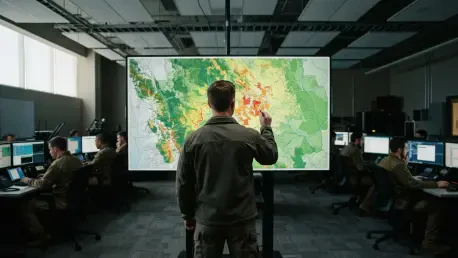
Effective military planning in the mid-2020s necessitates the integration of environmental data and climate expertise directly into the legal advising process. While military commanders are not expected to be climatologists, they are increasingly held to a standard of using the best available scientific knowledge to assess the risks of their operations. This might involve consulting high-resolution satellite imagery, climate modeling software, and ecological vulnerability maps before finalizing a target list. By incorporating these tools, strategic planners can better account for the “carbon cost” of their actions and the potential for triggering irreversible ecological feedback loops. This evolution in doctrine ensures that environmental considerations are not an afterthought but are instead woven into the fabric of the decision-making process. The goal is to create a military culture that respects the environment as a vital strategic asset, the destruction of which can lead to long-term regional instability and humanitarian crises that far outweigh any temporary tactical gain.
Harmonizing International Legal Frameworks
A persistent challenge in the quest to protect the environment during armed conflict is the perceived separation between International Humanitarian Law and International Environmental Law. To provide a truly effective defense against climate-related harm, these two legal regimes must be applied in a cohesive and integrated manner. The principles established in major environmental treaties, such as the Paris Agreement and the United Nations Framework Convention on Climate Change, should serve to “color” the interpretation of the Geneva Conventions. This harmonization ensures that conduct during wartime does not actively undermine global efforts to mitigate climate change and protect biodiversity. By treating the environment as a unified system that warrants protection at all times—whether in peace or in war—the international community can bridge the gap between the immediate needs of military necessity and the long-term requirements of planetary health.
The ongoing work of the International Law Commission on the protection of the environment in relation to armed conflict, known as PERAC, has provided a vital conceptual link between these disparate legal fields. These principles emphasize that states have a continuous duty to prevent significant environmental harm, a responsibility that does not vanish simply because a state of war exists. This systemic reform encourages a move away from viewing the environment as a collection of isolated targets and toward a perspective that sees it as a shared global heritage. When IHL is applied through the lens of international environmental obligations, it becomes a much more dynamic and responsive tool for addressing modern crises. This integrated approach ensures that the law of war remains a living body of rules, capable of adapting to the existential challenges of the twenty-first century and providing a more robust shield for the natural systems that sustain all human life.
Bridging the Gap Between Law and Scientific Data
The current legal threshold for environmental protection in war, while traditionally seen as an exceptionally high bar, is becoming more manageable as our ability to measure and predict climate harm improves. The triple-cumulative test of “widespread, long-term, and severe” is rigorous, but contemporary climate science provides a new factual basis for meeting these criteria in ways previously unconsidered. For instance, sophisticated modeling can now demonstrate how the destruction of specific natural resources contributes directly to regional temperature spikes or the permanent loss of biodiversity. As this data becomes more accessible and reliable, the legal invisibility of indirect environmental damage is fading. The international community is moving toward a standard where the foreseeable environmental consequences of an attack are weighed with the same gravity as direct civilian casualties, ensuring that the law reflects the physical and biological realities of the modern world.
This paradigm shift suggests that the “absolute ceiling” of permissible destruction can finally serve its intended purpose if it is applied with scientific rigor. The harm caused by modern conflict is no longer confined to immediate casualties and debris; it manifests as the systemic degradation of the life-support systems of the planet. By adopting a climate-informed interpretation of IHL, the law can address the long-term “blast radius” of warfare, which extends across time and space. This approach recognizes that environmental security is inseparable from human security and that the rules governing warfare must evolve to meet the unique threats posed by a warming globe. As the legal community continues to refine these definitions, the focus remains on ensuring that the protection of the environment is not a theoretical ideal but a practical reality that safeguards the future of both the natural world and the human populations that depend upon it for their very existence.
Implementing Practical Solutions for Global Security
The international community pivoted toward a more aggressive integration of climate science into the legal structures of warfare, recognizing that the old interpretations of IHL were insufficient for the challenges of the mid-2020s. Strategic planners and legal experts shifted their focus to proactive measures, such as the establishment of “no-strike zones” around ecologically critical areas like primary forests and major watersheds. These regions were designated as vital for global climate stability, and their protection became a priority in military doctrine. By formalizing these protections, policy makers ensured that the most essential carbon sinks were removed from the theater of kinetic operations, thereby preventing the kind of irreversible damage that the “long-term” and “severe” thresholds were designed to prohibit. This move reflected a practical application of the precautionary principle, turning theoretical legal debates into actionable defense policies that prioritized the long-term survival of the environment.
Furthermore, the legal community recommended the mandatory inclusion of environmental impact assessments in the post-conflict reconstruction phase to ensure that restoration efforts were targeted and effective. These initiatives focused on rebuilding green infrastructure and restoring ecological functions that were disrupted during hostilities, such as repairing water management systems and replanting native vegetation to prevent desertification. The integration of these climate-resilient strategies into the recovery process allowed conflict-affected regions to bounce back more quickly and with greater stability. By linking environmental restoration directly to the legal obligations of the parties involved in the conflict, the international community created a framework where accountability for environmental harm was clearly defined and enforced. This forward-looking approach established a new standard for global security, one that acknowledged the environment as a foundational element of peace and a critical factor in the long-term health of the human species.