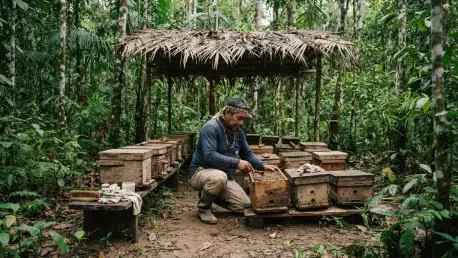

Municipal ordinances recently adopted in Satipo and Nauta establish that these essential pollinators have an inherent legal right to exist, thrive, and inhabit a healthy environment. This groundbreaking shift in the Amazonian legal landscape represents the first time in global history that an insect species has been granted the status of a legal person. Finalized in early 2026, this move transforms native stingless bees from mere biological resources into rights-bearing subjects, allowing them to be represented in courtrooms to defend their habitats. The transition reflects a deeper understanding of the ecological interdependencies that sustain the rainforest, moving away from human-centric conservation models toward a more holistic legal framework. This legislative milestone was achieved through years of rigorous scientific advocacy and deep collaboration with local communities, who have long viewed these creatures as vital components of their ancestral lands and daily survival.
Environmental and Cultural Protections
Indigenous Wisdom and Scientific Evidence
The movement to protect these pollinators was built upon a unique partnership between modern scientific researchers and Indigenous communities like the Asháninka and Kukama-Kukamiria. Scientific institutions, including Amazon Research Internacional, provided the empirical data necessary to demonstrate the bees’ critical role in the Amazonian food web. Researchers meticulously documented how these insects interact with specific floral species, creating a database of ecological interactions that proved their indispensability. At the same time, Indigenous leaders like Apu Cesar Ramos of EcoAsháninka brought forward centuries of traditional knowledge, explaining that the health of the forest and the prosperity of their people are inextricably linked to the presence of these stingless bees. This combination of Western science and ancestral wisdom created a compelling case that resonated with policymakers, illustrating that conservation is not just about biology but also about heritage.
For many Indigenous groups, the legal recognition of bee rights is seen as a long-overdue validation of their worldview, where humans and nature are seen as part of a single, interconnected system. These communities have served as the unofficial guardians of the bees for generations, practicing meliponiculture—the traditional keeping of stingless bees for honey and wax—in a way that promotes forest health. The new legislation formalizes this guardianship role, providing Indigenous meliponiculturists with greater authority to manage their territories and resist external pressures. By elevating the status of the bees, the law also reinforces the land rights of the communities that protect them, as the bees’ right to a healthy environment cannot be fulfilled without preserving the forests where they reside. This synergy ensures that the legal protections are grounded in the realities of those who live closest to the land, creating a sustainable model for community-led management.
Ecological Roles of the Meliponini Tribe
Peru boasts a remarkable diversity of native stingless bees, with over 170 species belonging to the Meliponini tribe, which accounts for nearly half of the global diversity of these specialized pollinators. Unlike the common European honeybee, which was introduced to the Americas, these native bees have evolved in lockstep with the unique flora of the Amazon rainforest. They are responsible for pollinating approximately 80% of all Amazonian plant species, making them the primary drivers of forest regeneration. Their specialized foraging behaviors and small size allow them to access flowers that other pollinators cannot, ensuring the survival of a vast array of hardwood trees and medicinal plants. Without the constant work of the Meliponini, the structural complexity and biodiversity of the Amazon basin would likely face a slow and steady decline, as many plant species rely exclusively on these bees for their reproductive cycles and the dispersal of their seeds.
Beyond their role in the wild forest, native stingless bees are also crucial contributors to the local agricultural economy, particularly in the production of high-value crops like cacao, coffee, and avocados. Many of these crops require the specific pollination services provided by the Meliponini to achieve high yields and quality fruit. For example, local farmers have observed that cacao plantations located near native forests, where stingless bees are abundant, produce more robust beans compared to those in more isolated areas. This ecological service provides a strong economic argument for their protection, as the livelihoods of thousands of small-scale farmers depend on the silent labor of these insects. The medicinal properties of the honey produced by certain stingless bee species, such as Melipona eburnea, also represent an important resource for traditional medicine and potential pharmaceutical research, highlighting why their right to thrive is essential.
Enforcement and Future Application
While the recognition of legal rights initially represented a significant victory, the long-term impact relied on the ability of local communities to enforce these laws against powerful economic interests. The effectiveness of the ordinances was tested as legal representatives attempted to shield biodiversity from industrial expansion and illegal logging. This initiative established a vital synthesis of Indigenous worldviews and Western science, validating the interconnectedness of all life. To move forward, the regional governments of Satipo and Nauta established clear protocols for monitoring the health of stingless bee populations and identifying violations of their legal rights. This process involved the creation of specialized environmental task forces that included both scientific experts and Indigenous guardians, who were responsible for patrolling protected areas. The legal practitioners also developed specialized training to understand how to represent these non-human clients in court effectively.
To ensure long-term sustainability, the Peruvian government prioritized expanding these local successes into a unified national framework for insect conservation. This initiative involved integrating the Rights of Nature principles into national land-use planning and agricultural policies, which provided a consistent standard of protection across all regions of the Amazon. Education also played a critical role; local schools and community centers implemented programs that taught the importance of native pollinators and the legal rights they held. Furthermore, fostering sustainable economic alternatives, such as certified bee-friendly cacao and honey production, gave local communities financial incentives to uphold the bees’ rights. By aligning economic prosperity with ecological health, Peru demonstrated that protecting the smallest members of the ecosystem was a viable strategy for growth. The lessons learned from this case provided the necessary insights to refine insect laws.