
The delicate equilibrium between industrial acceleration and community health is undergoing a significant transformation as federal regulators look to decentralize their oversight roles. The Environmental Protection Agency is currently introducing a pivotal rule change that would transfer the management of minor source air quality permits from federal jurisdiction directly to the state of Texas. This specific shift targets the public notice and participation requirements for industrial facilities that fall below major emission thresholds, a move presented by the agency as a necessary step toward streamlining complex bureaucracy. While the federal government maintains that this transition will allow for more responsive local governance, the proposal has sparked an intense national debate regarding the potential loss of community influence over industrial development. Residents living near proposed sites express concern that removing federal guardrails will leave them without a legal voice in projects that directly impact their air quality and long-term health outcomes.
The Challenge: Balancing Administrative Efficiency and Environmental Safeguards
Administrative officials at the federal level contend that shifting permitting authority to the Texas Commission on Environmental Quality will significantly reduce redundant bureaucratic delays that often stall critical infrastructure projects. By placing state regulators in the driver’s seat, the Environmental Protection Agency believes the permitting process can be tailored to meet the specific economic and geographic needs of the region without necessarily compromising established health standards. This proposal is framed as a modernization effort designed to support a policy of energy dominance and rapid industrial growth, ensuring that the United States remains competitive in a global market that demands quick deployment of technological resources. Proponents of the change argue that state-level experts possess a more nuanced understanding of local environmental conditions than federal officials in Washington. They suggest that this autonomy will foster a more efficient regulatory environment where innovation can thrive under the watchful eye of those closest to the ground.
Conversely, environmental advocates and community organizers view the decentralization of oversight with deep-seated skepticism, fearing that the state’s historical preference for industrial expansion may overshadow public health priorities. They argue that federal involvement serves as a necessary safety net to ensure that public participation is not merely a formality but a meaningful part of the decision-making process. The concern is particularly acute for fenceline communities, which are often located in low-income or minority neighborhoods and bear a disproportionate burden of industrial pollution. Critics worry that without the oversight of the federal government, the state may adopt a path of least resistance by scaling back notice requirements and limiting the window for public comment on new projects. This potential reduction in transparency could effectively silence local residents who rely on these windows to voice concerns about noise, traffic, and the long-term respiratory impacts of living adjacent to high-emission industrial operations in their local areas.
The Impact: The Rise of Localized Power Generation in the AI Sector
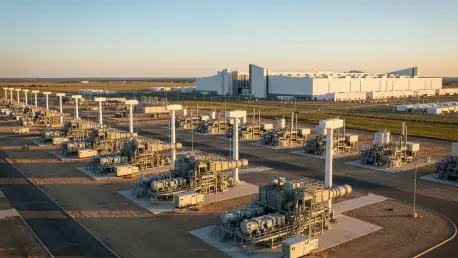
A primary driver behind this regulatory shift is the recent and rapid expansion of the artificial intelligence sector, which has fundamentally changed the nature of minor source permitting in Texas. Modern data centers require immense amounts of electricity, often exceeding what the traditional power grid can reliably provide in peak periods or remote locations. To maintain constant uptime, these facilities have increasingly turned to a “bring your own power” strategy, installing massive arrays of diesel generators and natural gas turbines directly on-site. While individual generators might not meet the criteria for a major source, the sheer volume of equipment often involves hundreds of units collectively emitting substantial volumes of pollutants. Under the current federal framework, these projects have faced significant public scrutiny, but the proposed rule change could allow these distributed power plants to bypass the rigorous community engagement processes that traditional utility plants must undergo before they are authorized to begin operations.
The environmental footprint of these localized power sources is far from negligible, as some of these massive AI infrastructure projects are permitted to emit nearly 100 tons of nitrogen oxides every year. These specific pollutants are well-documented contributors to the formation of ground-level ozone and have been linked by medical professionals to a range of severe respiratory illnesses and instances of premature death. Historically, the ability of local residents to challenge these permits has served as a vital health protection, often forcing industrial operators to adopt cleaner technologies or implement better mitigation strategies. Advocacy groups point out that when companies are held accountable by the public, they are more likely to invest in Tier 4 diesel engines or alternative energy storage solutions that minimize the impact on surrounding neighborhoods. If the EPA removes itself from the oversight of public participation rules, there is a distinct risk that these technological safeguards will be treated as optional rather than essential components of development.
The Context: Navigating Legal Frameworks and Cumulative Community Impacts
The timing of the EPA’s proposal is particularly noteworthy as it coincides with a period where Texas has been attempting to repair its own reputation for regulatory transparency. Following pointed criticism from state auditors and community leaders, recent legislative reforms enacted in 2023 were specifically designed to improve how the state engages with the public regarding environmental permits. These reforms sought to address a documented lack of accessibility and clarity within the Texas Commission on Environmental Quality, aiming to build trust between regulators and the citizens they serve. There is now a palpable fear among civic organizations that the federal government’s move to relinquish oversight could inadvertently signal a green light for the state to roll back these improvements. By removing the federal floor for public involvement, the EPA may be creating a situation where future state administrations can rewrite participation rules without needing to adhere to the baseline standards that were previously enforced by national environmental authorities.
Beyond the procedural questions of notification and comment periods, the issue of cumulative environmental impact remains a significant hurdle for residents in urban centers like Houston. In regions lacking traditional zoning laws, industrial projects are often sited in close proximity to residential zones, schools, and hospitals, leading to a clustering effect that magnifies pollution levels. When each facility is evaluated and permitted in isolation as a minor source, the total pollution load on a specific neighborhood is frequently overlooked by the current regulatory framework. Strengthening the public’s right to know is seen by many urban planners as an essential tool for ensuring that the air quality in these mixed-use areas remains safe for all inhabitants. Weakening the federal requirements for public involvement could strip these communities of their best defense against the scenario where multiple small permits combine to create an environment that is hazardous for the people who live and work in the immediate vicinity of these industrial sites.
The Outlook: Strategic Considerations for Sustainable Industrial Development
As the landscape of environmental regulation evolved, the necessity for a balanced approach that integrated industrial necessity with community preservation became increasingly evident. To move forward, stakeholders focused on developing hybrid oversight models that maintained state flexibility while preserving federal standards for transparency and public engagement. This approach encouraged industrial operators to proactively collaborate with local neighborhood associations well before the formal permitting process began, thereby reducing the likelihood of legal delays and community resistance. It was found that establishing clear, standardized metrics for cumulative impact assessments provided a more accurate picture of neighborhood health than evaluating single-source permits in a vacuum. Furthermore, the integration of real-time air quality monitoring around data centers and other minor source facilities helped bridge the trust gap between corporations and the public. These efforts demonstrated that the path to sustainable growth required a commitment to open communication and data-driven protection.