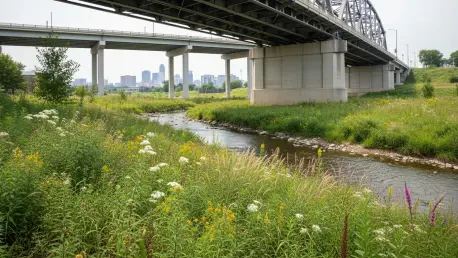

The transformation of concrete-heavy metropolitan landscapes into vibrant, self-sustaining ecosystems has reached a legal turning point as Illinois officially codifies rewilding as a core pillar of its state conservation strategy. This groundbreaking legislation represents a departure from the traditional land management paradigms that have long favored aesthetic “mow and maintain” practices over ecological health. By empowering the Illinois Department of Natural Resources to prioritize the restoration of natural processes, the state is moving toward a future where human-built environments are no longer seen as separate from the wild. This shift involves moving away from the constant human intervention required by manicured lawns and ornamental gardens, focusing instead on the reintroduction of native species and the repair of broken ecological cycles. As urbanization continues to expand across the Midwest, this legal framework provides a crucial mechanism for ensuring that nature can thrive within the city limits.
Protecting State Resources Amid Federal Policy Shifts
The enactment of this specific legislative framework provides a necessary safeguard against the fluctuating nature of federal environmental regulations which have recently become more unpredictable. In recent years, high-profile Supreme Court decisions have drastically narrowed the jurisdiction of the Clean Water Act, effectively removing federal protections from millions of acres of isolated wetlands and ephemeral streams nationwide. Illinois has responded by creating its own legal “backstop,” ensuring that these vital natural resources remain under state protection regardless of the shifting political priorities in Washington D.C. This move is less about defiance and more about establishing a stable, long-term foundation for local ecological health that cannot be undermined by federal administrative changes. By asserting state-level authority over these territories, Illinois leaders are securing the autonomy needed to pursue specific conservation goals that reflect the unique environmental needs of the Great Lakes region.
Beyond just responding to federal shifts, this law establishes a clear set of standards for how state-owned and managed lands are categorized and valued in terms of their ecological output. Previously, lands that did not meet specific definitions of “parkland” or “farmland” often fell into a legal gray area where they were neglected or slated for industrial development without consideration for their natural potential. The new law changes this dynamic by formally recognizing rewilding as a legitimate and high-priority land use designation for state resources. This allows for more nuanced management strategies that account for the interconnectedness of different habitats, such as connecting fragmented forest patches to create wildlife corridors. This systematic approach ensures that conservation efforts are not just isolated projects but part of a cohesive statewide network designed to maximize environmental resilience and turn neglected liabilities into ecological assets.
Implementing Trophic Cascades and Industrial Site Restoration
The scientific backbone of the law is rooted in a sophisticated understanding of ecological process theory and the concept of trophic cascades. Unlike older conservation models that attempted to keep a landscape frozen in a specific state through constant human intervention, rewilding aims to kickstart natural chain reactions. By reintroducing foundational native plants or restoring natural water processes, the state can trigger a resurgence of entire food webs, from soil organisms to predatory birds. These trophic cascades prove that a small initial intervention can lead to massive, self-sustaining improvements in biodiversity and ecosystem function. This approach is particularly effective in urban areas where traditional land management is often too expensive to maintain on a large scale. The science suggests that when natural processes take the lead, the resulting ecosystems are far more resilient to diseases and invasive species than those managed through human landscaping efforts.
The practical impact of this law is most visible in Chicago’s industrial corridors, where long-abandoned manufacturing sites are being reborn as thriving wetlands. Indian Ridge Marsh Park serves as a primary example of this transformation, having moved from a site of heavy industrial runoff to a legally protected sanctuary for endangered avian species. Under the new legislation, these former brownfields are not merely reclaimed for recreation but are designated as permanent rewilded zones, shielding them from future commercial development. This legal protection is essential for sites that require decades of natural filtration and sediment stabilization to reach full ecological health. By allowing these areas to return to a wild state, the city is cleaning up its industrial legacy while providing essential habitats within the urban fabric. These projects demonstrate that even the most damaged soils can support life when given the time and legal protections necessary for regeneration to occur safely.
Advancing Regional Cooperation and Sustainable Urban Integration
The economic and climate resilience provided by these rewilding projects became a primary driver for their adoption across the Great Lakes region, including Michigan and Wisconsin. Urban rewilding acts as a sophisticated form of green infrastructure that manages stormwater more effectively than traditional pipes and sewers. By allowing wetlands to soak up heavy rainfall naturally, municipalities were able to reduce the burden on aging drainage systems and lower the costs associated with flood damage. Furthermore, these green corridors helped cool urban centers by mitigating the heat island effect and capturing carbon in the soil, making them essential tools for climate adaptation. As other states observed these measurable benefits, the Illinois model began to serve as a regional blueprint for cross-border conservation. This move shifted the focus of local governments toward viewing ecological health as a prerequisite for long-term fiscal stability and urban resilience in a changing environmental landscape.
The successful integration of these principles into the legal framework of Illinois necessitated a series of actionable steps that transformed urban planning across the Midwest. State agencies moved quickly to establish financial incentive programs that encouraged private developers to incorporate designated rewilding zones into new commercial and residential projects. These initiatives ensured that the responsibility for ecological restoration was shared between the public and private sectors, rather than falling solely on government budgets. Furthermore, local zoning boards began to prioritize the connectivity of green corridors, requiring new developments to maintain migratory pathways and native vegetation buffers. This transition proved that the wild and the urban could coexist, provided that legal and economic structures were aligned to support natural processes. Ultimately, the state established a precedent where the protection of biodiversity was treated as a fundamental public utility.